Producer burnout is not a shortage of ideas and it is not laziness. It is what happens when months of high-stakes creative work stack up without real recovery, real boundaries, or any distance between your music and your self-worth. You beat it by scheduling genuine time off, cutting the next project down to something small and finishable, and rebuilding a studio routine you can hold for years.
It takes time, usually several weeks of deliberate changes before you feel like yourself again. The hard part is not knowing the steps. The hard part is doing the boring ones while a half-finished project nags at you.
If your situation is burnout rather than ordinary creative block, you will notice a specific set of signs. This guide walks through what you need before starting, then a six-step recovery plan, then the traps that keep people stuck in the cycle. That is how to beat producer burnout without quitting music: smaller load, hard stop, and someone who knows the plan.
Table of Contents
- What You Need
- How to Beat Producer Burnout: A Step-by-Step Recovery Plan
- Step 1: Recognize the Difference Between Fatigue and Burnout
- Step 2: Create a Mandatory Recovery Window
- Step 3: Shrink the Next Project Instead of Quitting Music
- Step 4: Separate Creative Work From Self-Worth
- Step 5: Rebuild a Low-Pressure Studio Routine
- Step 6: Add Support, Structure, and Professional Help When Needed
- Common Mistakes
- Frequently Asked Questions
- Can you push past burnout without taking time off?
- How long does producer burnout take to recover?
- Should a burned-out producer quit music entirely?
- How do I restart making music after a long break?
- How do I balance client work with my own creative energy?
- Is it normal to feel nothing when I open my DAW?
- Take the First Step Today
What You Need
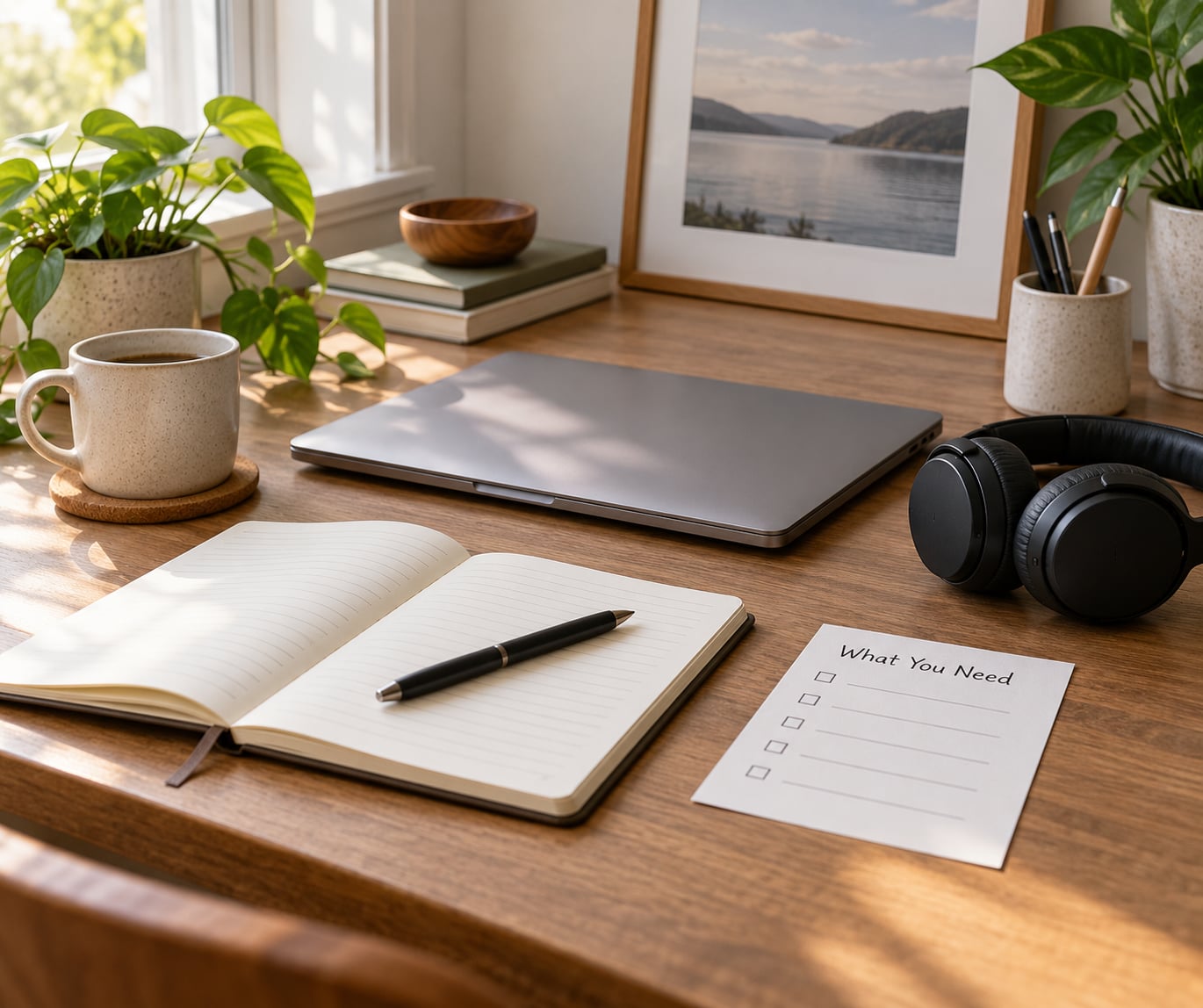
Recovery works better when you set up the conditions before you need them. Here is the short list I would want before touching a session again.
- A schedule you can actually honour. Pick specific days and finish times. Not “I will work on it later this week” but Thursday, one to four in the afternoon.
- A smaller scope. Decide now what the next piece of work is, and make it small enough to finish in days rather than months.
- Some way to track your energy. A note on your phone at the end of each session, one to five. That is enough. Overcomplicated tracking becomes a second job.
- One person who knows what you are going through. Another producer, a friend, a partner. Someone outside the project who can tell you when your story has drifted.
- Storage and a backup habit. A version you can reopen without dread beats an unfinished session you are scared to look at.
If you are doing client work, add one more: the contract or message thread where revision limits and delivery dates live. Boundaries that only exist in your head are not boundaries.
How to Beat Producer Burnout: A Step-by-Step Recovery Plan
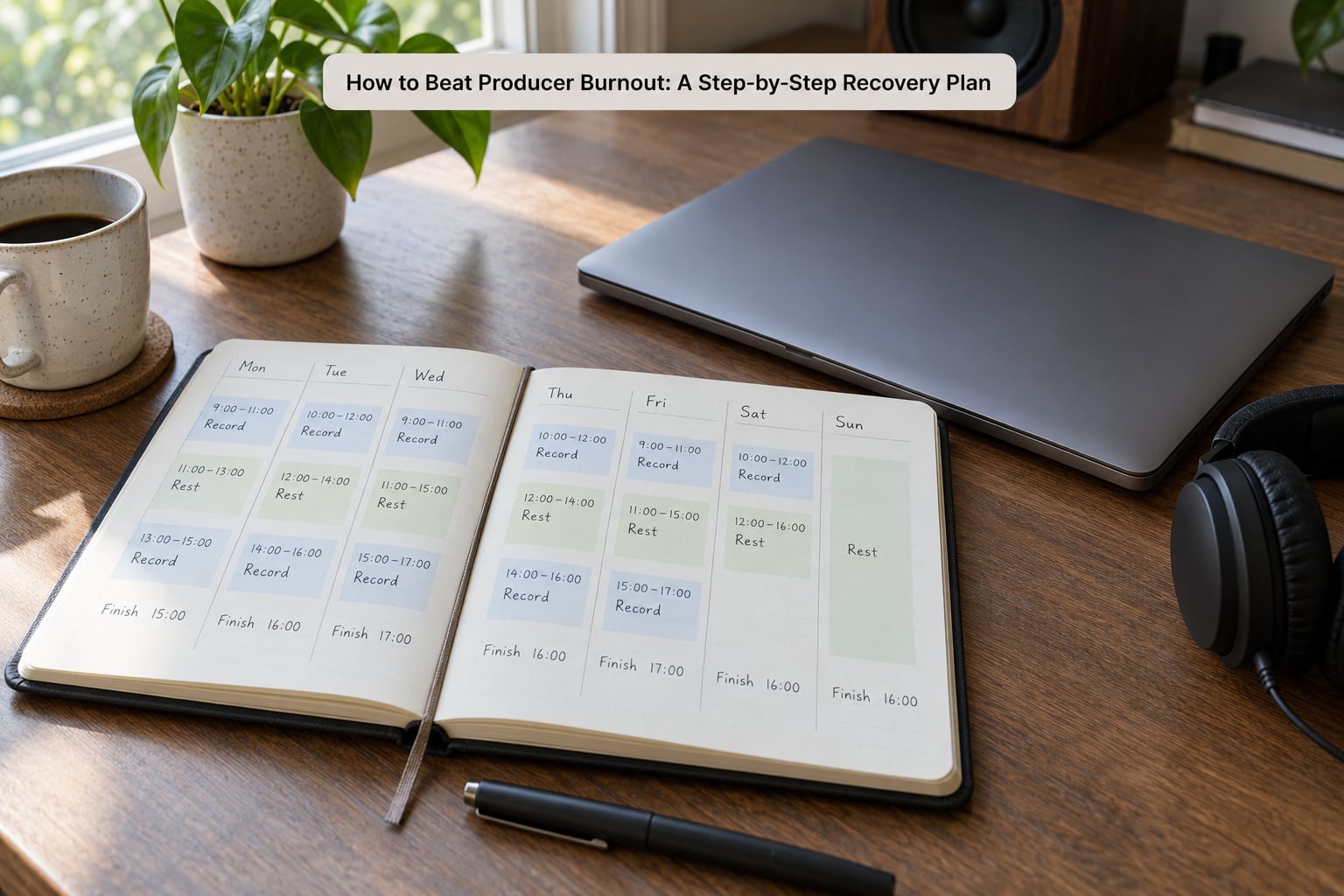
Run these in order. Skipping ahead to Step 3 while still working eighteen-hour days is the most common way people end up back where they started.
Step 1: Recognize the Difference Between Fatigue and Burnout
Fatigue is a tired afternoon. You rest, you come back, the interest is still there. Burnout is a pattern that lasts weeks and drains the interest itself, so resting at night does not fix it.
Look for a cluster rather than a single symptom. Physical signs include poor sleep, tension in the neck and shoulders from a hunched studio posture, and drifting through meals. Emotional signs show up as dread before a session, irritation at small problems that used to be interesting, and a flatness that follows every track you finish.
Creative signs are the ones producers notice last. You stop enjoying other people’s music because every track turns into an analysis of what you would do differently. You start projects and abandon them. A forum thread in r/musicproduction described the pattern well enough: burnout creeps up slowly and then arrives all at once.
There is also a separate thing called DAW fatigue. Opening your software makes you tense because every session brings back the last failure. That is workflow feedback, not a talent problem, and Steps 3 and 5 address it directly.
One honest test: after a full week off, does the pull to return feel like interest or like dread? Dread is the signal to work through this plan rather than just take another weekend.
Step 2: Create a Mandatory Recovery Window
Block real time off before you feel you need it. Seven to fourteen consecutive days works as a starting point. Put it in your calendar with the same weight you would give a delivery date, and tell collaborators you are unavailable.
The critical detail is that this window is not for catching up on the work you already missed. If you spend your break finishing a backlog, you are back at zero on the day you return, and the break confirms rather than removes the problem.
Use the time to disengage. Non-musical hobbies, time with people who do not ask about your catalog, exercise. Producers on r/WeAreTheMusicMakers and r/edmproduction described the shift that helped most: doing something with a different kind of skill that does not feed the comparison loop.
One producer offered a useful analogy. When you burn out on one game, you do not quit games. You switch, or you mod it. Music works the same way, and Step 3 is the mod.
Step 3: Shrink the Next Project Instead of Quitting Music
Most burned-out producers do not need a new career. They need a smaller target. Take the marathon project you cannot face and replace it with something that ends.
- One beat, finished and exported, instead of a full EP.
- A single remix of a track you already like.
- One arrangement experiment capped at two hours.
- Ten minutes of playing around with no recording required.
Finish it and put it out of sight. The point is not the release. The point is proof to your own nervous system that a session can end without a verdict.
This also solves the returning-after-a-break problem that forum readers keep asking about. A few months away does not damage your ability. It damages your confidence, and small finished pieces rebuild it faster than a comeback project ever will.
Step 4: Separate Creative Work From Self-Worth
Burnout feeds on the belief that a rejected track is evidence about you as a person. Unwrap that and recovery gets much easier.
A track that does not land is a workflow result. It means the arrangement, the mix, or the timing of that song did not work, and those are three different problems with three different fixes. Some of the biggest names in this craft describe years of slow progress and abandoned ideas before anything landed.
Watch for the comparison trap. Scrolling other producers’ sessions until yours feel small by comparison is a mood, not a measurement. Forum writers who escaped the cycle all describe the same turn: judging the work by whether the process was interesting rather than whether it performed.
Write down one thing you learned from each finished piece and one thing you would change. That log becomes more useful to you than any stream of other people’s highlights. Getting how to beat producer burnout to stick usually comes down to this: the log records process, not verdict.
Step 5: Rebuild a Low-Pressure Studio Routine
Make the routine small enough that a bad week does not collapse it.
- Cap session length. Two or three hours beats a six-hour sprawl. Most producers get their best ideas in the first part anyway.
- Stop at the cap even mid-thought. Write a note, leave the session open, come back tomorrow.
- Limit revisions. Three passes on a mix, then move it. Fourth-pass tweaking is where a lot of producer exhaustion hides.
- Keep one session type per day. Beat day, mixing day. Switching tasks mid-session adds friction you read as lack of discipline.
- Use a template. A saved starting point with your plugins and routing removes setup decisions, which are pure friction.
- Set one goal per session. Finish the drum bus. Nothing vaguer.
Write the finish time in the planner as an appointment. A session with a stated end feels shorter and ends cleaner.
Step 6: Add Support, Structure, and Professional Help When Needed
Isolation makes it worse. One conversation with another producer about the actual work, without the self-pity, tends to do more than a week of solo reflection.
If you take client work, the structural piece matters. Write revision limits into the deal: two rounds included, each extra round billed, delivery date set in advance. Say it up front, when you are not the one who needs it. Scope creep is a design problem, not a discipline problem.
On money, separate the freelance income from the life income so quiet months do not feel like personal failure. If irregular income is the main stressor, a small fixed baseline you can count on changes how every deadline feels.
And if burnout is touching your sleep, your mood or your functioning outside the studio, that is beyond what a schedule fix can address. Talk to a doctor or a therapist. Nothing here is a diagnosis or a substitute for professional care, but asking for help earlier is the single most reliable recovery step people skip.
Common Mistakes
Each of these feels productive in the moment. None of them work.
- Forcing a constant output schedule. A daily streak turns music into a debt you owe yourself. Two or three good sessions a week beats seven empty ones.
- Treating scrolling and streaming as recovery. Watching other people produce keeps you in the comparison loop you are trying to leave. It is input, not rest.
- Spending the break on catch-up. Rest that ends with the backlog intact teaches you that time off costs you. Next time you will refuse it.
- Arguing with people online about production. Forum threads will hand you a hundred opinions and none of them are your project.
- Pushing through with substances and stimulants. They buy you hours and charge you interest in sleep.
- Holding out for a masterpiece comeback. The big return project is the thing keeping you stuck. Small finished work is the way back.
One more worth naming: mixing the two together. If music is the only thing you do to feel better, it stops being able to do that job. Keep at least one thing in your life that is just for you and has nothing to do with output.
Frequently Asked Questions
Can you push past burnout without taking time off?
Usually not. Pushing through exhaustion reliably extends it, and the work produced during that stretch tends to be the work you are least happy with. A short enforced break of one to two weeks, plus smaller projects after it, tends to move things faster than grinding. If you cannot stop working right now, cut session length and revisions first, then schedule the full break.
How long does producer burnout take to recover?
Most producers describe two to six weeks of deliberate changes before music feels enjoyable again. Severity and circumstance change that range, and there is no fixed schedule. Track your energy with a one-to-five note after each session. A rising trend over a month is a better signal than any calendar milestone.
Should a burned-out producer quit music entirely?
Rarely. Burnout is usually tied to workload, deadlines and identity fusion rather than to music itself. Producers who quit in this state usually regret it later. Shrinking the scope, setting a finish time and separating your worth from your output keeps the door open without the daily cost.
How do I restart making music after a long break?
Start with something that ends, not something that matters. One beat, one remix, one short experiment. Set a two-hour cap and stop when it hits. The aim is to prove that a session can finish without damage. Escalate the project size only after several sessions feel normal again.
How do I balance client work with my own creative energy?
Separate the calendars. Block client delivery dates in one part of the week and personal work in another, rather than filling gaps. Set revision limits in writing before you start, require a deposit, and schedule personal sessions first so client overruns eat recovery time instead of creative time.
Is it normal to feel nothing when I open my DAW?
That flat feeling is one of the most widely reported signs of producer burnout. It often shows up as tension before opening the software, or as analysis of every track instead of enjoyment. Rest, smaller projects and a template-based routine address it. If it persists and reaches beyond the studio, speak with a doctor or therapist.
Take the First Step Today
Close the project you have been avoiding. That is the first move, and it costs nothing.
Then pick three dates this month, put them in your calendar with a finish time attached, and tell one person they are real. When those days arrive, work on one small thing that ends. Nothing about how to beat producer burnout works on willpower alone. It works on a smaller load, a hard stop, and someone watching who knows the plan.