To stay creative when you feel stuck, name the exact limitation holding you back, replace open-ended choices with a deliberate constraint, and finish something small. The block is a signal about your setup, not evidence that the talent is gone.
This is the version I wish someone had handed me years ago, when two unfinished tracks sat in a folder and I called myself out for opening Serum just to avoid either one. A producer on r/edmproduction described almost the same thing: two WIP tracks stalled, a daily goal abandoned, time disappearing into small tweaks. Nothing was wrong with the gear or the ideas. The problem was the size of the blank space in front of them.
Musicians hit creative block for the same reasons every other maker does, but the fix gets expressed in musical terms. The process below takes about twenty minutes to start and works for producers, songwriters, and anyone who makes sound.
Table of Contents
- What You Need
- Step-by-Step
- Step 1: Name the Limitation Blocking You
- Step 2: Start With a Deliberate Constraint
- Step 3: Change the Input (How to Stay Creative When Every Idea Sounds Familiar)
- Step 4: Make a Small, Finished Version
- Step 5: Create From a Creative Prompt
- Step 6: Preserve the Sparks You Love
- How to Know Each Step Worked
- Common Mistakes
- Frequently Asked Questions
- How can I be creative when I have no musical ideas?
- Is it better to take a break when I feel creatively stuck?
- How do I stop comparing my music to professional artists?
- What is a simple exercise for songwriting when I feel blocked?
- How often should I work on music to keep your creativity active?
- Should I finish an idea even if I do not like it?
What You Need
Four things, and you almost certainly own all of them already. None of it needs to be expensive.
- A recording device or DAW. A phone voice memo counts. So does a laptop with a free DAW, or a hardware recorder used without any processing at all.
- Headphones or speakers. Whatever you listen on, including earbuds.
- One reference track. A song you love, chosen for a reason. Not a folder of forty.
- A notebook or a voice memo app. Something that captures a line, a rhythm, or a half-formed idea within seconds of hearing it.
The only item that changes how the next month goes is the last one. Ideas that get captured become material; ideas that do not become a vague sense of having nearly had something.
Step-by-Step
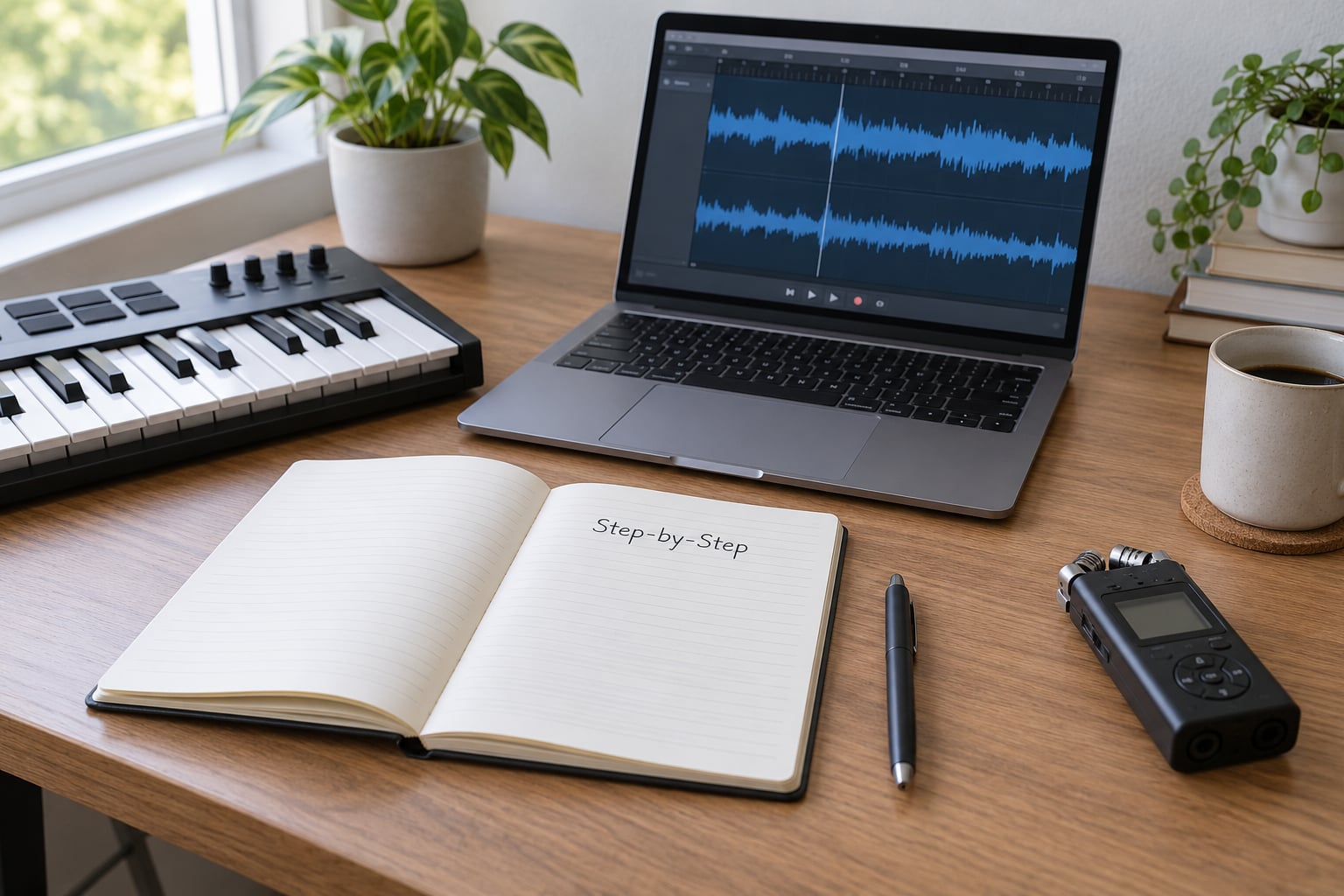
Step 1: Name the Limitation Blocking You
Stuckness comes in flavors, and each one has a different first move. The honest question is which of five things is actually missing: an idea, a skill, confidence, direction, or energy. One sentence in the notebook is enough to tell.
No idea means you need input, not a better DAW. No skill means you have picked a technique you cannot yet do, which is a lesson problem. No confidence means you are judging a first attempt like a finished record. No direction means your project is too vague. No energy means you need rest or a change of scene, not more hours at the desk.
Writers on r/ArtistLounge keep landing on the same harder version of this: not feeling like you are improving, and not knowing what would improve it. That is a direction problem, and writing the obstacle down shrinks it, because “I am not getting better” becomes “I have never actually arranged a full arrangement.”
Step 2: Start With a Deliberate Constraint
Blank-page anxiety comes from having unlimited options. A constraint closes them, and closing options makes decisions small. Before you start, pick one rule and obey it for the whole session.
Useful rules for a producer: four sounds only, no layer count above eight, drums and one melodic element, nothing above 100 BPM, no reverb anywhere, or a hard stop at sixty minutes. For a songwriter: eight bars of chorus, no verse, one chord loop for the entire song. The rule has to be a real limit, not a suggestion you can quietly abandon when you get bored.
You will notice how little resistance a rule removes. The session starts before you have decided anything, and deciding is where most of the energy was leaking.
Step 3: Change the Input (How to Stay Creative When Every Idea Sounds Familiar)
If every idea sounds like something you have already heard, your inputs are the problem, not your talent. In 2026 the reference problem is sharper than it used to be, because an infinite supply of near-identical loops makes anything you make immediately familiar to you.
Swap the input. Listen to a genre you do not respect and pull out the thing that annoys you about it. Change the instrument you normally reach for, because a new instrument changes the vocabulary, not just the sound. Set a tempo you would never choose on your own. Record a non-musical sound from your environment and let it be the hook. Follow one artist you have never heard of rather than the playlist you have on repeat.
Throwing out one input and pulling in an unfamiliar one is the cheapest way I know to make something feel new without buying anything.
Step 4: Make a Small, Finished Version
Finish something. That is the whole instruction, and it is harder than it sounds because finishing requires decisions and deciding is exactly what a block avoids.
Set the target low: one eight-bar loop, a thirty-second hook, a single finished sound with fades and no processing on it, or one section of a song with a rough mix. Define done before you start, put a time on it, and stop when the time ends. An eight-bar loop that plays through without you holding your breath counts, even if it is not the song.
Endless tweaking has a specific cause: you are revisiting a part that still requires a decision, and small adjustments feel like progress while the decision stays unmade. Open a new file instead. You can bring the good parts back later.
Step 5: Create From a Creative Prompt
A prompt removes the job of choosing a subject, which is usually the step that stalls. Respond fast, and do not judge the first result. Here are five I use when nothing is coming.
- Make a beat that sounds like rain on a train window. Restrict yourself to soft, repeating textures and one percussive element.
- Write a hook from a phrase you scribbled by hand yesterday. Sing it before you touch a keyboard, so the melody follows the words.
- Build a thirty-second sound that is slightly unsettling. It must still be listenable, which is the harder requirement.
- Make something with a chord progression you cannot name.
- Record one minute of ordinary noise and turn it into the foundation of a track.
Set a fifteen-minute limit and keep whatever happens, good or not. The output of a prompt is not a hit. It is a new piece of raw material, and raw material is what the next session needs.
Step 6: Preserve the Sparks You Love
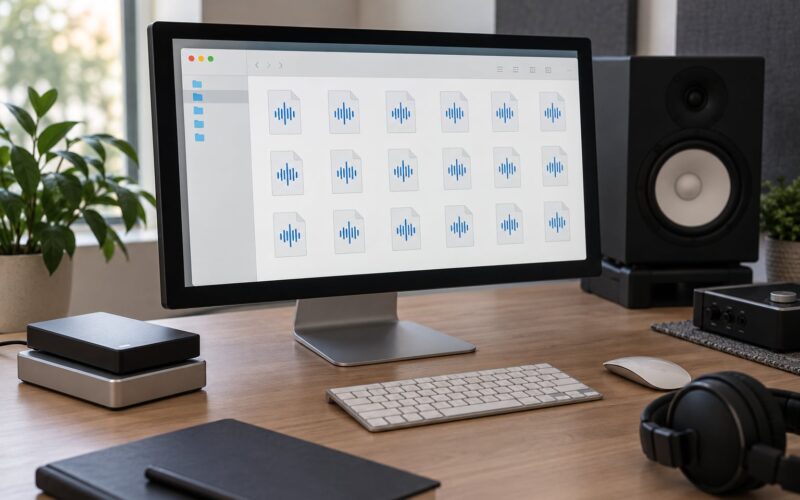
Set up four folders today: loops, riffs, melodies, and sounds. Anything that made you stop and listen goes in immediately, dated, with one line of note on where it came from.
Once a month, open the folder and resample something old. This is where ideas combine that you would never have tried in the moment, because the original moment was about the loop, not the combination. A three-year-old stab that never got used turns out to be the right bridge between two sections that would not sit together.
How to Know Each Step Worked
Step one worked if your sentence about the block got smaller and more specific. Step two worked if you started recording within a minute. Step three worked if you made something you could not have predicted at the start. Step four worked if something plays all the way through. Step five worked if you have a file dated today that you would not have made this morning. Step six worked if next month has more raw material than this month did.
Common Mistakes
These six traps are the ones I see most, and each has a matching fix.
Waiting for Inspiration
Inspiration is unreliable by nature, so treating it as the trigger means waiting indefinitely. The workable model is that action breeds creativity: the thought arrives during the making, not before it. Fix: schedule a short session first, inspiration second.
Tweaking Instead of Deciding
Small adjustments feel like work, so they fill a session without resolving anything. Fix: name the one decision you are avoiding, write it down, make it in the next five minutes, then stop touching that element for the day.
Comparing Your Work to Finished Records
You are hearing a professional mix, mastered, released, and checked forty times, against your own Tuesday. Fix: compare your work to your own work from six months ago. That is the only comparison that shows anything true.
Starting With a Huge Concept
A project too large to finish gives you many chances to quit. Fix: cut the concept down until finishing it looks slightly embarrassing. That is usually the right size.
Abandoning Ideas Too Soon
The first version of anything is rough, and abandoning early is why your folders fill with nearly-good loops. Fix: keep a rule that nothing gets deleted in the first week. Revisit on day eight.
Restarting From Zero After a Broken Habit
Missing a few days feels like losing everything, and that feeling becomes the reason for missing more days. Fix: restart at a deliberately smaller size, like one ten-minute session, so the streak rebuilds. A producer on r/ExperiencedDevs had already tried the standard advice about sleep and working less without luck, which is a sign that the missing piece is structure, not effort.
One note on boredom, because it is the opposite of what most people expect. Commenters on a widely shared reset framework make the same argument: boredom is the soil creative work grows in, with a research reference from the University of Arizona behind it. If every gap in your week gets filled with scroll, you are removing the exact condition where the idea in step three shows up.
To keep momentum, keep one non-negotiable action smaller than your mood on your worst day. Ten minutes counts. The size of the habit matters less than the fact that it did not break.
Frequently Asked Questions
How can I be creative when I have no musical ideas?
Start with a constraint or a prompt rather than an idea. Four sounds only, drums plus one melody, sixty minutes, no reverb. A limit removes the open-ended choice that usually causes the stall. Adding a foreign input helps too: one unfamiliar genre, one swapped instrument, or one recorded non-musical sound. The goal is a finished eight-bar loop, not a good idea, because the file you keep is what gives the next session something to work from.
Is it better to take a break when I feel creatively stuck?
It depends on which kind of stuck you have. If you have energy and no ideas, take a break from the project rather than from music, and change scene for a day. If you are tired, irritable, and dreading the session, that is closer to burnout, and stepping back is the productive move rather than the opposite of it. A short break helps when the block is emotional; a complete disconnection helps when it is depleted. Neither replaces a smaller restart plan.
How do I stop comparing my music to professional artists?
Compare your work to your own work from six months ago instead. A finished record has had a professional mix, a mastering pass, and dozens of listens, so it is never a fair benchmark for a work in progress. Keeping dated folders of your own material also shows you whether you are actually improving, which is the question you are really asking. If you find you are not, that becomes a specific skill to study rather than a verdict on your talent.
What is a simple exercise for songwriting when I feel blocked?
Write or scribble a phrase by hand, then sing it out loud into a voice memo before you touch an instrument. The melody follows the rhythm of the words instead of a blank page. Give it fifteen minutes, keep whatever happens, and stop. Repeat the next day with a different phrase. The exercise works because it replaces one hard decision, what to write about, with an easy one, which words are here right now.
How often should I work on music to keep your creativity active?
Often enough that stopping never becomes a decision. A short session most days keeps inputs fresh and makes restarting automatic. If a few days get missed, resume at a deliberately smaller size, like ten minutes, rather than trying to make up lost time. A larger session is not required. The producers who seem to sustain output usually have a low floor rather than a high ceiling, and the floor is what protects them when motivation dips.
Should I finish an idea even if I do not like it?
Yes, at least the first time, and set a rule that nothing gets deleted in its first week. Rough early versions tell you something specific, usually that the structure or the tempo is wrong, which is useful. Most people abandon ideas at the exact moment a decision is required, so finishing teaches you where the problem was. Once it is finished you can resample it, flip the sample, or let it become a bridge between two sections in a different track.
To stay creative when you feel stuck, start tonight with one sentence naming what is missing, one constraint, and a fifteen-minute session that produces something finished. Keep the file.
Three questions to check yourself with: Is my block an idea problem, a skill problem, or an energy problem? Is the next action I am avoiding small enough to do today? Am I comparing this work to my own work from six months ago? Answer those honestly and the block usually has a name, and named things have fixes.
If it helps to hear someone else work through it, tell us which step you are on. The stubborn cases are the interesting ones.