A tracking session is the recording session where a song’s basic tracks get captured onto separate tracks, usually the rhythm section first, before any overdubs, mixing or mastering happen. If you searched this phrase and landed on web analytics pages, you landed in the wrong place: this is the studio meaning. Last updated October 2026.
Think of it as laying the foundation of a song. Everything recorded later sits on top of what got tracked in that first session, and changing your mind about a basic track is far more painful than changing your mind about a guitar layer.
Over the next few minutes I’ll cover what actually happens in the room, who does what, how a tracking session differs from an overdub session or a mix, and how to walk in prepared.
Table of Contents
- What Is a Tracking Session?
- What Happens During a Tracking Session?
- Tracking vs. Overdubbing vs. Mixing: What’s the Difference?
- Who Is Involved in a Tracking Session?
- How to Prepare for a Tracking Session
- What Equipment Does a Tracking Session Need?
- How Long Does a Tracking Session Usually Last?
- How Do Artists Get the Best Performance in the Studio?
- How to Tell Whether a Tracking Session Was Successful
- Frequently Asked Questions
What Is a Tracking Session?
A tracking session is the block of studio time devoted to recording the basic tracks of a song: drums, bass, guitar, keys, and the core of the arrangement, one instrument at a time onto its own track.
Two things are worth flagging before the details. First, the term has no single agreed definition among working engineers. A long-running Gearspace thread titled “What does tracking mean?” is still full of people arguing, one of them writing that when they hear “tracking session” they think of something different from an overdub. Where you work matters, so here is the usage this guide sticks to: tracking is the basic-tracks pass, and anything added once the rhythm section is down is an overdub.
Second, this is not mixing. Tracking decides what goes on the recording and roughly when it happens in time. Mixing decides how loud, how polished and how present everything feels. Mastering comes last and is about the final sound of the finished release, usually in a different room and often a different person.
A concrete example: a singer-songwriter brings two finished songs to a bookable studio. The engineer puts up a condenser mic in the live room, sends a click to the singer’s headphones, and records the acoustic guitar pass. That pass, plus a bass and a drum kit recorded after it, is the tracking session. The harmony stacks, the doubled vocal on the chorus and the tambourine come later, as overdubs.
What Happens During a Tracking Session?
Most sessions follow the same arc, whether they run three hours or three weeks. Here is the workflow you can expect, and roughly what to be doing during each step.
- Setup and sound check. The engineer checks levels, positions microphones, and confirms signal flow from mic to preamp to console to DAW. Each source lands on its own channel and its own audio track.
- Click and headphone mix. A click track establishes tempo, and each player gets a headphone mix built from the other instruments. If the mix is wrong, everything recorded after it will feel wrong too.
- Warm-up and rehearsal. Players run the song a few times before anything is printed. This is where arrangement decisions get locked.
- Count-in and take one. The engineer counts the player in and records. Expect a few takes, not one.
- Review. Everyone listens back. The engineer, the player and usually the producer listen for timing, tone and feel.
- Comp and move on. Strong parts from several takes are assembled into one clean performance, called a comp, so the next player can record against it.
- Save, back up, document. The session is saved, backed up in at least a second location, and the mic choices and channel settings get written down while everyone remembers them.
Doubling and harmony work gets added within the same session or in a later one, depending on the schedule.
Tracking vs. Overdubbing vs. Mixing: What’s the Difference?
Tracking captures the skeleton, overdubbing adds layers on top of it, mixing balances the whole thing, and mastering prepares the final release.
Tracking
Goal: lock the groove and arrangement. Who is in the room: band or solo artist, engineer, producer. What gets captured: drums, bass, guitar, keys, core rhythm. Typical length: hours to a few days per song. Deliverable: clean basic tracks.
Overdubbing
Goal: add parts against what exists. Who is in the room: session musicians or the same players. What gets captured: harmonies, doubles, solos, percussion, fixes. Typical length: a few hours per song. Deliverable: completed arrangement.
Editing and comping
Goal: assemble the best performance. Who is in the room: engineer, sometimes the artist. What gets captured: nothing new, just cleaner takes. Typical length: hours. Deliverable: takes list and comped tracks.
Mixing
Goal: balance, EQ, effects, dynamics. Who is in the room: engineer or a mix engineer. What gets captured: nothing new. Typical length: one to three weeks. Deliverable: mix-ready stereo file.
Mastering
Goal: final loudness and polish for release. Who is in the room: mastering engineer. What gets captured: nothing new. Typical length: a few days. Deliverable: finished master.
Overdubbing and double tracking are two different things, and the confusion is common. Overdubbing means adding any new part later in the process. Double tracking means recording the same part twice and layering both takes for width and thickness, usually with one take panned slightly left and the other slightly right.
Layering is the broader term: stacking several different performances, sometimes a dozen vocal harmonies, into one sound. Doubling is a special, very disciplined case of layering where the two performances are near-identical.
One more distinction from the forums worth repeating: tracking and overdubbing are not separate industries, they are the same session on different days. On Reddit, producers describe the tracking session as the phase where an engineer oversees mic placement and capture for the rhythm section. Everything after that is still recording, just a different kind.
Who Is Involved in a Tracking Session?
The roles overlap in small sessions and separate cleanly in large ones, but these are the jobs that need doing.
The artist
Performs, and owns the creative calls. Knows the songs well enough to play them from memory or from a chart, and decides when a take feels right rather than leaving it to the engineer.
The recording engineer
Chooses microphones and placement, sets levels, builds the headphone mix, records and comps. This is the person an r/audioengineering thread describes as overseeing the tracking session and making sure each instrument is properly mic’d and captured.
The producer
Decides what the song needs and in what order, and decides when the basic tracks are good enough to stop working on. Producers also keep the session from wandering.
The songwriter
Not always a separate person, but somebody has to have the structure, the chords and the key locked before anyone records.
The session musician
A hired player who reads a chart and nails the part in a handful of takes. Working session players describe the pace honestly: a couple of tries at most on a well-prepared part.
The vocal coach
Optional, and most common on pop and gospel projects. Sits in the booth and fixes phrasing, breath placement and vowel choices before a take is printed.
In a home setup most of these collapse into one person, which is the main difference. Beginners regularly ask whether they should separate tracking, mixing and mastering into different sessions at home, and the honest answer is that splitting the stages helps mainly when you are tired, because fresh ears are the cheapest tool in the studio.
How to Prepare for a Tracking Session
The single biggest factor in how a session goes is how finished the songs are on arrival. Bands underestimate this badly; one thread describes someone expecting 60-plus hours for an eight-song record.
- Finish the songs. Structure, key and tempo decided. No choosing an arrangement in the booth unless you have hours to spare.
- Know your parts cold. If other players are on the call, learn the arrangement, not just your own line.
- Charts and lyrics. Bring a printed or on-screen version. Muscle memory fails under pressure and paper does not.
- Know your gear. Fresh strings, tuned guitars, new drum heads, a snare that does not choke, patched cables.
- Rehearse with a click. A few runs at tempo before you arrive saves more time than anything else on this list.
- Back up everything. Demo files, chords, lyrics, bounces of any arrangement you like. Two copies on two drives.
- Agree the plan. Know which songs, how many, and what the day is meant to produce.
- Protect the vocal. Warm up, hydrate, and if a session is weeks long, book the voice rest days too.
Bring a water bottle you can open one-handed and eat before you arrive rather than during. A tracking session is a waiting activity, and hunger makes players irritable by take six.
What Equipment Does a Tracking Session Need?
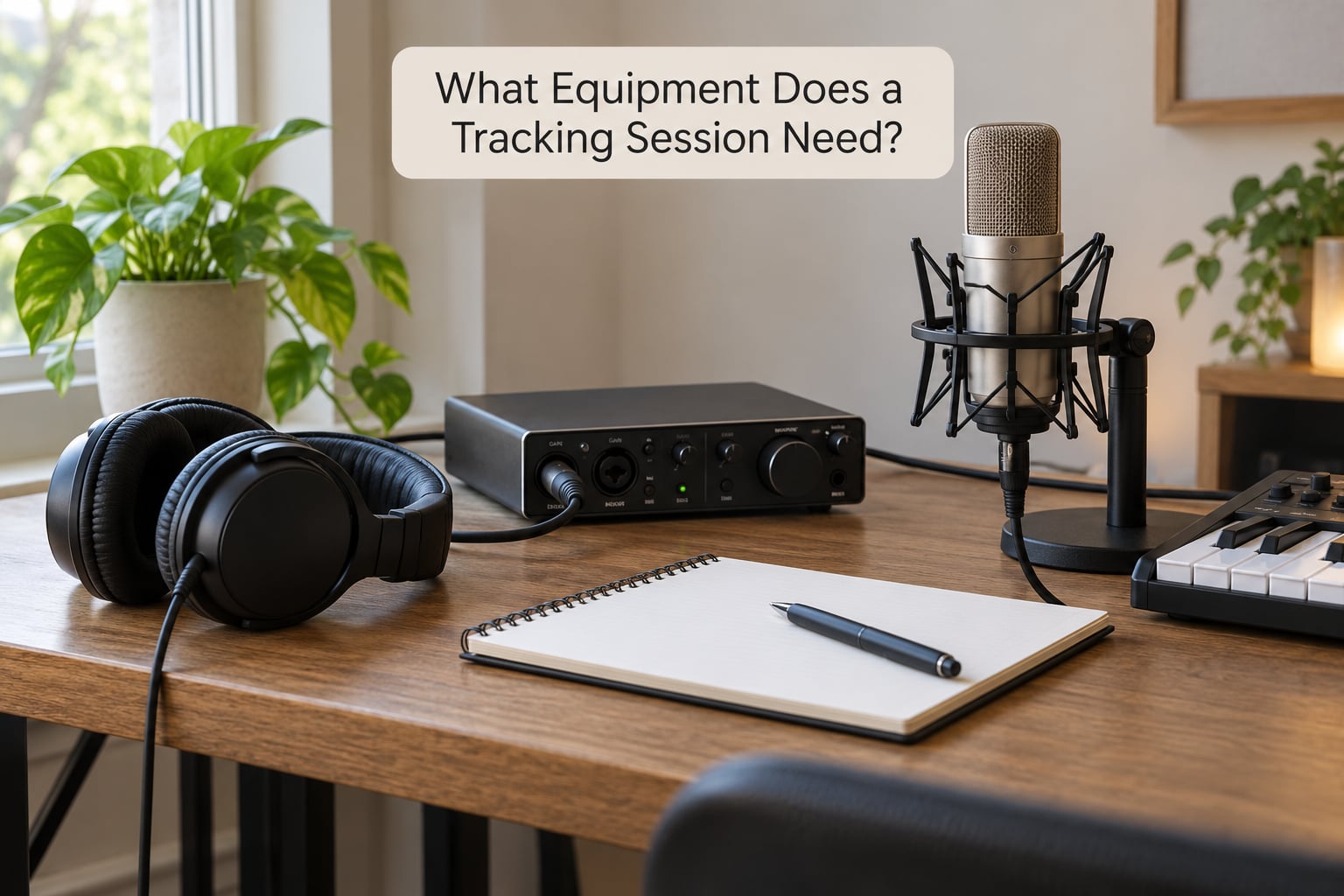
The essential list is shorter than most gear catalogs suggest, and every item on it has one job.
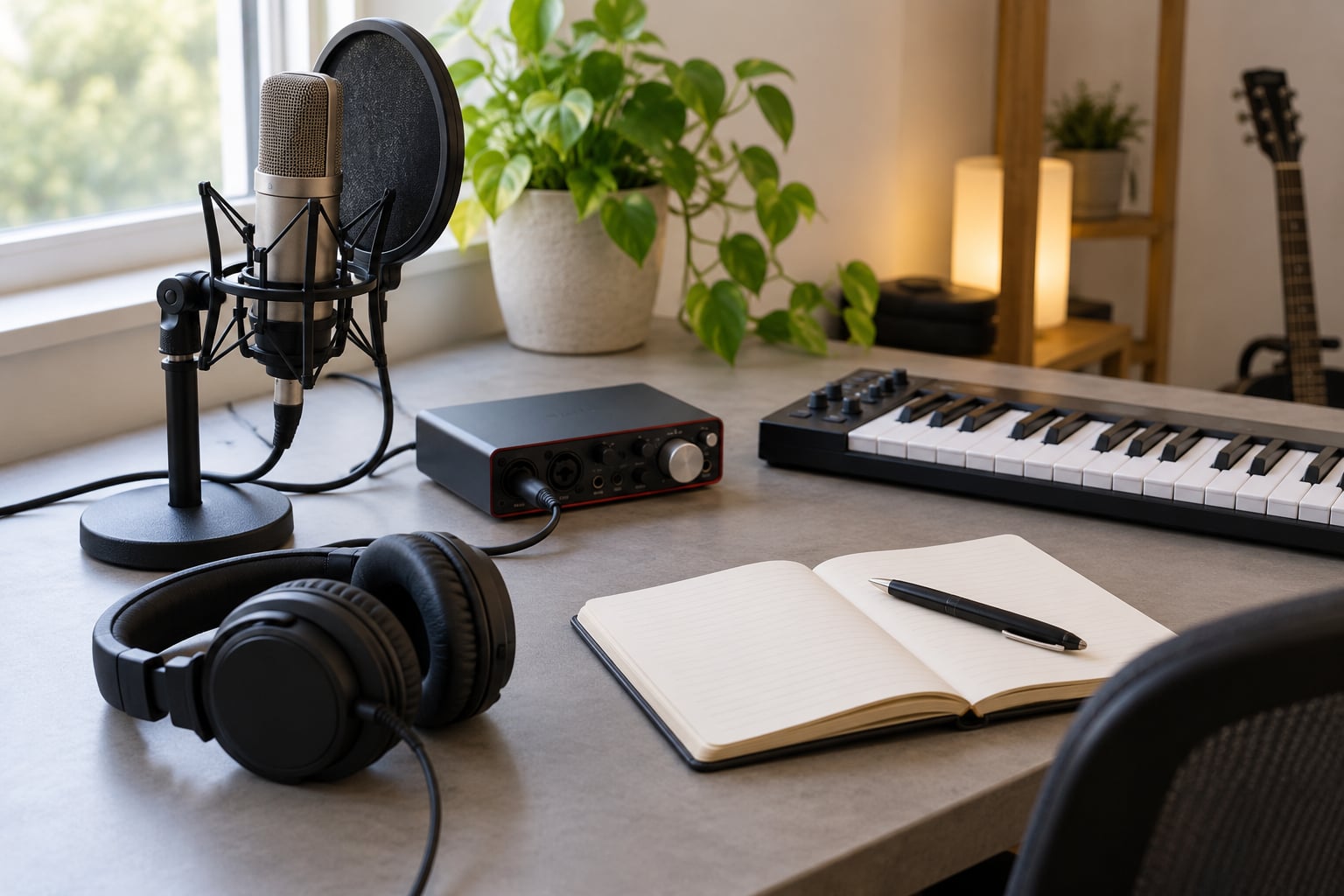
- Microphones. One that suits the source. A large diaphragm condenser for vocals and acoustic guitar, a dynamic for loud sources and close-miked drums, and a pair of small diaphragm condensers as overheads.
- Preamps or an audio interface. Converts the mic’s signal to digital at a usable level.
- Closed-back headphones. Monitoring with a closed-back pair keeps the click and cue mix audible without leaking into the mics.
- A DAW running the click. Pro Tools, Logic, Ableton, Reaper, Cubase and the rest all do this; the click, the tempo map and the takes list live here.
- Stands, cables, pop filter and a treated space. A bedroom closet with soft stuff hanging in it beats an untreated room with an expensive mic.
Optional but useful: an outboard preamp for a little colour, a second interface for tracking a band live, and a control surface for moving faders with real hands.
A professional studio adds a console, a treated live room, isolation booths, a good talkback, and an engineer who has done it a thousand times. A practical home setup is the interface, one microphone, headphones and a closet. Both can produce a finished basic track; only one lets five people play in the same bar at once.
How Long Does a Tracking Session Usually Last?
Most single-song basic tracks land somewhere between four and ten hours of studio time, and that is with everyone prepared.
A rough demo of one idea might take an hour. Lead vocals for a finished arrangement commonly take two to four hours once you count takes, comping and the inevitable re-singing of one line. A full rhythm section tracked properly runs longer than beginners expect, because engineers listen back after every pass and something usually moves.
Albums get scheduled per song rather than per record, which is the industry’s answer to the 60-hour surprise. If the parts are not learned, if the tempo changes halfway, or if the band wants to rethink the chorus, the schedule slips fast.
On cost, rates vary so much by city and room that any number I printed here would be wrong for half the readers. Studios quote hourly, often with a block-booking minimum, and the two figures worth asking are the hourly rate and the minimum commitment. If you book eight hours and use five, you still pay for eight.
How Do Artists Get the Best Performance in the Studio?
The best take is rarely the first one, and the worst thing you can do is stop at take one and call it done.
Warm up before you sing or before you play anything fast. Run scales, hum, say the lyrics out loud. Wear the headphones, play along with the click for ten minutes, and talk through the arrangement so the pulse is not new to your ears.
Ask about the headphone mix early. Players describe monitoring as a comfort tool, and when you cannot hear yourself properly you play quieter and looser without noticing.
Click tracks scare people. A useful distinction: the click is for precision, not personality. Play with it, but play like a drummer, not a metronome.
Communicate in specifics. “Looser” or “more committed” gets better takes than “do it again.” So does playing the take back immediately after the click, so a half-second of drift is obvious before it becomes a habit.
Keep the room comfortable. Temperature, water, breaks, and a door that closes properly. When artists freeze up in the booth it is rarely the microphone.
How to Tell Whether a Tracking Session Was Successful
A session worked when you can play the tracks start to finish, nobody wants to redo them, and the next stage has something solid to work with.
Concretely, that means usable performances rather than perfect ones, clean recordings with no hum, clicks or unwanted bleed, a takes list someone else can follow, an arrangement you could explain in one sentence, and a clear next step: comping, overdubs, or straight to a mix.
Before the room empties, ask for the session files and the multitracks. This is the step artists most often skip and regret months later, when stems have expired and the person who recorded them has moved on. Also ask for the printed tracksheet, the mic and preamp choices, the tunings, and any instrument settings that were dialled in. Nobody reconstructs that from memory in a year.
For remote and split tracking, treat the handover as more important. Bands recorded on different days and never met still finished records, but only because files and notes moved cleanly between rooms.
Frequently Asked Questions
What is a tracking session?
A tracking session is the studio time spent recording a song’s basic tracks, usually drums, bass, guitar and keys, one instrument at a time onto separate tracks. Lead vocals are often tracked in the same block or a later one. It happens before overdubbing, mixing and mastering, and it sets the groove, timing and arrangement everything else is built on.
What is tracking in music recording?
Tracking is capturing individual instruments or voices as separate recorded parts, normally following a click track and a headphone cue mix so everyone stays locked together. The word also means following a moving subject with a camera, which is a different discipline entirely. In a music context, tracking is the performance and capture stage, not the balance or polish stage.
What’s the difference between tracking and mixing?
Tracking decides what gets recorded and when it happens in time, producing clean basic tracks with the raw performance intact. Mixing happens after all parts are recorded and covers level balance, EQ, compression, effects, automation and arrangement choices. Tracking is about performance. Mixing is about making every part work together in the listener’s speakers.
What does it mean to track your vocals?
It means recording your vocal parts as their own audio tracks, usually one microphone at a time in a booth or a treated room, with headphones so you can hear the backing track. Most singers record several takes, then the engineer comps the strongest moments into a single clean vocal. Harmony lines and doubled parts are tracked separately and layered on top.
What does overdub mean in recording?
An overdub is any new part recorded after the basic tracks are already down, while you listen to what came before. Overdubbing is how harmonies, guitar layers, percussion, fixes and lead vocal alternatives get added. Tracking and overdubbing are the same activity on different days rather than different jobs, which is why engineers still argue about where the line sits.
What is a tracking script?
There is no standard audio-production term called a tracking script. Most people asking this mean either a track sheet, the written chart showing structure, parts and cues, or a click track script, a list of tempo and marker changes fed to the click during a session. If you saw the phrase in a contract or invoice, ask the studio what document they mean, because the term is not used consistently.
Start with one finished song, a click track, one microphone and a treated corner of a room. Get a clean, well-performed basic track, save the session twice, and write down what you did. Everything after that gets easier.