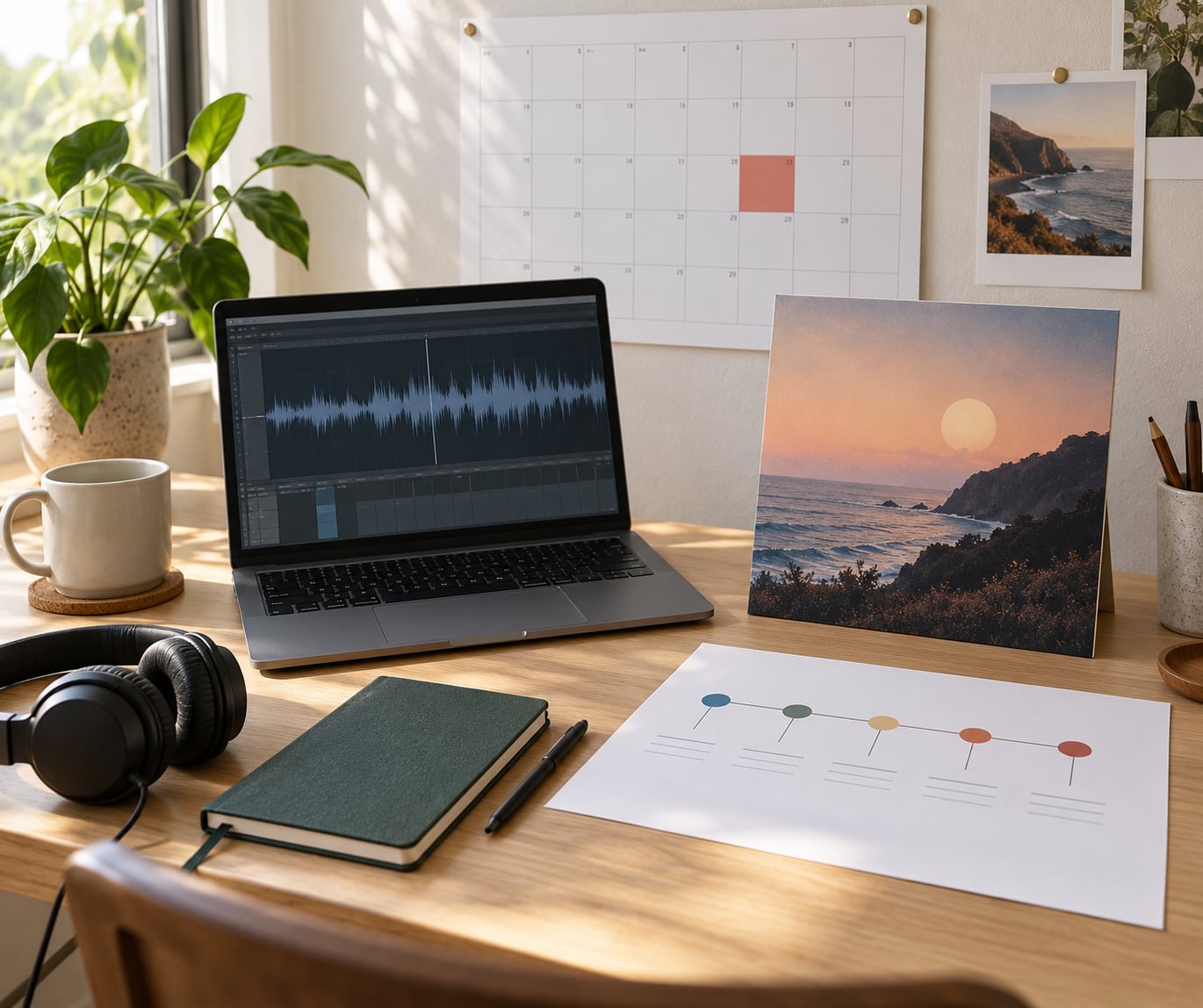
To plan a single release, work backward from a fixed release date and give every task a deadline, starting with the Spotify editorial pitch at least 7 days out. Eight weeks of lead time is the comfortable target, four weeks is the floor. The whole process fits on one page and takes a few focused sessions once you have the master finished.
A single release plan is not a launch day. It is a countdown with three phases: a pre-release phase where you lock the master, artwork and metadata and submit everything to a distributor, a release window covering the first 72 hours, and a post-release phase that runs four to six more weeks.
People get stuck because they treat it as one big question. Split it into nine, write a date next to each, and the overwhelm mostly disappears.
Table of Contents
- What You Need
- Step-by-Step: How to Plan a Single Release
- 1. Define the release goal and audience
- 2. Set the release date and build a backward timeline
- 3. Finish the song and confirm the master
- 4. Create the visual and written release package
- 5. Choose a distributor and prepare delivery
- 6. Plan the promotional campaign
- 7. Run the pre-release campaign
- 8. Execute release day
- 9. Follow up and measure results
- Common Mistakes
- Frequently Asked Questions
- Conclusion
What You Need
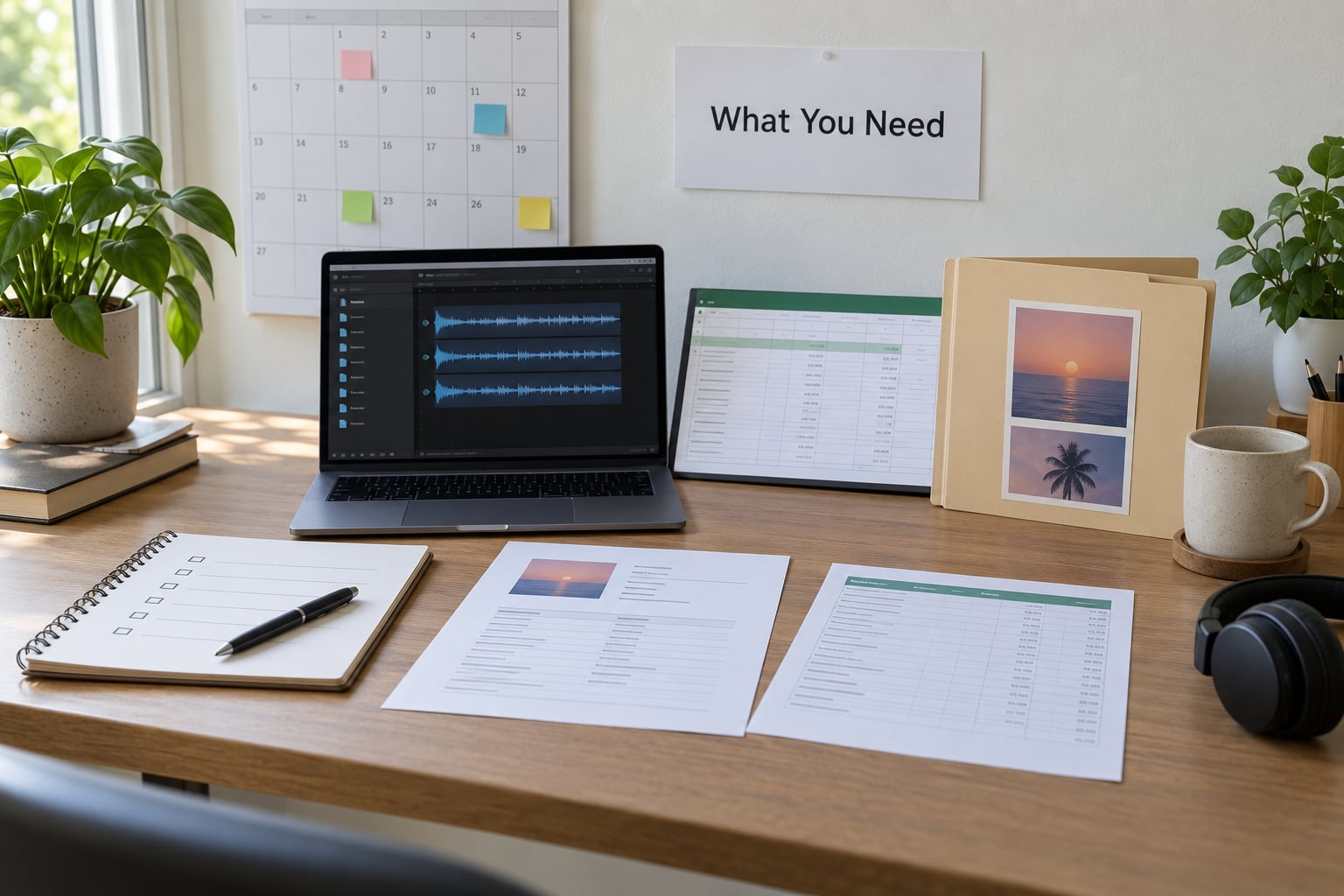
Before you schedule anything, gather six things: a finished master, a chosen release date, a distributor account, the visual assets, the written metadata, and a short list of people who will help.
The decisions. One primary goal for the release, written as a sentence you could read to a stranger. Growing a mailing list, landing a sync placement, and testing a new sound are three different campaigns and they need three different plans.
The files. A 44.1kHz 16-bit WAV master, a clean instrumental version, any vocal or instrumental stems, and a square cover image at 3000 by 3000 pixels with no logos, URLs or pricing text baked in. Keep an Atmos or lossless master too if your distributor offers it.
The written pack. Song title, artist name, songwriter credits and splits, ISRC, release date, primary and secondary genres, a two-line description, and lyrics in plain text.
The accounts. A distributor account, Spotify for Artists, Apple Music for Artists, your email platform, and whatever scheduling tool you actually use.
The people. A co-writer, a mix engineer, a mastering engineer, a photographer or designer, and a short list of playlist curators or creators whose audience overlaps yours.
The budget. Decide a ceiling before the distributor asks anything of you. Money can go to mastering, artwork, a short-run of physical units, small ad spend, and a submission service for film and television libraries. A zero-budget plan is completely workable — it just leans on relationships instead of paid placement.
Step-by-Step: How to Plan a Single Release
Work from the end. Pick the date first, then fill in every task backwards until you land on today. If a task falls before today, you either moved too late or you moved the date.
1. Define the release goal and audience
Write one goal per release, and name the listener it is for. “Build a list of 500 people who save songs in this subgenre” is a goal. “Get streams” is not.
Pick one primary objective and let everything else be secondary. If the goal is a sync placement, your plan leads with metadata and library submission. If the goal is audience growth, your plan leads with short-form video and a pre-save landing page.
Then describe the listener in one line: what they listen to now, where they find new music, and what would make them press play rather than scroll past.
2. Set the release date and build a backward timeline
Choose a Friday, give yourself eight weeks, and mark the deadline that governs everything else: the Spotify for Artists editorial pitch must be submitted at least 7 days before release, and many teams treat 2 to 3 weeks as safer because it leaves room for a rejection and a resubmission.
Avoid dates with heavy competition — the biggest releases of the year and holiday periods when listening drops. Do not chase a specific festival or playlist date either; those move constantly.
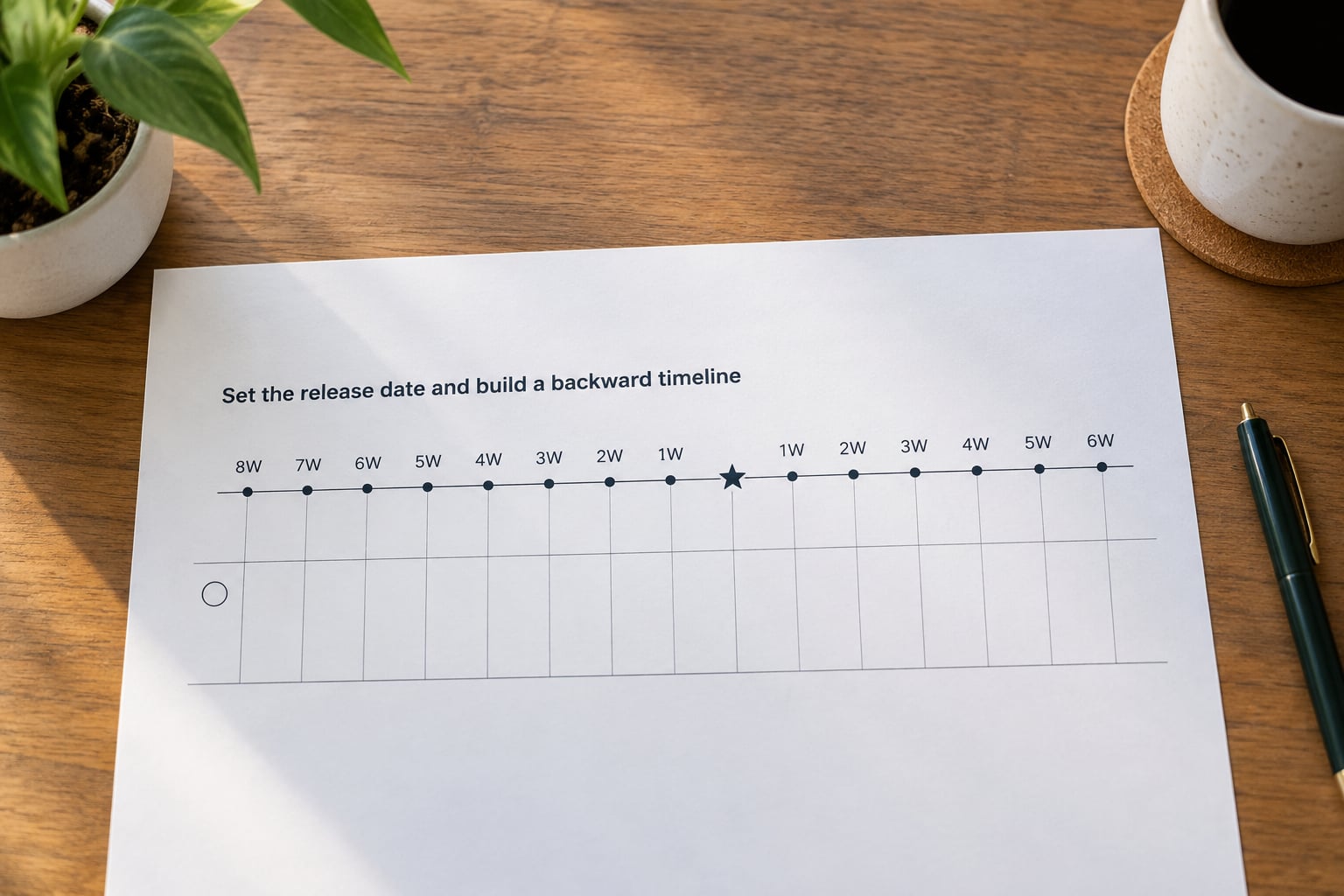
Here is the countdown that does most of the work. Adapt the rows, keep the order.
| When | Task | Why it sits here |
|---|---|---|
| 8 weeks out | Goal set, release date chosen, distributor account opened | Everything else hangs off these two |
| 7 weeks out | Final mix approved, mastering booked, artwork commissioned | Artwork takes longer than most people expect |
| 6 weeks out | Master delivered, split sheets signed, metadata drafted | Splits are the single most common cause of a delayed release |
| 5 weeks out | Track uploaded to distributor, release scheduled, ISRC assigned | Distributors need days to process and can hold delivery |
| 4 weeks out | Pre-save link live with email capture, announcement post published | Pre-saves accumulate for weeks before they convert |
| 3 weeks out | Short-form clips seeded with 2 to 3 creators, press kit sent | Creators need lead time to make something original |
| 2 weeks out | Spotify for Artists pitch submitted, Release Radar opt-in confirmed | Hard 7-day deadline, earlier is safer |
| 1 week out | Links checked on every platform, countdown posts, listening-party invites | Link rot is embarrassingly common |
| Release day | Watch the first 72 hours: saves, completion rate, shares, comments | Signals here drive algorithmic testing |
| Weeks 2 to 6 | Second-wave content, curator outreach with real numbers, sync submissions | Most artists go silent here and lose momentum |
3. Finish the song and confirm the master
Lock the arrangement, print final vocals, get the mix approved and master it. Then confirm the technical specifications match what your distributor asked for, usually a 44.1kHz 16-bit or 24-bit WAV.
Archive the release master, the instrumental, the stems and the project file in at least two places. You will want the instrumental for sync pitching and for creators who make karaoke-style and instrumental content, and the stems for anyone remixing later.
Listen once on headphones, once on a phone speaker, and once in a car. If something is wrong, fix it now — it is a fraction of the cost after the release is live.
4. Create the visual and written release package
Plan the cover, photos, graphics and video so every channel gets something consistent. One cover, one colour palette, one font, and every asset cut from that system.
Budget for these assets: a square cover at 3000 by 3000 pixels, vertical clips in 9:16 for short-form video, a horizontal still for streaming pages, a press photo, and a Spotify Canvas if you have the video skills to make one. Keep text off the cover itself so it does not get cropped on different surfaces.
Write the metadata in one document and reuse it everywhere: a short hook, a longer description, the credits, and lyrics in plain text. Streaming pages and social posts should say the same thing in the same order.
5. Choose a distributor and prepare delivery
Use a distributor. Uploading to streaming services directly is not available to most independent artists, and a distributor handles delivery, royalty collection and store metadata for you.
Compare the main options on the things that actually differ: whether they charge per year or per release, whether they take a cut of royalties or a fee per sale, whether they handle lyric and Canvas delivery, how fast approval is, and whether they let you keep streaming and download access permanently. DistroKid, TuneCore and CDbaby all have long track records, and newer options sometimes win on price alone — check the current terms directly rather than trusting a number you read a long time ago.
Confirm ownership before you upload. Read what happens to your rights if you leave, and keep your ISRC so the same recording keeps its identity across future releases.
Enter the metadata carefully. A misspelled songwriter credit or a wrong genre can keep a track from appearing in the right algorithmic tests for months.
Request pre-save or pre-add delivery when your distributor supports it, and set up the smartlink that collects every platform in one place.
6. Plan the promotional campaign
Map the campaign to five repeatable content moments instead of a month of daily posting. The announcement, the pre-release story, the listening-party invitation, the release post, and the post-release content.
For each moment, decide the format, the hook, the channel and the asset it needs. One strong idea repeated in five shapes beats five half-thoughts. Most independent artists win by producing six to eight genuinely well-promoted songs a year rather than a much larger number of rushed ones.
7. Run the pre-release campaign
Publish your strongest planned content before launch, then leave it alone. The three weeks before release are for seeding, not for panicking.
Send 2 to 3 short vertical clips to creators whose audience matches yours, with a pre-save link attached. Creators post better when they have real lead time, and a creator post on release day competes with every other release day post.
Pitch editorial through Spotify for Artists with unfinished private playlist links, a short description of the sound and the story, and your most useful socials. Pitch to independent curators too, and send your press kit — a short bio, a press photo, the artwork, and a clean one-paragraph description.
Watch early responses without rewriting the plan. A post that underperforms is information, not a verdict.
8. Execute release day
Run release day as a checklist in order, not as a day of reacting.
First, confirm the distributor approved the release and the track is live on every platform you care about. Then open Spotify for Artists and check Release Radar numbers, then verify the smartlink and every pre-save link resolves. Then post: the release post on every channel, the email to your list, the website and bio update, and the listening-party invitation. Finally, monitor saves, completion rate, playlist adds and comments for the first few hours and reply to every comment.
If something is missing from a store, check the distributor status first. Most delays are a metadata or rights issue, and most resolve within a few days once flagged.
9. Follow up and measure results
Compare your numbers against the goal you set in step 1, not against somebody else’s release. Save rate and completion rate tell you far more than raw stream count — those are the signals streaming platforms reward when they decide whether to test a track further.
Keep posting for four to six weeks. Publish a different version, a live take, a production breakdown, or a reaction clip. Pitch curators again, this time with real listener numbers attached, because a pitch backed by data converts better after release than before it.
Submit to sync libraries, note what worked and what flopped, and write both down. Then decide honestly whether this single earned a second one.
Common Mistakes
Seven errors show up again and again in release planning. Each one has a straightforward fix.
- No written goal. Everything after it becomes guesswork. Fix: write one sentence stating what this single is for, before you choose a date.
- Late delivery to the distributor. Uploading the week of release compresses pitching to zero and kills your pre-save window. Fix: schedule at least four to five weeks out.
- Inconsistent metadata. A different title or feature credit in one store makes the release look unfinished. Fix: one metadata document, used everywhere, checked once before delivery.
- Weak or inconsistent artwork. A cover that does not match the social graphics makes a release look improvised. Fix: design one system and cut every asset from it.
- An overbuilt rollout plan. Thirty channels for a track with no audience is exhausting and produces nothing. Fix: five repeatable moments on the two or three channels you actually use.
- Relying on one platform. Some of your listeners will never open the service you optimise for. Fix: push to a smartlink and bring email, social and your own site into the mix.
- Judging it too soon. Plenty of tracks gain real traction a month later. Fix: hold your verdict until six weeks after release.
A few habits help more than anything in that list: write the deadline next to every task, name one person responsible for each item, and build one week of slack into the timeline.
Frequently Asked Questions
How far in advance should I plan a single release?
Plan a single release eight weeks ahead if you can, and treat four weeks as the minimum. That buffer covers mastering, artwork, split sheets, distributor processing and the Spotify for Artists editorial pitch, which must be submitted at least 7 days before release. Eight weeks also leaves room to pitch a rejected track again and still make the date.
How much does it cost to release a single?
A self-released single can cost almost nothing if you already own the audio and make your own artwork, since the main expense is the distributor’s annual or per-release fee. Most artists spend more once they add paid mastering, a designer, physical units or small ad campaigns. Set a ceiling before you open a distributor account so the plan matches the budget.
Should I use a distributor or upload the song myself?
Use a distributor. Direct delivery to streaming stores is limited, and a distributor handles delivery, royalty collection, payouts and store metadata for you. Compare plans on pricing model, royalty cuts, approval speed and whether lyrics and Canvas delivery are included, then read the current terms rather than old pricing articles.
What time of day should I release a single?
Release on a Friday, and let the platforms handle the rest. Friday morning in your listener’s time zone is the long-standing convention because it captures the weekend listening window and the following Monday playlist cycles. What matters far more is the date you chose and the quality of your pre-release work, not the hour you hit publish.
How soon should I release another single after the first one?
Four to eight weeks is the workable range, which gives each track time to gather saves and playlist adds before the next one arrives. Releasing weekly leaves no room for any song to catch. If a single is still growing after six weeks, hold the next release rather than cutting its momentum short.
Conclusion
To plan a single release, start with three actions today: write the one-sentence goal, pick the release date and work backwards eight weeks from it, then mark the Spotify editorial pitch deadline seven days out. Everything else — artwork, metadata, distributor delivery, content, follow-up — hangs off those three decisions.