Learning how to work with a recording engineer comes down to three things: a defined goal for the song, materials that arrive finished, and feedback written in specific language. Get those right and a first session runs like a rehearsal instead of a search for sounds. Get them wrong and you pay for hours where nobody is recording.
Most independent artists learn this the expensive way, once. The good news is that almost every frustration reported in studio forums traces back to something you could have written down before booking. This guide walks through the whole arc, from deciding what you need to backing up your files, and it is written from the artist side of the glass, which is the angle most of the advice you will find online skips.
What You Need
Before you contact anyone, you need six things in hand: a written goal for the song, reference tracks, a locked arrangement, clean session files, a lyric sheet or chord chart, and a real schedule. That list is short, but every item saves billed studio time when it is missing.
- A one-sentence goal. Capture a raw performance for your own use, make a demo for a label, or finish a release-ready mix. These are three different jobs with different people.
- Two or three reference tracks. Named songs an engineer can pull up, chosen for specific musical traits rather than general mood.
- A locked arrangement. Song structure, key, tempo and any tempo changes decided before anyone plugs in a microphone.
- Session files at full quality. 24-bit, 48 kHz, no normalization, no clipping, individual tracks rather than a flattened bounce.
- A lyric sheet or chord chart printed or on a screen the engineer can see from the vocal booth.
- A schedule with slack. Know how many hours the song realistically needs, then book a little more than that. Studios bill from setup, not from the first take.
Step-by-Step
Here is the full process, in the order it actually happens. Each step includes the small sign that tells you it worked.
1. Define the Song’s Goal
Start by deciding what the recording is for, because that choice determines who you book and what you pay for. Recording, mixing, mastering and full production are separate services with separate deliverables, and asking for one while hoping to get another is the most common source of disappointment.
Say it in a sentence before you send it: capture one song with the band playing together, or record scratch vocals this week and mix it in six. Engineers regularly describe self-produced artists arriving without a clear ask, which forces them to guess, and guessing costs you money.
It worked when the engineer can repeat your goal back to you accurately on the first call.
2. Choose the Right Engineer
Pick by credits in your genre, by the way they communicate, and by whether they can do the specific job you booked. A great tracking engineer who does not mix is not the wrong choice; they are just the wrong person for the mix.
Look at three things before you commit: work that sounds like what you want, reviews or credits that match your genre, and a sample rate and DAW setup you can deliver into. Pro Tools is the industry default, but any DAW works if files arrive clean and correctly formatted.
The most reliable test is a paid trial session, one song or one movement. Artists report this consistently as the fastest way to find out whether the working relationship works before committing an album. Listen to what you get back for the noise floor, for bleed from the wrong source, and for level consistency across takes.
It worked when the trial file sounds usable to you, not just impressive to someone who knows microphones.
3. Share References and Musical Direction
Send named references with a sentence about what you want from each one, because a reference without a reason gets interpreted rather than used. “Make it sound like this” is a starting point, not a brief.
Be specific about the attributes you actually care about:
- Vocal tone and emotion, plus whether you want the performance intimate or big.
- Drum feel, whether the kit should sound tight and close or live and roomy.
- Bass movement, melodic and busy or simple and supportive.
- Guitar texture, clean and chiming or deliberately noisy.
- Space and depth, dry and up front or drenched in reverb and delay.
- Energy, restrained and controlled or loud and relentless.
It worked when the engineer can name the musical decisions behind those choices, not just the gear.
4. Prepare the Arrangement and Session Files
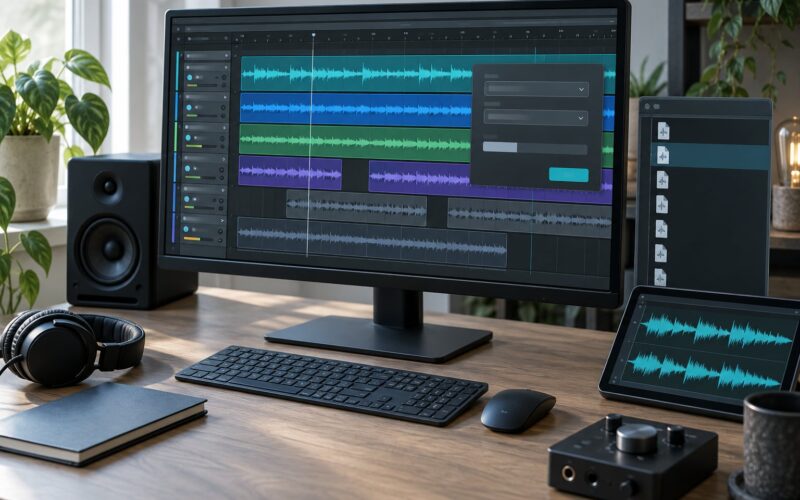
Hand over stems that are labelled, consistent and unprocessed, because an engineer should never have to guess what a file called final_v3_REAL is. Missing stems and unlabelled exports are the two complaints engineers raise most often about incoming work.
Send every track at the same sample rate and bit depth, with nothing normalized or limited. Include a tempo map if the song changes speed, and note the key, even if you plan to tune later. Mark which takes are favorites and which parts you want replaced.
Engineers on audio forums ask for the same four things: finished pre-production, clean stems, named references, and an agreed number of revision rounds. Send all four in writing before the session starts.
It worked when the engineer opens the project and starts working without asking a single setup question.
5. Confirm Roles, Rates, and Session Scope
Get the commercial details confirmed in writing before you pay a deposit: who is doing exactly what, how billing starts, how many hours are reserved, what is included, and what happens if you run over.
Billing models differ, and the differences matter. Hourly studio time includes setup, sound check and breaks, and the clock often starts when you are not in the room. A flat-fee mix or master is quoted per song and usually includes a set number of revision rounds. A production package bundles tracking, editing, mixing and mastering into one price, which is efficient but commits you to one team’s decisions.
Ask who owns the files. Under a work-for-hire arrangement you own what you paid for, and you owe no residuals or royalties to the engineer or the studio. That session project file should be yours, and getting a copy is a reasonable expectation, not an insult.
It worked when the invoice matches the conversation you had before booking.
6. Record and Direct the Performance
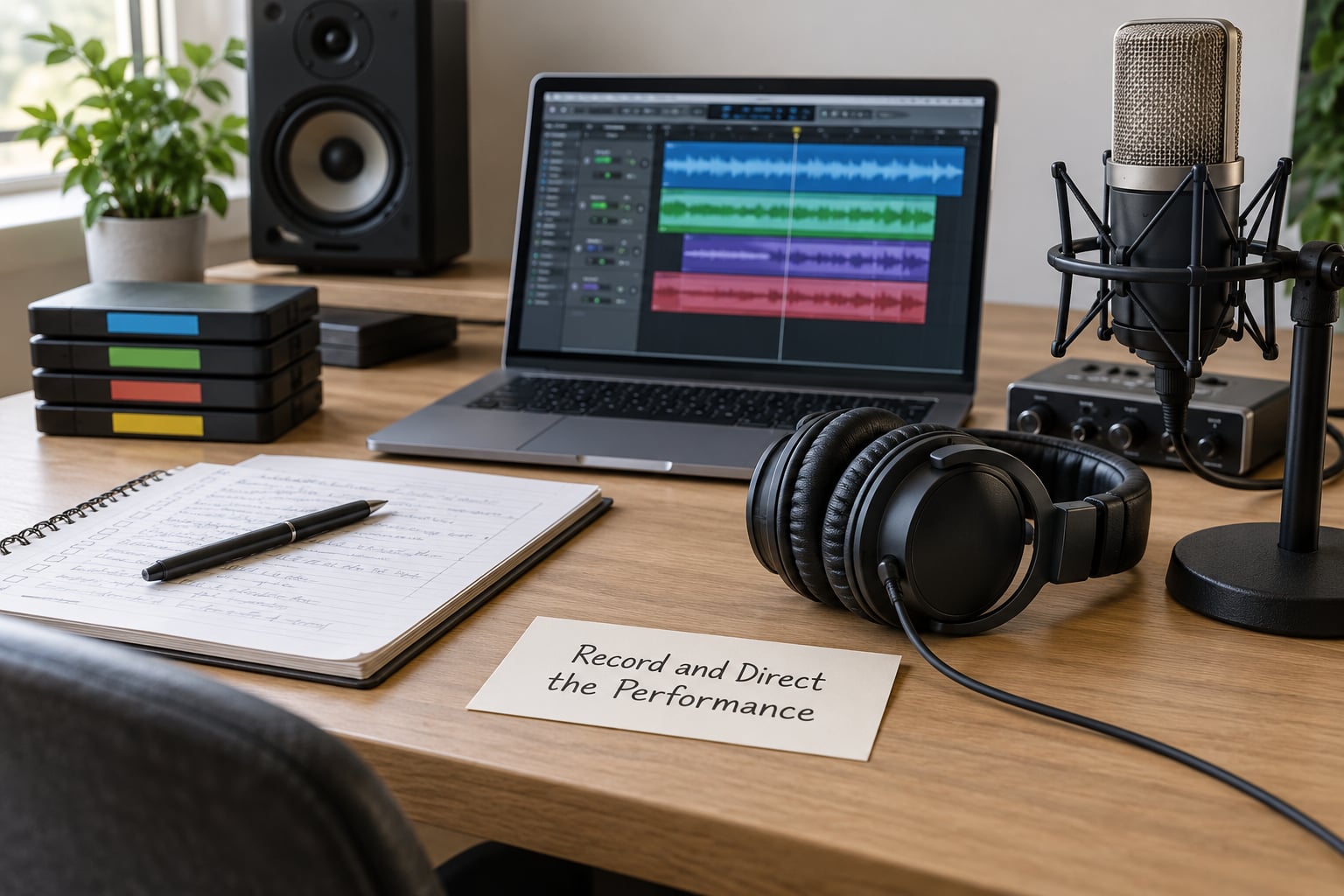
The engineer’s job during the session is to protect your performance from bad acoustics, bad levels and bad takes, which means you should spend your energy on direction rather than on equipment opinions. Tell them when something feels wrong before you have no take left.
Ask for the first 20 to 30 minutes to be the sound check and headphone mix. You want to hear yourself in headphones roughly the way you will hear it in the mix, with enough level to perform against and not so much that you push. Walk the room, stand where the microphone is, and hear the space.
Keep the talking reasonable. Engineers describe their ideal client as one who is prepared and decisive, not one who narrates every decision. Say what you want, then let the engineer solve the how. If you disagree with a microphone choice, ask to hear an alternative rather than refusing outright; most engineers will try a second option because it takes two minutes.
It worked when takes are logged, you can hear playback of any take, and nobody in the room is guessing.
7. Review the Mix with Specific Feedback
Review the rough mix on a decent system at a normal level, then compare it against your references. Feedback works when it names a moment, a track and a direction instead of describing a feeling.
Weak: “The vocals feel weird.” Strong: “At the second chorus the lead vocal sits behind the harmony stack; I want it forward and drier, closer to the bridge.”
Use the vocabulary you already have. Balance means who is louder than whom, tone means brightness and warmth, space means reverb and depth, energy means how hard the track pushes. You do not need to name a plugin to make a useful request.
Respect the revision rounds you agreed on. One round means one consolidated list of changes, not a trickle of messages across a week. Send every note at once so the engineer can see how the pieces affect each other.
It worked when each note could be acted on without a follow-up question.
8. Approve and Archive the Final Files
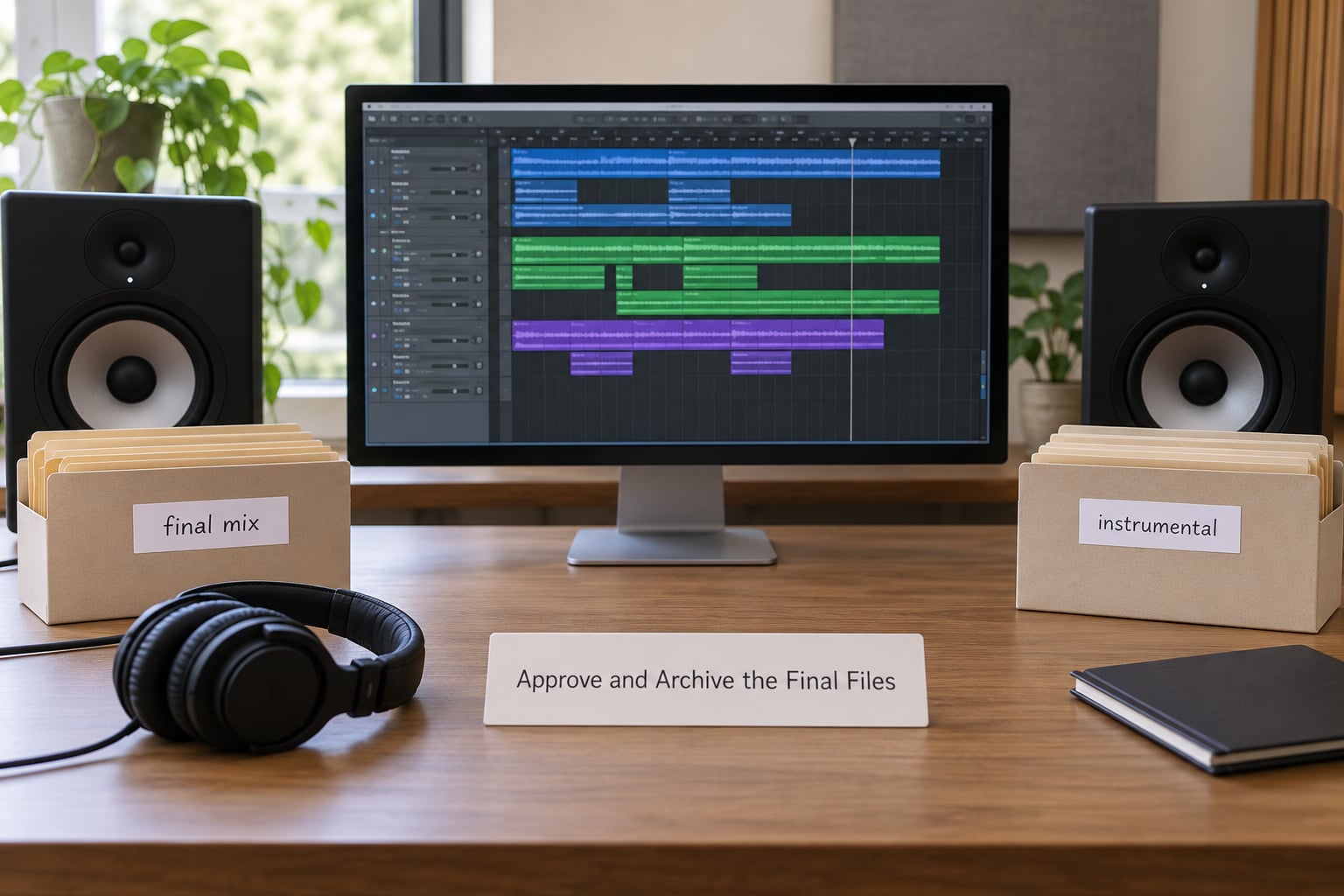
Before you leave or close the project, confirm what you are receiving: the final master, an instrumental version, and any alternate mixes you asked for. Ask for a copy of the session project files too, because a session that lives only on the studio drive is a session you cannot revisit.
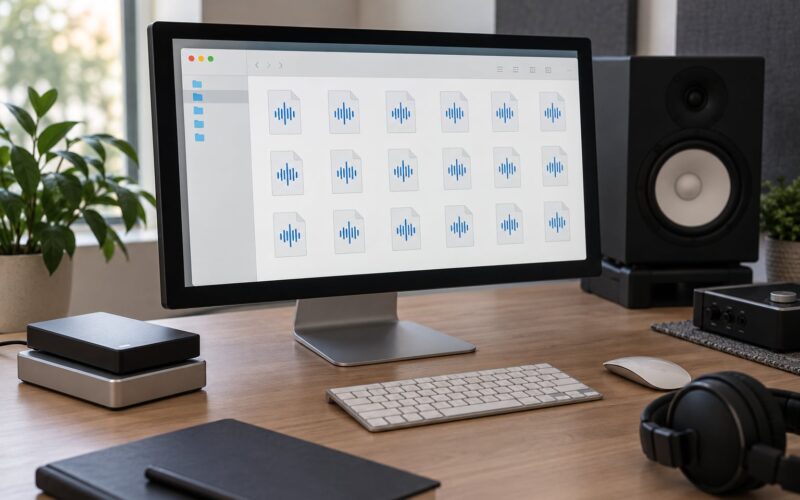
Organize everything on your own drive before you close the laptop. Name folders clearly, keep the raw session separate from the mixes, and run a backup that you have verified by opening a file from it. Most lost work is lost to a drive failure nobody planned for.
It worked when you can find any version of the song within a minute, six months later.
The same rules apply when you work with an engineer entirely online. File exchange replaces the control room, so clean stems, named versions and written notes matter even more. Expect video calls for playback review, and agree in advance how long you have to respond to a mix so the schedule does not stall.
Common Mistakes
Almost every bad session traces to one of these, and every one has a straightforward fix.
- Arriving without a decision on the song. Fix: lock the arrangement and key before you book, not during the session.
- Unlabelled or wrong-format stems. Fix: consistent naming, full-resolution exports, no normalization.
- References with no explanation. Fix: name the track, then say what you want from it.
- Vague feedback. Fix: timestamp it, name the track, state the direction.
- Leaving in the middle of a session. Fix: stay or reschedule. The bill runs whether you are there or not.
- Assuming the engineer will fix a weak performance in post. Fix: rehearsal first. Engineering cannot rescue a song that has no arrangement.
- Never asking for the session files. Fix: request a copy of the project before the session ends.
- Endless revisions past the agreed rounds. Fix: batch your notes, count the rounds, decide on a reasonable extra cost in advance.
Frequently Asked Questions
What does a recording engineer actually do?
A recording engineer runs the technical side of a session. They choose and place microphones, set gain levels, operate the console and digital audio workstation, control headphone mixes, log takes and edit them. Their real job is protecting your performance from bad acoustics and bad levels so the material is usable in the mix.
Do I need to be in the studio while the engineer works?
For tracking, yes. Your performance is the deliverable and the engineer needs you in the room for direction, takes and comps. For mixing and mastering, no. Most engineers work from the stems and send rough mixes for review, so you can be anywhere with a good pair of headphones and a reliable file transfer.
How much does a recording session usually cost?
Cost depends on region, studio size and whether you book a room or just an engineer. Hourly studio time typically includes setup, sound check and breaks, and some studios bill whether or not you are present. Mixing and mastering are usually quoted per song with a set number of revision rounds. Ask for a written scope so the invoice matches the quote.
What should I bring to my first studio session?
Bring your session files on a labeled drive or hard drive, two or three reference tracks, a printed lyric sheet or chord chart, your own cables and microphone if you have one, water, and comfortable clothes. Arrive early enough to walk the room and do a sound check before the clock matters to anyone.
How many revision rounds should I have with my engineer?
Two rounds is the most common arrangement: one consolidated list of changes after the first mix, and one follow-up to check the changes together. Agree the number before work starts and know what an extra round costs. Sending notes in one batch instead of a trickle of messages makes each round far more productive.
Do I get the session files from my engineer?
You should. Under a work-for-hire arrangement you own what you paid for, and the session project is part of that. If an engineer refuses to hand over the project file, treat it as a serious warning sign. Ask for a copy of the session at the end of every day, then back it up to your own drive.
Conclusion
Write down what the recording is for, choose two reference tracks and explain why you chose them, then find an engineer whose credits point in that direction. That is the first action, and it takes an evening rather than a studio day.
Everything after that follows from the same habit: make the artist’s decisions in advance so the engineer’s decisions stay technical. Artists who prepare arrive with a session instead of a search, and those sessions are the ones that finish. Updated for 2026.