R&B production has moved through four technical eras, and each one left a permanent mark on how records are made. Live-band two-track tape sessions gave way to analog synthesizers and drum machines, then to DAWs and sampling, and now to streaming-era mixes built around 808s, vocal stacks and loudness targets. Understanding how r and b production has changed matters because every shift came from a tool, not a mood.
I have spent the last decade in rooms where Motown-tinged mixes were rebuilt from scratch, so I hear these shifts as decisions an engineer actually makes. Not eras as vibes, but choices about where the low end lives and how much room the vocal gets.
Table of Contents
- How r and b production has changed at a glance
- How modern R&B differs from classic soul and early R&B
- The 7 biggest production shifts
- 1. Drums moved from human feel to hybrid precision
- 2. Harmony became wider, softer, and more modular
- 3. Synths and low frequencies became central to the palette
- 4. Vocals shifted from polished performances to detailed effects chains
- How R&B production moved from studios to DAWs
- 5. Production became faster, denser, and more iterative
- 6. Sampling and interpolation reshaped songwriting
- 7. Genre boundaries became more fluid
- What stayed important throughout R&B production history
- How to identify the production style behind an R&B record
- Frequently Asked Questions
- What changed the most in Ru0026amp;B production?
- Do modern producers need analog equipment to make professional Ru0026amp;B?
- How did DAWs change the way Ru0026amp;B records are produced?
- Does using samples make modern Ru0026amp;B production less original?
- How can a new producer learn from classic Ru0026amp;B records?
- Conclusion
How r and b production has changed at a glance
The table below is the fastest way to see the whole arc. Each row is an era, the technology that dominated it, how a session ran, and the sonic trace it left on modern records.
| Era | Dominant technology | Session workflow | Signature sonic trait |
|---|---|---|---|
| 1940s-1950s | Two-track and acetate discs | Live band, single takes, few edits | Breath, mic bleed, human swing |
| 1960s | Multitrack tape, 24-track | Overdubbed parts, live rooms, string and horn arrangements | Dense, warm, wall-of-sound mixes |
| 1970s | Analog synths, tape saturation | Sequenced electric parts, funk basslines, four-on-the-floor | Punchy low end, long instrumental passages |
| 1980s | Drum machines, sequencers | Programmed grooves, sampled keys, synth bass | Mechanical precision, new jack swing |
| 1990s-2000s | DAWs, samplers, SP-1200 | Chopped samples, infinite takes, cheap revision | Hip-hop fusion, filtered soul loops |
| 2010s-2020s | Auto-tune, streaming, unlimited plug-ins | Playlist-first writing, layered vocal stacks, rapid versioning | Dark pads, sub-heavy low end, hard tuning |
Notice what does not appear in the table: acoustic pianos and real vocalists. Those survived every row, which tells you something about where the real continuity lives.
How modern R&B differs from classic soul and early R&B
Classic soul and early R&B were recorded by groups playing at once, in rooms, with everything visible in the same place. A bass player and a drummer locked to each other because they could hear and feel each other, not because a grid said they should. Editing meant cutting tape with a razor blade, so decisions were final by default.
That baseline carried a lot of character with it. Bleed between mics made the room audible, which softened transients and gave drums a rounded edge. A bass part recorded slightly late still sat well because the ear forgave it. Billboard’s 1948 move from race records to rhythm and blues is a chart-cataloguing change, but the sound itself changed later and faster than the label did.
The Great Migration moved musicians north and put black gospel harmony into a popular song format, and that harmonic language is still the spine of contemporary R&B. What is different now is everything downstream of the arrangement: how the parts are captured, edited, tuned and delivered.
The 7 biggest production shifts
Each of these is a change in method, not a ranking of quality. Older is not better, and newer is not automatically more impressive. They are different tools pointed at the same job.
1. Drums moved from human feel to hybrid precision
Drums went from a live player to a layered hybrid that is neither one nor the other. A drummer records a take with real dynamics, then a producer quantises it lightly and layers a programmed kick and 808 underneath to give the low end weight the room mic could not.
The vocabulary grew too. Ghost notes, brushed drags and loose snare placement come straight from the live tradition. On top of that sit trap rolls, sixteenth-note hi-hat patterns and layered percussion stems borrowed from hip-hop. Producers on r/Makinghiphop and r/AdvancedProduction trade chops for exactly this kind of hybrid, and the recurring complaint is that beginners reach for a stock preset kit that sounds like generic pop instead of adding real dynamics.
One practical recipe that holds up: lay a single room mic over the live kit for air and transients, keep the programmed kick sub-layered and mostly out of the way, then sidechain the pads and bass lightly to the kick so the low end still breathes.
2. Harmony became wider, softer, and more modular
Chord voicings moved from tightly clustered soul arrangements toward wider intervals, extended chords and melodic bass lines that carry the harmony on their own. A producer can now spread one chord across a pad, a Rhodes-type electric key and a vocal layer and still leave space in the middle.
Modularity is the bigger change. Because everything is a separate audio file, an arrangement can ship as stems and be reconfigured without re-recording. The same vocal idea can sit alone, doubled an octave down, or run through a tape delay as an instrument rather than as a lyric.
Negative space is the part newcomers miss. Forum feedback on first R&B tracks keeps coming back to arrangement, not the beat itself, and dense mixes are the most common note engineers leave. Removing a layer fixes more problems than adding a plug-in.
3. Synths and low frequencies became central to the palette
The low end used to be an upright or electric bass recorded through an amplifier. Now it is often a synthesised sub with a separate layer for harmonic content, and that single decision explains a lot about how modern records feel on headphones.
The synthesiser lineage runs from analog voices with Prophet-style warmth to Juno-style poly patches and FM textures that give R&B its glassy edge on hooks. Sampling added a third path: chop a chorus, stretch it, tune it, and you have a new melody without a session. Forum producers consistently describe R&B melodic work as leaning on warm, filtered emulations rather than aggressive leads, which matches what you hear in alt-R&B records.
Watch the interaction between sub and kick. Both live in the same octave, and beginners lose all definition there first.
4. Vocals shifted from polished performances to detailed effects chains
Vocal production went from capturing a good take and comping it to building an entire instrument from one performance. The chain is longer now: tuning, layered compression, de-essing, saturation, short and long reverbs, delays tuned to tempo, and stacks of the same line at different octaves.
Hard tuning is the most audible marker of the last fifteen years, and it divided the room into two camps. Supporters hear perfect intonation and controlled vibrato. Critics hear the singer disappear. Both hear the same processing, which is why it is worth learning to dial it back rather than on or off.
Ad-libs and breath layers are the other half of the shift. The lead vocal is no longer a finished statement on its own; it is one layer in a stack that a mix engineer balances like an arrangement.
How R&B production moved from studios to DAWs
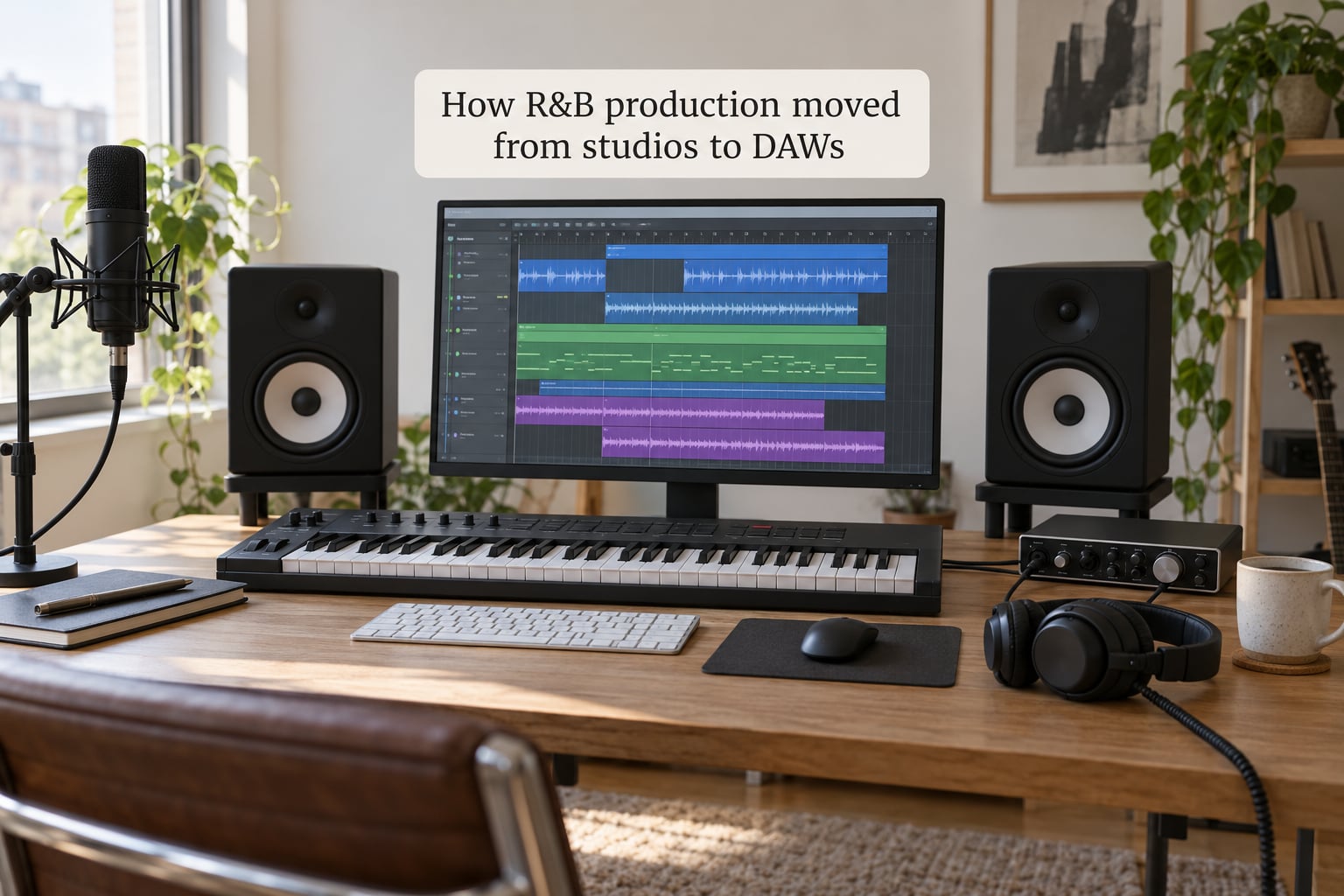
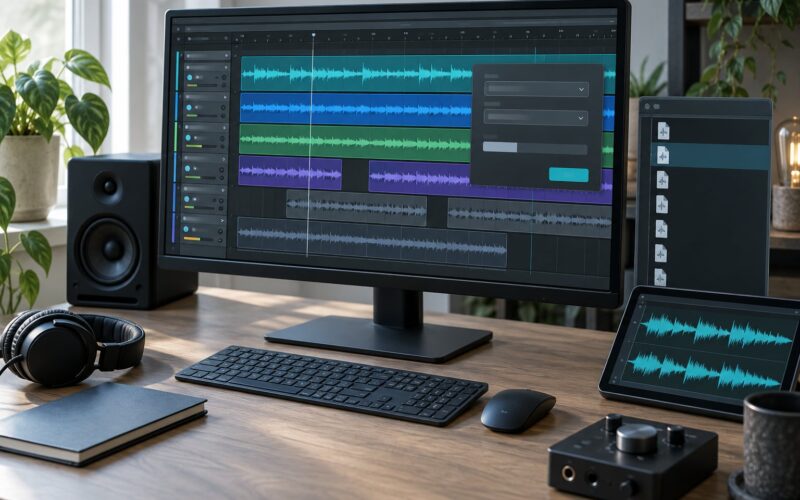
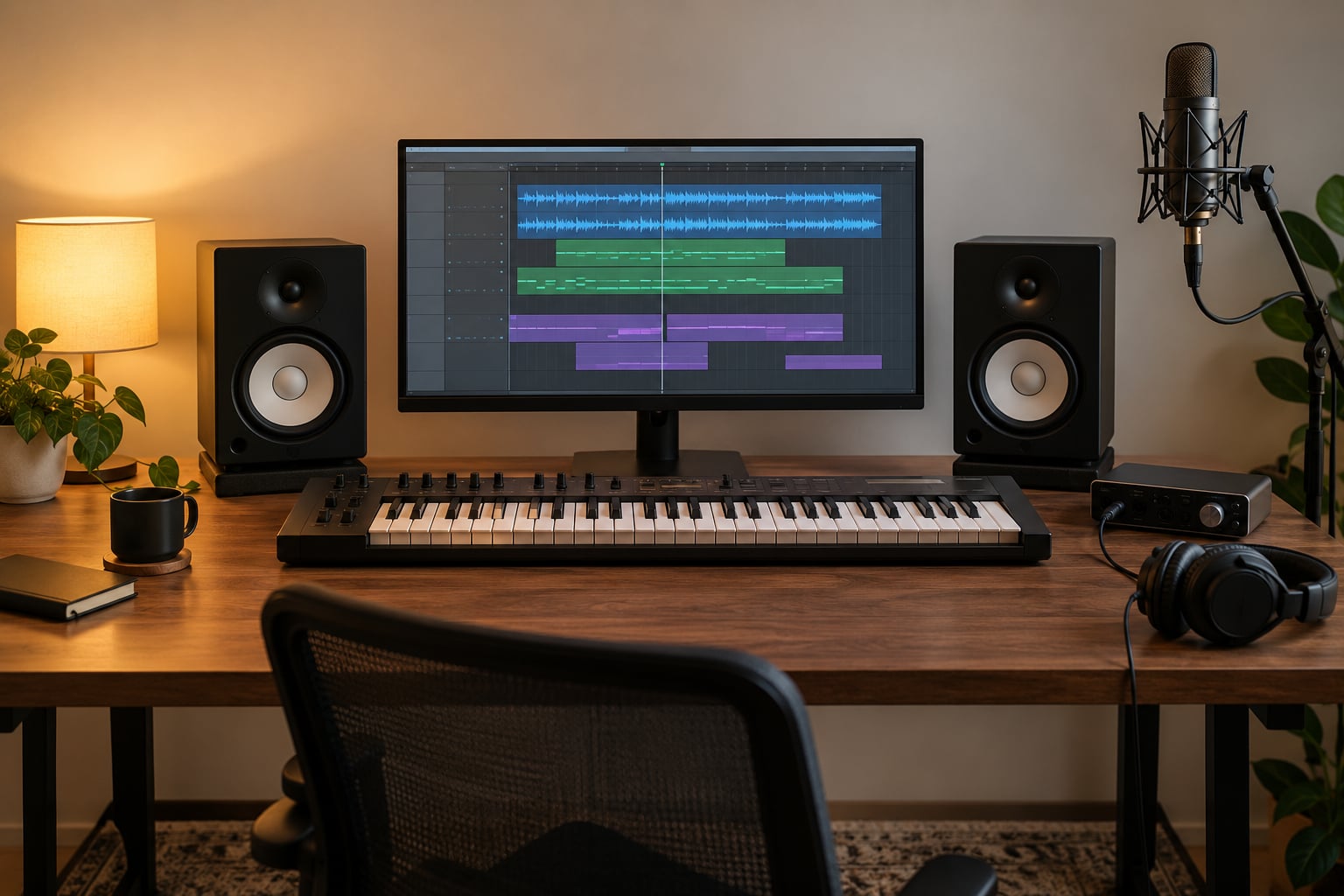
R&B production moved from studios to DAWs when a complete record stopped requiring a console, an engineer and a tape machine. A DAW, a handful of quality plug-ins and stock instruments cover the same steps, and the cost difference changed who gets to make records.
What actually shifted was decision-making. On tape, an edit was physical and expensive, so parts got committed to early. On a screen, an edit is free, so sessions become exploratory. Producers take forty versions of a hook instead of three and write the hook in the session rather than before it. Pro Tools sessions are routinely messier than tape sessions, which is the honest trade.
Collaboration followed the file. Two producers can open the same session, work in different cities and hand it back. Sessions now live in shared folders and version history, and a mix note travels as text instead of a phone call.
5. Production became faster, denser, and more iterative
Production became faster, denser and more iterative because the cost of another version fell to nearly zero. Beat selling and playlist pitching added an external clock, and the arrangement often has to earn attention before the first verse ends.
Density follows from speed. A hook, a countermelody, an ad-lib layer and a bass variation are normal in one session now. So is shipping before the record feels finished, then extending it later when the first version lands.
The trade is easy to miss: iteration improves the song but can harden the arrangement. Knowing which layer to delete is now a more useful skill than knowing which layer to add.
6. Sampling and interpolation reshaped songwriting
Sampling and interpolation reshaped R&B songwriting by making an existing recording the starting point instead of a reference. Chopping a loop, slowing it, keying it to a new chord and resampling the result can produce a chorus with more history than anything written from scratch.
The legal picture matters here and is not intuitive. Interpolation re-performs the underlying composition and can require a licence. Sampling uses the actual master recording and typically needs two clearances, one for the composition and one for the sound recording, which is why many releases lean on royalty-free or fully cleared libraries instead.
Musically, the shift gave R&B producers a way to hear harmony and phrasing as a texture to be handled, not just a correctness to be achieved. That is a genuine artistic gain, separate from any legal question.
7. Genre boundaries became more fluid
Genre boundaries became fluid because production moved faster than categorisation. A current R&B record can carry a trap hi-hat pattern, an Afrobeats guitar figure, a Latin percussion layer and a dance-music drop without any of those replacing the vocal and harmonic foundation underneath.
That foundation is what keeps it R&B rather than something adjacent. Melody first, harmony with real emotional pull, a bassline that supports the words, and a vocal performance with human timing. Producers blending other genres usually keep those four and borrow everything else.
The regional scenes have widened the palette too. UK, Swedish and Caribbean artists work comfortably inside this frame, and each brings its own rhythmic logic rather than a copy of an American reference.
What stayed important throughout R&B production history
Vocal performance, groove and songcraft survived every tool change. A dull singer stays dull through any chain, and a strong vocal with a plain mix communicates better than a polished one with nothing underneath it.
Arrangement contrast is the second durable principle. Something has to sit forward and something has to sit back. That was true in a live band playing in one room and it is true with forty stems.
The third is intentional sound design. Tape hiss and saturated low end are choices when they are made on purpose. They are accidents when a preset decides for you.
On whether R&B is declining: the format is changing faster than the genre is shrinking. Listeners are not moving away from the sound, they are listening to it inside hip-hop, Afrobeats and electronic records. That is distribution and collaboration changing, not demand disappearing.
How to identify the production style behind an R&B record
A practical listening framework works better than a genre label. Listen for five things in order: how the low end behaves, how the drums were made, how the vocal is treated, how wide the arrangement sits, and how much room is left around the voice.
| Signal | Earlier approach | Contemporary approach |
|---|---|---|
| Kick and bass | Bass through an amp, kick felt together | Layered kick and sub with sidechain pumping |
| Drums | One live player, loose timing | Quantised take plus programmed weight |
| Vocal tuning | Small corrections, natural drift | Fast tuning with delayed vibrato |
| Reverb | Short chamber or plate | Long ambience, tempo-synced delays |
| Arrangement density | Full band, limited parts | Many layers, frequent narrow-bandwidth elements |
| Low end weight | Analogue tape saturation | Digital sub plus soft-clip limiting |
Two habits make this fast. Listen once with headphones for the low end and once on speakers for the arrangement, and turn the volume down, because balance errors hide at high level. If a record gets noticeably better when you lower it, the mix is over-compressed and the streaming era left its mark.
Frequently Asked Questions
What changed the most in Ru0026amp;B production?
The single biggest change is that the rhythm section stopped being a live recording. Drum machines and synthesised bass replaced players, and a DAW made every part a separate editable file. The second is vocal production, which grew from comping a take into building stacked layers with tuning, compression and spatial effects. Arrangement also shifted, from a full band playing once toward a loop-led record assembled from many short elements.
Do modern producers need analog equipment to make professional Ru0026amp;B?
No. A DAW with quality plug-ins covers every step from recording to mastering, and most professional releases are made that way. Analog gear changes a sound rather than unlocking a capability. Saturation, tape compression and harmonic colour can all be approximated with software closely enough that listeners rarely identify the difference. Analog helps most when you already know what you want and want a specific texture, not as a requirement for a professional result.
How did DAWs change the way Ru0026amp;B records are produced?
A DAW turned recording into an editable process. Parts can be replaced, tuned and re-arranged without anyone booking studio time, so sessions became exploratory rather than one-shot. It also changed who can produce: a laptop, an audio interface and stock instruments are enough to complete a record. The practical downside is that decision-making gets deferred, because no edit is expensive, and sessions often arrive with far more layers than the song needs.
Does using samples make modern Ru0026amp;B production less original?
It depends on what you do with the sample. Reusing a loop unchanged adds nothing, but reworking a recording into new harmony, tempo and phrasing can produce something the original never contained, and sampling has deep roots in Black music practice. The legal side is separate from the artistic one and is often overlooked. Interpolation needs a composition licence, while sampling a master usually requires clearing both the song and the recording.
How can a new producer learn from classic Ru0026amp;B records?
Copy one record rather than studying many. Pick a track you know well, note the tempo feel, drum pattern, bass movement, vocal treatment and arrangement density, then rebuild it in your DAW with different sounds. That exercise teaches the decisions rather than the surface. Listening to one classic record beside one current release afterwards is where the comparison pays off, because the vocabulary transfers but the tools do not.
Conclusion
Modern R&B is additive, not a rejection of what came before. Every shift listed here is a new option on top of choices producers already had.
Start with one classic record and one current release, keep the seven shifts beside you, and write down what changed in the low end, the drums and the vocal treatment. Then rebuild the older one in your DAW. That single exercise teaches more than a year of presets.