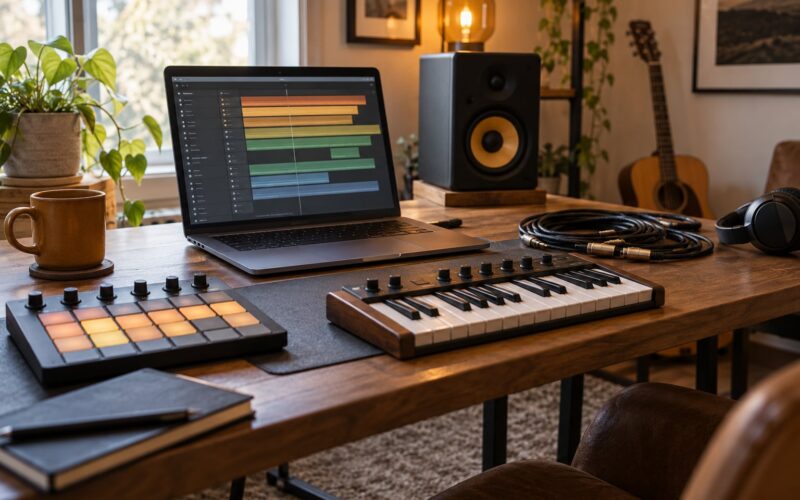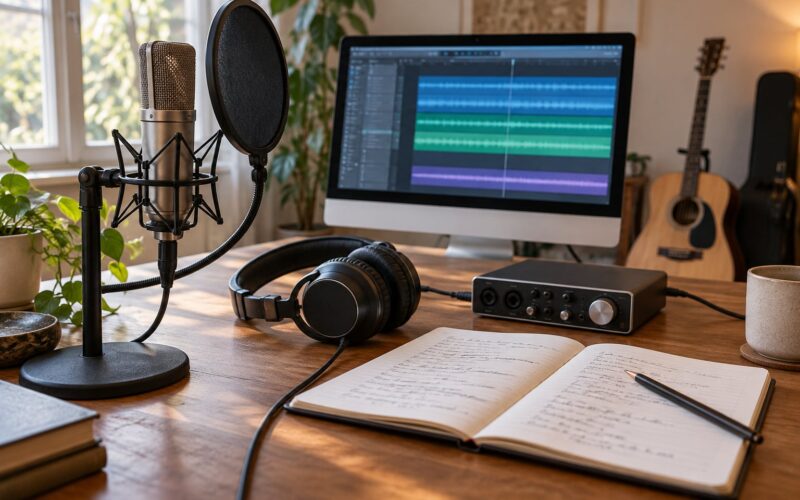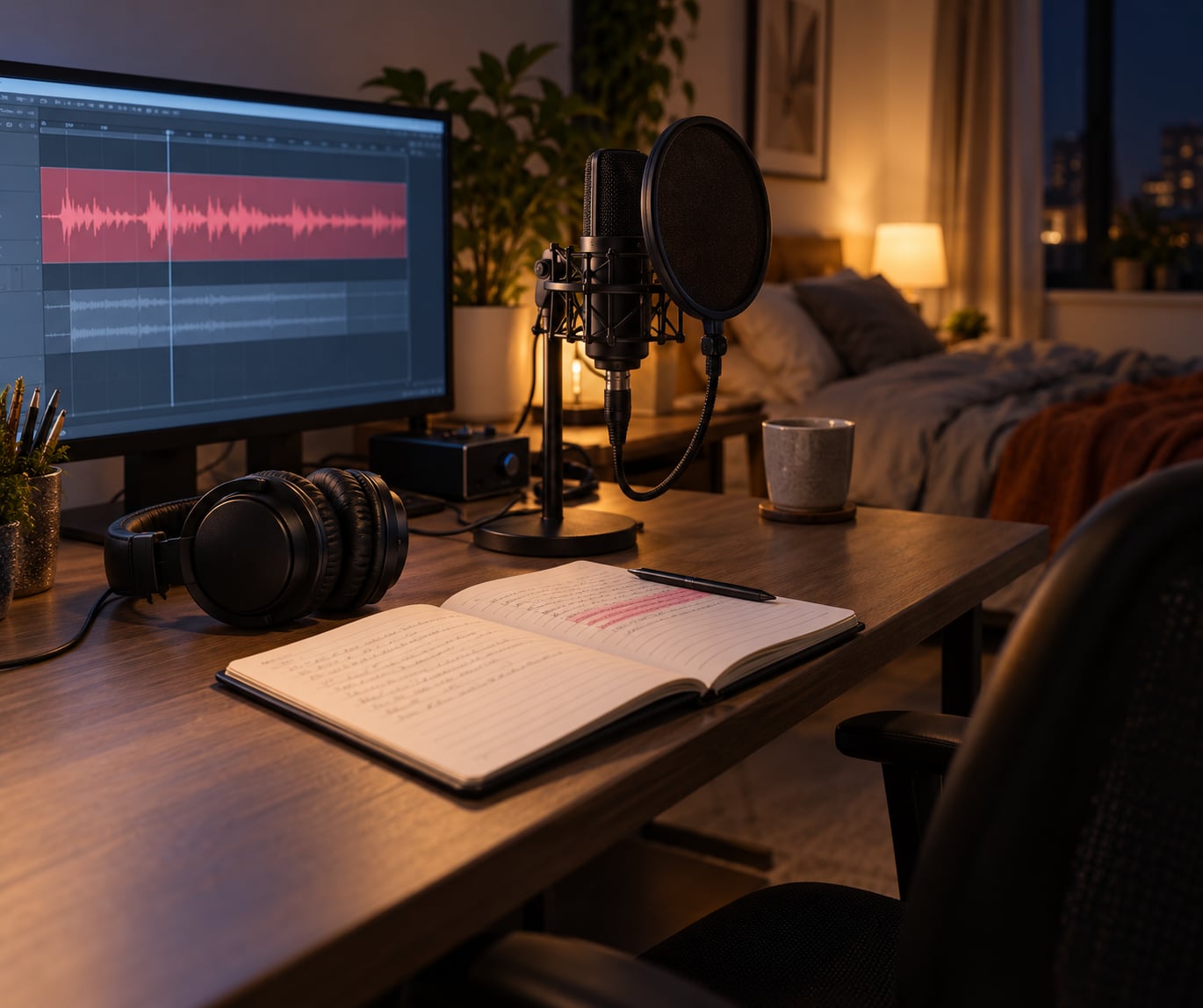
To record a hook before a verse, you capture the chorus first as a rough scratch vocal, print it, then write and perform verses against the pocket and energy it already sets. Most home sessions stall because the verse gets tracked before anyone knows what the hook sounds like sung. Fix that by locking four to eight bars of chorus, comping the best take, and only then moving to bar one. The whole session takes about two hours if you prep the room and the beat beforehand.
The order sounds minor. It isn’t. A hook sets the key, the tempo, the register, and the emotional ceiling of the song, and every verse you sing later has to live inside those four decisions. Record the verse first and you’ll spend an afternoon rewriting lines to fit a hook that didn’t exist yet.
Table of Contents
- What You Need
- Step-by-Step: How to Record a Hook Before a Verse
- Common Mistakes
- Frequently Asked Questions
- Should I record the hook before the verse?
- How many takes should I record for a hook?
- What microphone is best for recording a hip-hop hook at home?
- How do I comp a vocal hook from multiple takes?
- Can I write and record verses while the hook is still rough?
- How do I make a recorded hook sound bigger before the verse?
- Start With the Core Performance
What You Need
Six things, and only one of them is expensive. You need a reference track you actually like, a hook idea written down in words or melody, a microphone and an interface, closed-back headphones, your DAW with a working click, and a room that isn’t a hallway.
- A reference track. One song that already does what you want. Keep it on your phone or a second output so you can A/B without leaving the session.
- A hook concept. Not a finished chorus. One emotion, one image, or one repeated phrase is enough to start.
- Microphone and interface. A USB condenser for a bedroom booth, an XLR dynamic if the room is untreated and loud. Either works.
- Closed-back headphones. Open-backs bleed into your mic and you’ll chase ghost sibilance for an hour.
- A DAW with a metronome. Any of the big four does this fine. The template matters more than the software.
- A pop filter and a quiet space. Closet vocal booths beat untreated rooms because the room stops fighting you.
Step-by-Step: How to Record a Hook Before a Verse
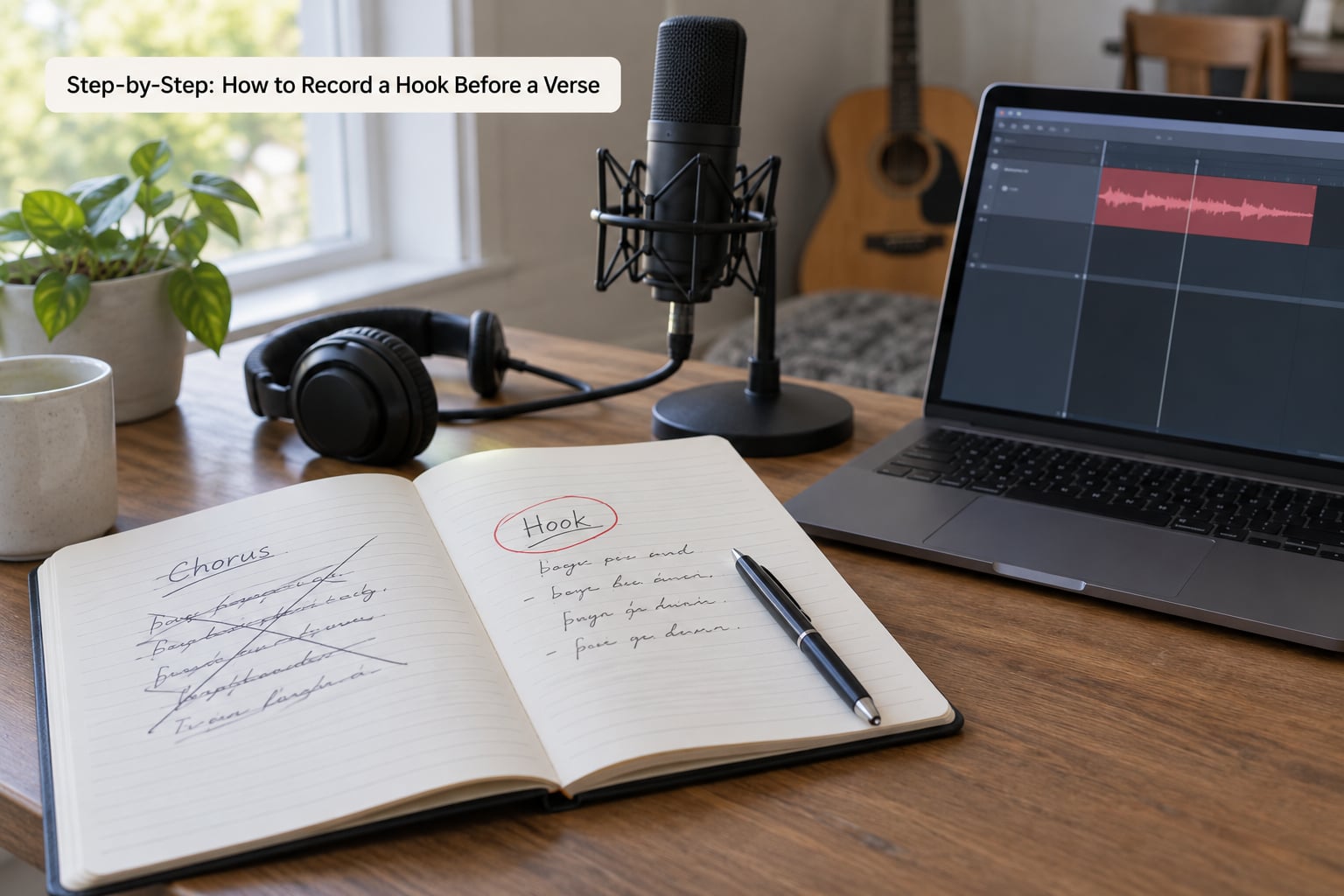
1. Define the song’s central idea
Write one sentence about what the song is actually about, then one sentence about how the hook should feel. If those two sentences can’t be said out loud in under fifteen words each, the song is still a mood, not a direction. It worked for me when the brief was “restless, driving, the third listen should feel more urgent than the first.” That sentence told me the hook needed a higher note in the last line than the first two.
Write the verse’s job next to it. If the hook is the payoff, the verse is the setup, and it has to earn the payoff. Keeping those two roles separate is what stops every line sounding like the climax.
2. Build a usable reference track
Assemble the instrumental first, then place a marker region where the hook will sit. In most hook-first sessions the hook lives in bars 1 to 8 of its own section, or bars 9 to 16 after an intro. Label the region, name the track, and stop rebuilding the beat later.
Hum a guide melody if you don’t have one yet. Even a monotone vocal playing the hook’s rhythm gives you a reference for pocket and tells you whether the hook needs a lift in bar 4. If the hook sounds flat without words, the melody is the problem, not the lyric.
3. Write and simplify the hook
Get the hook to four to eight bars and no more. Longer than that and you are writing a verse. Test three or four rhyme options out loud, keep the one that is easiest to say, then cut every syllable that isn’t pulling weight.
Say it out loud at performance tempo, not in your head. A line that reads well can be physically impossible to land cleanly on the downbeat. If you run out of breath before bar 8, the line is too long, no matter how good it looks on paper.
4. Warm up and rehearse the performance
Spend three minutes on lip trills and a couple of gentle sirens, then speak the hook in rhythm a few times without singing. Memorize it. Reading off a phone screen during the take splits your attention and the result always sounds like that.
Run the whole thing two or three times with the beat. The point is not to nail it, it’s to arrive at the mic with the phrasing, the breath plan, and the energy already decided.
5. Record a scratch hook take
Record one relaxed pass. This take exists to confirm timing, confirm the lyric fits, and prove the hook works in the pocket, so don’t spend five minutes setting up gain structure for it. Set the input so your loudest word peaks around -12 dBFS and let it ride.
Play it back and mark what moves you and what doesn’t. Usually the energy sits too flat through bars 3 and 4, and the last line is under-sung. Note both on the timeline before you stop for the day.
6. Record focused, full-performance takes
This is where people learn how to record a hook before a verse without sabotaging themselves. Set gain for headroom, check your monitoring latency with a clap or a click test, and record five to eight complete passes from the top of the hook to the end.
Keep the same vocal approach across takes and resist stopping after every small mistake. A take with one wobbly vowel beats four takes of perfection because it stays in the pocket. Walk away for a minute between takes if your voice is tightening.
7. Choose, comp, and double the best take
Listen back on headphones and judge four things: emotion, diction, timing, and musicality. Pick the take with the best emotion first, then check whether the other three hold up. Comp the strongest sections into one composite take rather than settling for the best full pass if one line is clearly stronger somewhere else.
Only then reach for layers. Double the hook with the same performance panned slightly wide, pan each voice about 30 percent of the width, and lower the double by 3 to 5 dB so it sits behind the lead without disappearing. Add a harmony only if it reinforces the melody rather than competing with it.
8. Print the hook for verse recording
Bounce the comped hook to its own track with a small amount of room around the first and last word, then play the verse section underneath it. Write verse one against what the hook actually sounds like, not what you remember it sounding like.
Keep the same input gain and monitoring settings for the verse performance. Changing the chain between sections is how a finished hook ends up sitting oddly against the verse, and it takes ten minutes to avoid.
Common Mistakes
Almost every hook-first session that falls apart hits one of these five. None of them are talent problems. They are workflow habits, and they fix the same way every time.
Recording the hook with no song direction
The fix: write the one-sentence brief before you touch the mic. If you can’t fill in emotion and message, keep the beat on and play twenty minutes of your reference track until a sentence shows up. The session logic here hasn’t changed much in 2026, and it doesn’t need to.
Overthinking every take
Ten takes of the same idea gives you ten slightly worse versions of take three. The fix: cap yourself at eight takes, mark the two best, and stop. Perfectionism is the most common reason a hook never gets finished at all.
Putting too much processing on the hook vocal
Heavy compression, stacked doubling, and a bright EQ boost all narrow the options later. The fix: keep the hook comp flat, high-passed, and lightly compressed. Save the glossy layering for after the verses exist, so the hook still has headroom to grow.
Writing verses before the hook is locked
Verses written against an imagined hook rarely fit the phrasing later. The fix: don’t pen bar one of verse one until you can play the comped hook back and sing along without guessing. That playback is the signal that you’re ready to write.
Drifting tempo, tuning, or monitoring between sections
Warping the hook, switching tuners, or nudging vocal takes so they “sit better” changes the song underneath you. The fix: pick a tempo and a tuning reference before the first take and leave them alone. If something sounds wrong, fix it in mixing, where you can hear the whole picture.
Frequently Asked Questions
Should I record the hook before the verse?
For most home and project sessions, yes. Recording the hook first locks the song’s register, pocket, and energy ceiling, so verses can be written and performed to match instead of dragging the hook around later. It also shortens the session, because you are not rewriting verses to fit a chorus that has not been sung yet. If a song already exists as a finished demo, keep the original order.
How many takes should I record for a hook?
Record five to eight complete passes and stop there. The first two are usually warmup, takes three through five tend to hold the best phrasing, and the last three are for the one line you keep wanting to fix. Mark the strongest two, comp the best sections, and move on. Recording twenty takes does not produce a better hook, it only produces a stiff singer.
What microphone is best for recording a hip-hop hook at home?
A large-diaphragm USB condenser is the easiest starting point for a rap hook because it needs no extra gear and sits close to the mouth for detail. If your room is untreated and reflective, a dynamic mic such as an SM58-style model handles the noise better, and then your close-mic technique matters more than the mic. A cheap mic in a quiet closet beats an expensive mic in a bad room.
How do I comp a vocal hook from multiple takes?
Set the takes to overlap on the timeline, audition them on headphones, and build one composite track. Listen for the take with the strongest emotion, then replace only the lines where another take has clearly better diction or timing. Keep the original takes underneath rather than deleting them, so you can widen the comp later if a section feels thin.
Can I write and record verses while the hook is still rough?
Yes, as long as the hook is recorded rather than imagined. A scratch hook vocal tells you the actual phrasing, tempo feel, and breath pattern that the verse has to work against, which a melody on a piano never will. What you should not do is treat a rough take as final. Leave yourself room to re-record the hook once the verses reveal what it needs.
How do I make a recorded hook sound bigger before the verse?
Do the obvious things first. Double the hook with the same take, pan the two voices apart, and pull the double down a few decibels. Stack a harmony a third or fifth above the melody on the last line of the section. Then leave a short gap before the hook returns so the arrangement has somewhere to rise. Resist added processing until the verse is finished.
Start With the Core Performance
Here is the whole workflow in one sitting: write the one-sentence brief, lay a reference track with the hook marked at bars 1 to 8, rehearse until you can perform it without reading, record one scratch pass, then five to eight real takes. Comp the best sections, add a doubled layer only if the hook needs weight, and bounce it to its own track.
That is how to record a hook before a verse without turning the session into a two-day negotiation. The verse comes next, written against what the hook actually sounds like, not against the idea of it. If a take feels like work rather than a performance, close the DAW and come back tomorrow. The hook you can deliver cleanly beats the hook you can describe.