Your vocal range is the distance between the lowest note and the highest note you can sing, written as two note names with octave numbers, such as C3 to C5. You can measure it at home in about ten minutes with a reference pitch source, a phone recorder, and a quiet room, and this guide walks through the whole process step by step.
The reason to measure instead of guessing is simple: a number tells you which songs fit, which keys to transpose into, and which notes to leave alone. It also gives you a baseline you can retest later.
Here is the short version before the detail:
- Warm up for three to five minutes with gentle humming and a couple of easy slides.
- Find your lowest comfortable note by sliding down on an “ah” until the voice stops sounding clear and supported.
- Return to a comfortable middle note and find your highest comfortable note by singing up without pushing.
- Record both endpoints and check them against a piano, keyboard app, or chromatic tuner.
- Write the result down as two note names with octave numbers, and repeat the test later to track changes.
Table of Contents
- What You Need
- Step-by-Step: How to Find Your Vocal Range
- Common Mistakes
- Tips for Testing and Improving Your Range Safely
- Frequently Asked Questions
- Can I find my vocal range without singing in front of someone?
- What is the difference between vocal range and comfortable range?
- How do I know if I am forcing a high note?
- Should I count vocal fry or falsetto notes when testing my range?
- Can a vocal range app tell me my voice type accurately?
- How often should I retest my vocal range?
What You Need
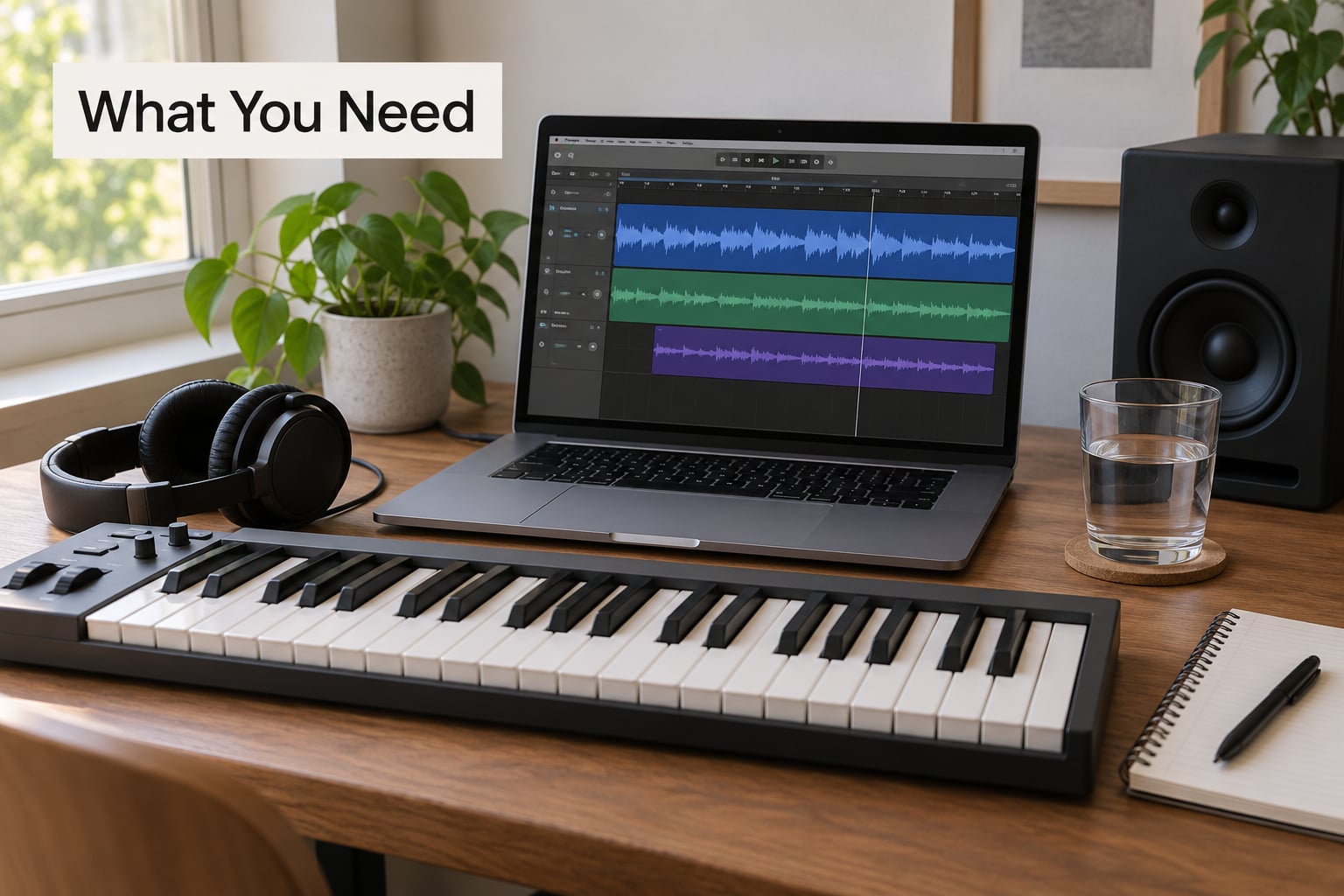
None of this is expensive. You need a pitch reference, a way to capture your voice, and a room that is not fighting you.
- A pitch reference. A real piano or digital keyboard is best. A piano app on your phone or tablet works nearly as well, and a chromatic tuner app is the fallback when you have nothing else.
- A recorder. Your phone is fine. Put it about a hand’s width from your mouth, not flat on a table, because a table adds vibration and rumble that muddies the low end.
- A quiet space. A bedroom beats a living room with a television on. Background noise is the most common reason a test gives a wrong reading.
- Water. Room temperature, not iced. Dry throat gives a smaller range than your voice actually has.
- A five-minute warm-up. Gentle humming on “mm”, a few lip trills, and one or two slides up and down. Testing cold understates you.
- A pen and something to write on. You will want to record the result, because apps forget it and your memory will edit it.
One note on headphones: they are not required for the test. They are helpful later, when you want to hear playback without the room adding to it.
Step-by-Step: How to Find Your Vocal Range
Run the test seated or standing tall, with your shoulders down and your jaw loose. Sing on one vowel for the whole descent and one vowel for the whole ascent, because changing vowels mid-test makes the notes harder to compare.
How to Find Your Lowest Comfortable Note
Start in the middle of your voice, around a comfortable speaking pitch, and sing “ah” on one note until it settles. From there, move down one step at a time and sing each note for a few seconds before continuing.
You are looking for the lowest note that is still clear, still audible, and still sounds like you. The moment the sound turns breathy, thin, or creaky, you have gone one step too far. That creak is vocal fry, and it does not count as your lowest note.
If you prefer a glide, slide from a comfortable note down to the lowest pitch you can reach without pressing, then come back up. Both methods work. The step-by-step version is slower but easier to control, and the glide version is faster but easier to overshoot.
Write the note down the moment you find it. Singers who test this part and then go upstairs for the high end frequently lose the low number.
How to Find Your Highest Comfortable Note
Come back to a comfortable middle note, take a breath, and ascend one step at a time. Sing each note on the way up and give the top one a fair chance before you call it.
There are two different things that can happen at the top. One is a usable note: full, resonant, and repeatable on a second attempt. The other is a spike: you hit it once, everything tightens up, and the pitch drifts sharp because you are pressing rather than supporting.
Stop at the first one. The spike is not part of your usable range, and pushing past it on a regular basis is how singers end up with a sore throat or a hoarse voice the next morning.
Two things change with vowel. Closed vowels such as “ee” and “oo” usually go highest because the tongue and jaw shape the vocal tract into a small, focused tube. Open vowels such as “ah” and “oh” usually feel easiest and most resonant in the middle of the range. If you want the honest ceiling, test “ee” on the way up and “ah” on the way down, then write down both results.
Confirm the Notes with a Recording
Record the whole test on your phone, then play it back with the reference pitch in front of you. Compare your low note against the keyboard or tuner and your high note the same way.
This step catches the most common silent error: a note that was never in tune to begin with. Plenty of singers hit a pitch that is a semitone flat, call it their lowest note, and then wonder why two tests disagree. Listen for whether the note is centered in the pitch rather than leaning to one side.
It also lets you hear quality, not just pitch. Play the low endpoint back at half volume. If it sounds like a creaky pulse rather than a sung note, test again and go one step higher.
If you have a tuner app, run the playback through it. The needle should sit near the center and stay there. A note that only touches the correct pitch and immediately slides off was not a held note.
Calculate the Range and Identify Its Limits
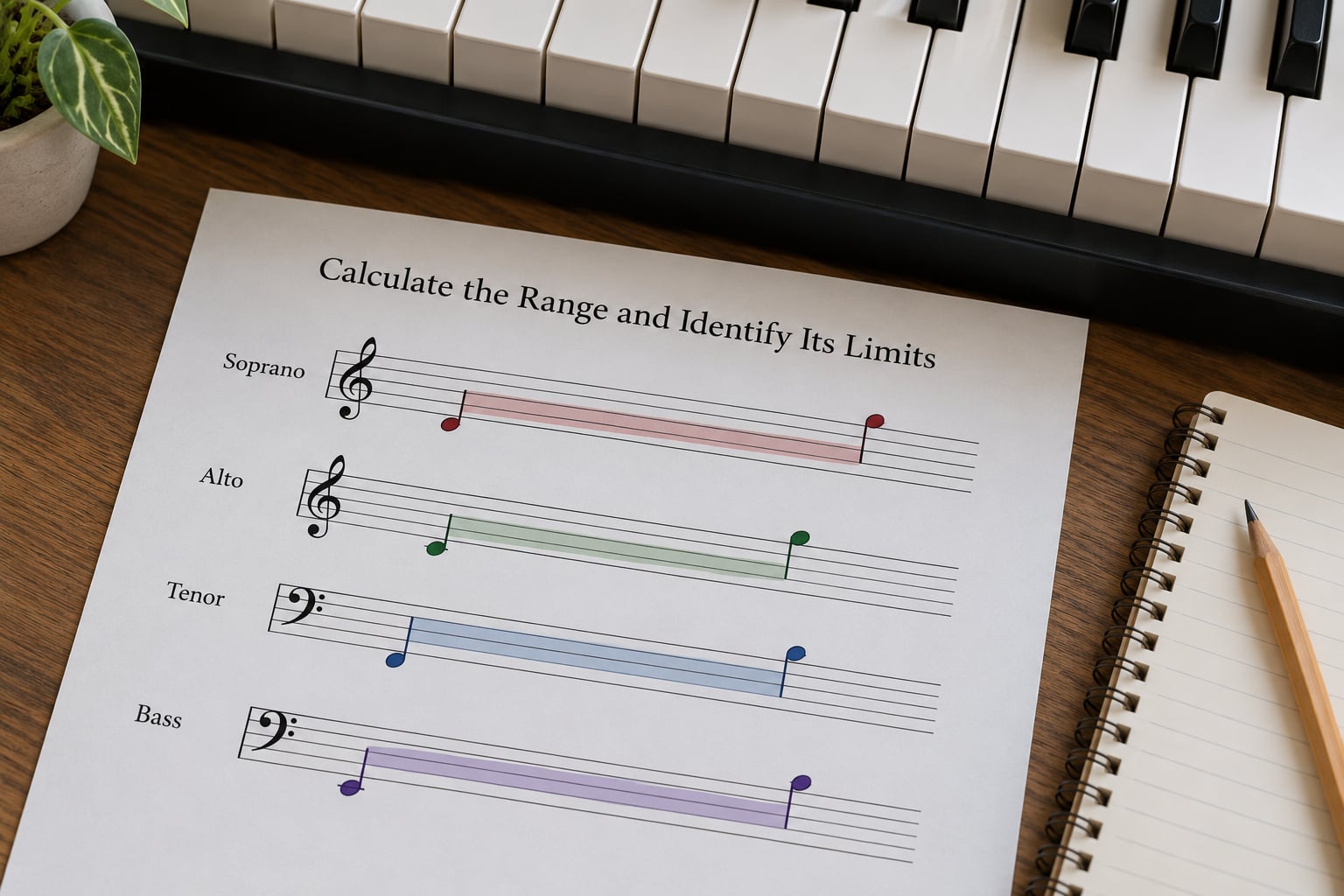
Your result is two notes written low to high, both with octave numbers: for example A2 to E4. Count the distance between them in steps to get the span in notes and octaves.
| Note | Approximate frequency | How it usually feels |
|---|---|---|
| C3 | 130.8 Hz | Low, chesty, easy for most bass and baritone singers |
| A3 | 220 Hz | Comfortable low for many alto and tenor singers |
| C4 (Middle C) | 261.6 Hz | The reference point everyone can sing or hum |
| E4 | 329.6 Hz | Upper middle, where most beginner songs live |
| G5 | 784 Hz | A solid high for untrained female-range singers |
| C6 | 1046.5 Hz | Very high; most singers reach it only in a light head tone |
Then write down a second number, which matters more than the first: your comfortable range. That is the span where you can hold a note for several seconds at full volume without strain. Many singers have a wide total range and a much narrower comfortable range, and the songs they sing well are decided by the second one.
Two limits are worth naming up front. First, ignore the whistle register and any sub-harmonic growls; they are effects, not part of a standard range measurement. Second, if you counted falsetto on the way up, write it as a separate note, such as “modal A2 to D4, falsetto to F5”, so nobody later mistakes the two.
Common Mistakes
Almost every wrong result comes from one of five mistakes. Each has a straightforward correction.
- Testing with a cold voice. A cold voice gives you a narrower range than you own. Warm up with humming and slides for three to five minutes first, even if you are in a hurry.
- Testing in a noisy room. A fan, a television, or a busy street will cap your reading and can make you push to be heard. Close the door and wait for the room to go quiet.
- Straining for the extreme notes. If a note comes out once and never again, it is not part of your range. Range is repeatable; strain is not.
- Counting vocal fry as your low note. Vocal fry is the creaky, crackly pulse at the very bottom of most voices. It registers as a pitch on a tuner, which is why tools sometimes report a low note you are not actually singing. It does not count.
- Counting notes without checking pitch. Moving up a scale by memory drifts. Play each endpoint against a reference so a flat or sharp note does not inflate your span.
A sixth habit causes trouble in the other direction: judging only your speaking voice. Plenty of singers speak lower than they sing, and a few speak higher. Measure the singing voice.
Testing when you are tired also skews results, usually downward. Your range on a rested morning and on a late night can differ, which is normal and worth knowing about.
Tips for Testing and Improving Your Range Safely
How you test matters as much as what you record. A few habits make the number reliable and the process easier on your voice.
- Warm up every time. Gentle humming, a few lip trills, and slides on “mm” and “oo” get the voice moving without loading it.
- Use a tuner, but do not chase it. A chromatic tuner app confirms pitch while you sing. Treat a moving needle as a sign to reset and try again, not as a target to strain toward.
- Retest at different times of day. Run the test once in the morning and once in the evening for a week. Most singers find their honest range in the middle of that spread.
- Stay hydrated and avoid testing through illness. Water, room temperature, and a rested voice give a more accurate reading than any technique tweak.
- Log your results. Date, low note, high note, comfortable span. A simple list is enough, and a month of entries tells you whether training is moving the number.
- Stop at discomfort. Pain, a persistent scratchy feeling, or hoarseness that lasts more than a day is a medical matter, not a training one. Rest the voice and see a doctor or an ear, nose and throat specialist.
- Get a second opinion from a teacher when it matters. For auditions, choir placement, or repertoire decisions, a qualified voice teacher can hear things a phone recording misses.
Once you have the number, use it. Songs published with a vocal range line can be checked against yours before you learn the whole song. If a chart is published in a key that puts the top note out of reach, transpose the song down instead of forcing it. That single habit removes most of the strain beginners blame on their voice.
Frequently Asked Questions
Can I find my vocal range without singing in front of someone?
Yes, and most people do it alone. You only need a pitch reference and a recorder, not an audience. Sit or stand tall, warm up, sing down on an ah until the voice stops sounding clear, then back up to find your top note. Recording the test and checking it against a piano or tuner afterward gives you a more honest result than singing for someone, because there is no performance pressure.
What is the difference between vocal range and comfortable range?
Vocal range is the full distance from your lowest to your highest note, including notes you can only hit once or reach in a light head tone. Comfortable range is the span where you can hold a note for several seconds at full volume with no strain. Song choice depends on your comfortable range, while the full number tells you where your edges are.
How do I know if I am forcing a high note?
Forcing usually shows up in three places at once: the pitch drifts sharp, the sound gets thin and breathy, and your jaw or throat tightens. You will also only be able to hit the note once before needing a rest. A usable note can be repeated on a second attempt at the same volume. If the note only appears once, treat it as outside your usable range.
Should I count vocal fry or falsetto notes when testing my range?
Neither needs to be counted in your main number. Vocal fry is the creaky pulse at the bottom of the voice that tuners sometimes read as a very low note. Falsetto is lighter and sits above the modal voice. Write your modal range as the main result and note the extras separately, for example modal A2 to D4 with falsetto to F5.
Can a vocal range app tell me my voice type accurately?
An app can measure pitch well, so it gives you a reliable range span. It cannot tell you your voice type, because voice type also depends on where your passaggio sits, how your voice carries, and how it sounds to an experienced ear. Use the app for the numbers and a voice teacher for the label.
How often should I retest my vocal range?
Every few weeks is enough for most singers, and monthly suits people training seriously. Testing daily tends to produce a lower, less useful number because the voice is not warmed up. Keep the conditions similar each time, use the same warm-up, and record the date so you can compare results honestly rather than guessing at changes.
Warm up first, test in a quiet room, and write down both endpoints with octave numbers before you do anything else with the result. Then check that result against a song you want to sing and transpose it into your comfortable range instead of straining for the top note.