If you mean touring as a musician rather than sightseeing, then learning how to tour on a small budget comes down to one number: your daily burn rate. Most first-time bands do not lose money because the gigs pay badly. They lose money because hotel rooms, fuel, food and last-minute rental gear quietly cost more per day than the show earns. A regional DIY tour can run on 35 to 70 dollars per person per day once lodging is handled through friends or crash networks and every date has a written guarantee or door split. This guide walks through that math, then gives you the routing, booking and packing process that makes it hold up on the road. Most of it takes a few weekends of planning before you commit a cent.
Nothing here requires a manager, a label, or a van you own. Solo artists, duos and three or four person crews can all run this version.
Everything below reflects typical United States touring costs as of 2026. Fuel, rent and club guarantees all move around, so re-check the ranges before you book rather than trusting a number you read months ago.
What You Need
A budget tour needs exactly eight line items. Anything beyond these is a want, not a need, and wants are the first thing to cut when a date goes wrong. Build the list before you book a single show, because a number you write down beforehand is the only thing standing between you and a tour that quietly drains your account.
| Category | What it covers | How to estimate it honestly |
|---|---|---|
| Transportation | Fuel, tolls, parking, maintenance, bus or train tickets, rental fees | Total route miles multiplied by your vehicle’s real fuel economy, plus a maintenance allowance per mile and separate toll and parking estimates for each city |
| Lodging | Hotels, hostels, crash pads, camping, rental fees | Count the nights you genuinely have no friend available, multiply by the realistic nightly rate, then add the ones where nobody has a place |
| Food | Groceries, road meals, per diem for the crew | Set a fixed per diem per person per day and write it on the itinerary as a hard rule |
| Promotion | Posters, digital ads, flyers, printing, small fees on local shows | Decide a monthly figure and stop when it is spent |
| Artist fees | Support acts, session players, a drummer for a solo act | Quote a flat fee per show rather than a percentage, and ask what the act is buying |
| Backline and gear | Rental amps, drums, PA, cables, insurance, repairs | Check each venue’s backline list first. Anything not on it is either rented, borrowed or bought |
| Contingency | Cancelled shows, illness, breakdowns, van trouble | Hold 15 to 20 percent of your total in a separate account you do not touch for ordinary expenses |
| Optional | Support act buyouts, better lodging after a good night, van purchase, merch reorders | List them separately so they never creep into the core number |
The worksheet version is simpler. One column for planned amounts, one for what you actually spent, one for notes. Fill the planned column per show rather than for the whole run, because a five-date route and a fifteen-date route have completely different fuel and lodging math.
Two estimation rules keep the sheet honest. First, use your own numbers, not someone else’s tour report, because fuel economy, dietary needs and how much you actually sleep in a car vary a lot between bands. Second, add your worst realistic case, not your best one. If a show might be cancelled, assume one date in eight goes wrong and cost the tour accordingly. In r/musicmarketing, one band told a thread that it budgeted about 2,000 dollars for a run of roughly 500 dollars per member, with another 500 held back for activities and spending under half of it. Having a real number with slack built in is what kept that trip in the black.
Step-by-Step: How to Tour on a Small Budget
Choose a Compact, Bookable Route
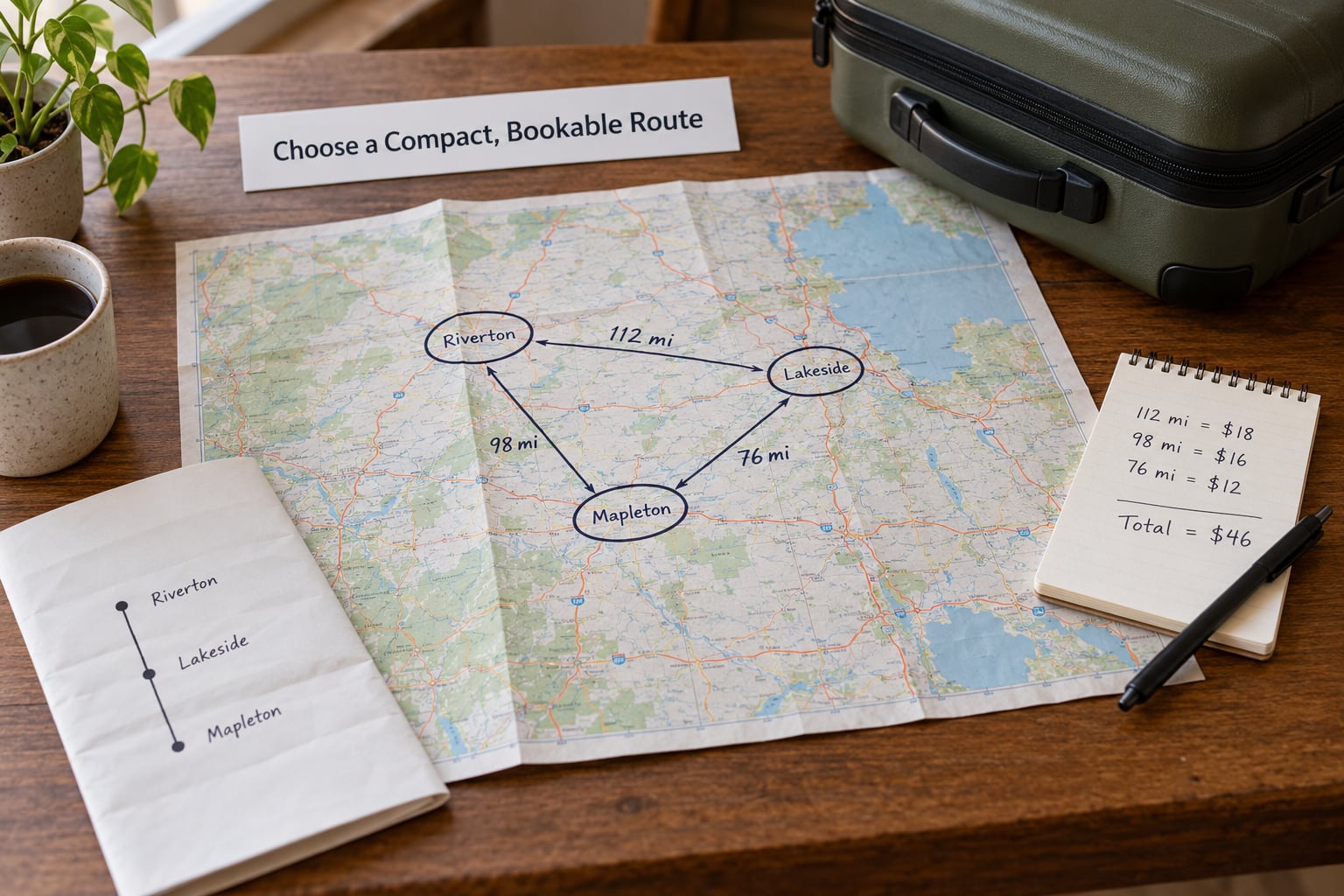
Route geography is the cheapest cost cut available to you, because it shrinks fuel, lodging and rental gear at the same time. You know it worked when every date on the itinerary sits within roughly a four hour drive of the previous one and you can name a fallback date in each city.
Three patterns work. The first is nearby markets: several small towns inside a two hour radius, played over a weekend. You drive home between runs, so lodging drops to zero and you only carry what fits in one car. The second is a hub city: you rent a room or crash centrally, then drive out to two or three towns within an hour and return to the same bed each night. One room instead of three saves real money and saves packing twice. The third is the single longer drive between two anchor cities where a guaranteed show waits on each end, which sometimes beats three hotel nights in between.
Avoid the pattern that costs the most: four shows in four cities with no one host in any of them. That route turns a week into four hotel nights and a rental amp into four rental fees, for very little gain.
Work the venues before you lock the route. Small clubs and mid-size rooms will list exactly what they provide, and in r/livesound people will tell you the modest end of the PA world needs very little: a couple of drum mics, an acoustic guitar, keys, vocals and simple backing tracks. If a date needs a backline you are already carrying, it fits the route better than one that needs a rental.
Set the Real Budget and Minimum Profit
A date is worth playing only when the guarantee, plus a deliberately cautious merch estimate, clears your per-show cost by a margin you actually keep. You know the model is right when you can state each show’s break-even attendance before you accept it.
Start with the cost side. Per show, add the guarantee you will pay, the fuel and tolls to reach that city, your share of lodging, the per diem for everyone, and the fee for any hired player. That total is your break-even number.
Then look at the income side. A guarantee is a flat amount the promoter owes you regardless of ticket sales. A door split pays a percentage of what actually came through the door, so it can pay nothing. Working musicians argue about this constantly in r/TouringMusicians, so decide your position before the email exchange, not during it.
Do the door split arithmetic honestly. If tickets sell for 20 dollars and the door split is 80 percent of the gross, the band needs 63 paid attendance just to cover the split share of one ticket. If your per-show cost is 400 dollars, you need 200 paying bodies before anything lands in your pocket, and more after the opening act’s cut and the merch table cut are removed.
Now merch, carefully. Assume nothing more than your slowest recent show sold until the numbers say otherwise, and treat any stronger figure as upside, not budget. Merch can cover a good night. It has never covered a bad run, and bands that build it into the plan end up cancelling dates mid-tour because the money was already promised to someone.
Finally, set your minimum profit floor, and I mean a floor below which you cancel rather than negotiate. Some bands pick a fixed figure per person per date. Whatever you pick, write it at the top of the worksheet so the decision is made by the spreadsheet and not by how tired you are at midnight.
Book the Right Mix of Shows
A first DIY tour usually survives on support slots, openers and residencies, not headline nights. You know you have the right mix when at least half your dates have a written guarantee, a door split, or both, before you leave home.
Support slots are the cheapest door into touring. You usually play a shorter set, you get a soundcheck slot and the room is already full, and the promoter has a reason to bring you back next time. Openers work similarly but carry no payment, so treat those dates as travel practice and never as income.
Residencies and benefits stretch your money further than they look like they will. Four nights in one city means one hotel night, one rental fee and one set of backline, with four chances to sell. Benefits and showcases can draw people who would not have bought a ticket, which makes merch and tips stronger than usual.
Before you say yes to anything, get these terms in writing: the amount or percentage, who is paid and when, the deposit and its timing, whether backline is included and exactly what that includes, the settlement method at the door or the load-out, the cancellation terms in both directions, and the merch table cut. Small venues are often casual about paperwork, so bring a W9 and a one-page contract you wrote yourself. A venue that cannot describe how it pays you is a venue you treat as a zero in the budget.
Also confirm the advance. A contact at every date with the load-in time, the stage plot, the backline list, the sound engineer and the settlement figure is the cheapest insurance there is, and it costs nothing.
Cut Travel, Lodging, and Food Costs Safely
These three categories are where the real savings live. You know you have done it well when your total road cost per person per day lands in the range below, without anyone skipping a meal or sleeping somewhere unsafe.
| Daily cost per person | Lean weekend route | Standard regional run | Two-week run with paid rooms |
|---|---|---|---|
| Lodging | 0 to 10 dollars | 10 to 30 dollars | 40 to 90 dollars |
| Food | 10 to 15 dollars | 15 to 25 dollars | 20 to 35 dollars |
| Fuel and transport | 10 to 20 dollars | 15 to 30 dollars | 15 to 35 dollars |
| Parked cash for incidents | 20 to 30 dollars | 30 to 50 dollars | 50 to 100 dollars |
These are typical United States ranges and they move with the region, the season and the price of fuel, so treat them as a starting point and re-check before each run.
Lodging is where the biggest single reduction sits. Build a crash list before the route is booked rather than after, and it needs more names than you think. Coworking spaces that rent desks by the day, hostel rooms booked on short notice, and friends of friends in each city all work. Rent the room once per city rather than per person, and share it. Do not treat a venue floor as a default, because you will be gone before the room empties anyway and getting thrown out at 1am is a bad way to start a residency.
Transport: split fuel across the crew and settle it per mile so the person with the largest tank is not subsidising the band forever. Overnight sleeping in a rest area, in shifts, saves a hotel and lets you cover a longer drive in a day. Trains and intercity buses are cheaper per mile than fuel for two or three people and they sleep for you, though they only work where the routing is sane.
Food: cook on a camp stove more than you expect, buy groceries in a supermarket rather than a convenience store, and set the per diem in writing so nobody has to ask. Eating modestly is fine. Skipping meals so the guarantee is bigger is not, because the physical cost of a tour shows up as bad playing, illness and a miserable crew.
Book paid rooms a few weeks ahead and only for the nights you truly cannot cover otherwise. And notice the two costs you should not trim: travel insurance worth having, and a real cash buffer on the road.
Pack Light and Protect the Show
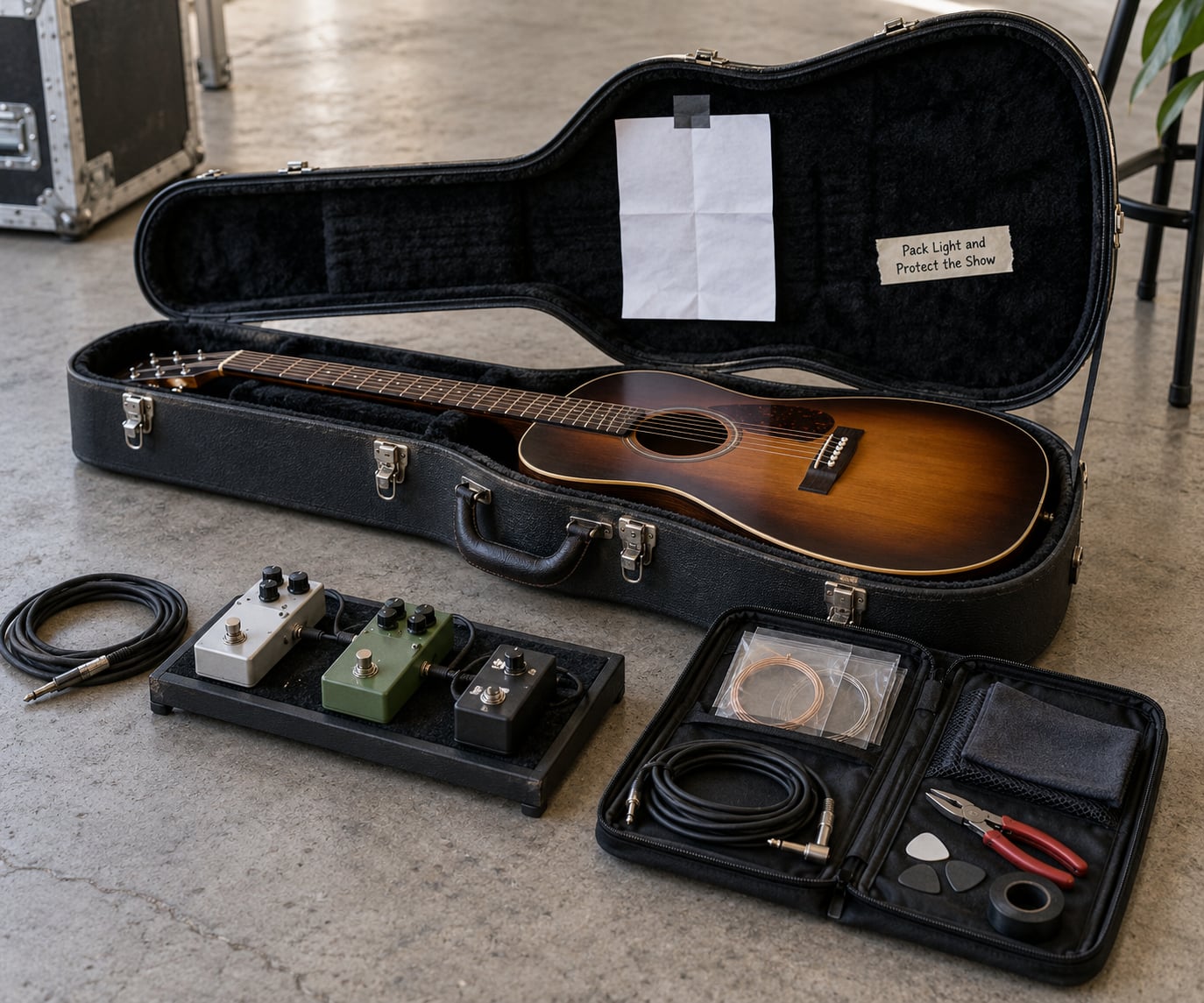
Pack for the trip, not for the possibility of a cancelled show. You know you have the right kit when every case has a reason to be on the van and you can carry it yourself in two trips.
Carry by hand anything you cannot replace on the road: instrument, pedals, laptop or recorder, cables, adapters, tuners, medication, travel documents, chargers, and one change of clothes. Ship what is bulky and replaceable, like wardrobe basics and paper goods, using a tracked service with insurance.
Backups beat duplicates in most cases. A spare set of strings, a spare instrument cable, a spare set of drum skins, a backup power supply and a printed setlist cover more failures than a second full kit ever will. If you play electronic parts, keep a backup interface and the essential cables in your bag rather than in the van.
Clothing is where people overpack. Plan for the actual weather along the route, pack one week’s worth for a short run and do laundry at the venue or a laundromat. Dirty laundry in a duffel is not a moral failure.
Tag everything with a phone number that rings. Instruments get lost in the load-out more often than anyone admits, and a case with a contact on it is usually returned the same night.
Promote Without Wasting the Budget
On a small budget, promotion has one job: fill the rooms you have already booked. You know it is working when ticket presales or guarantee conversations tell you which cities are real and which are not.
The cheapest channels are the ones you already own. Email your list directly, post in the places your actual listeners already gather, and message every local act and promoter in the city you are about to play. A venue partner who posts you three times a week is worth more than a paid ad, because the room is already sold out by the promoter.
Short-form video does the heavy lifting for small budgets, but only when it is filmed once on the road and reused across every city in the route. Record one vertical clip per show day with the room, the date and the city name in it, then post them as the run happens. Local press and college radio still work in smaller markets when you send a short, specific email with a picture and a date rather than a press release.
Track the response with one sheet: date, city, channel, tickets sold or inquiries, money spent. After three shows you will see where money actually produces bodies in the room. If a channel has spent twice its budget with no movement, stop paying it. If a channel brought a single person who bought a shirt, it may be worth more than the tickets it sold.
A street team of three or four people who post and invite locally costs nothing but the shirts, and it works better in college towns than any ad buy.
Run the Road and Track Every Dollar
The plan only survives contact with the road if you keep it current. You know the system is working when you can name your cash position, your next settlement and your fallback for the next morning at any point on the road.
Advance every date a few days out. Confirm the settlement figure, the payment method, the backline, the load-in, the soundcheck and the name of someone on site who answers the phone.
Keep a cash reserve in a separate place from the day fund. Cash solves a lot: a broken cable, a late train, a cash-only laundromat. Split petty cash per person and keep receipts for everything, because fuel and mileage records are a real record when tax time comes around.
Log expenses the same day, in the same app or notebook, with the mileage for that drive. Set up your bookkeeping from the start if you have not already; it takes twenty minutes a week and it saves a painful reconstruction in about six months.
Reconcile guarantees and door splits the night of each show, while you are still standing near the box office. Cash or a prompt bank transfer is far better than an IOU that follows you home. Ask for a W9 on any business dealing, and take it seriously: performers are usually treated as self-employed and the paperwork is not optional.
Have a backup plan for each of the four things that go wrong. Cancelled show: a written cancellation clause and a list of local contacts for replacement dates. Illness: a small first-aid kit, sensible sleep, and one person authorised to cancel or drive. Delayed travel: build spare hours into the route rather than the schedule, because a routing with room in it absorbs delays. Equipment failure: know which backline the venue carries and which items you have backups for.
One more thing nobody budgets for: relationships. Touring cheaply means long hours in a small space, and the band that ends the run not speaking to each other cannot tour again next year. Give people alone time and an honest way to say something is not working.
Common Mistakes
Almost every tour that loses money does it the same way. Each mistake below has a correction that costs nothing but planning.
- Booking a route before researching venues. The correction is to build the venue list first, check backline and settlement, then draw the route around what you actually have.
- Counting merchandise income as guaranteed. The correction is to budget on zero merch, then treat every sale as money that goes into the contingency account rather than into next month’s fuel.
- Accepting vague payment terms. The correction is to require the amount, the method, the timing and the cancellation terms in writing before the advance, in your own one-page contract.
- Overpacking and paying to haul it. The correction is to carry only what cannot be replaced and ship the rest, then launder rather than pack for two weeks.
- Depending on a single travel method. The correction is to have a second option for every long leg, whether that is a second driver, a bus instead of a rental, or a spare show date you can shift.
- Skipping the contingency fund. The correction is to hold 15 to 20 percent of the total separately and agree with the crew in advance that it is not touchable for ordinary expenses.
- Splitting costs by vibe instead of by mileage. The correction is to log miles and dollars per person, settle on a schedule, and let the person who paid for the van carry the agreed extra rather than an unspoken one.
- Playing the hardest dates on the calendar. The correction is to cancel anything below your floor two weeks out, which costs you nothing and protects the rest of the run.
A few habits cover most of the rest. Write the budget down, where the whole crew can see it. Set the per diem once and stop talking about it. Keep the cash reserve separate. Book rooms early only where you must. And when in doubt, take the date closer to home with a written guarantee over the further one on a promise.
Frequently Asked Questions
Can a musician tour on a small budget without a band?
Yes. Plenty of solo artists run touring with hired players or with a rotating local drummer picked up in each city. The costs that hurt most are the same ones a band faces, because a solo act usually carries their own instruments, a backline and travel. Build the budget per show with a musician fee in every line, treat local players as part of the crew rather than a guest, and confirm who is paid from the guarantee before each date.
How much does it cost for an independent artist to tour?
For a regional run in the United States, a lean weekend route can run 35 to 70 dollars per person per day when lodging comes from friends or crash networks. Standard runs sit higher, with a paid room in each city. The total depends far more on your route length and how many nights you pay for than on anything else. Work out the per-show figure, then multiply by the number of dates.
Is crowdfunding a reliable way to pay for a tour?
It can be, but treat it as funding a plan rather than rescuing one. Crowdfunding works best when you can show a route, dates, a budget worksheet and what each tier delivers, because supporters back specifics and they arrive with expectations. Campaign early, before the shows are locked, and never promise dates or merch you have not confirmed. Money raised after the route is booked rarely changes the route.
Should I travel by car, bus, or train when touring on a budget?
For short regional runs, a car with a split fuel cost is usually the most flexible option and the easiest to route around shows. Trains and intercity buses cost less per mile for two or three people and let you sleep while you travel, which saves a night of lodging, but they only work when the timetable lines up. Always book a fallback for every long leg before you commit to it.
What should I do if ticket and merchandise sales are lower than expected?
Stop spending on promotion for that city immediately, cancel the dates below your floor two weeks out, and tell the promoter early rather than late so they can try to fix the room. Check whether any dates in the run still clear break-even on a written guarantee, since those can carry the weaker ones. Log the shortfall honestly, and use it to reshape the next route rather than quietly absorbing the loss.
Conclusion
Budget touring is not one clever trick. It is a route that keeps you close to home, a written number for every show, lodging handled through people rather than hotels, and a reserve you do not spend.
Start today with four things. Pick three cities and check which venues there can actually book you. List every dollar of guaranteed income you have already secured. Estimate the full road cost for that route per person per day. Then confirm the backline at each venue before you spend anything on travel. Everything else on this list is detail built on top of those four answers.