Most people ask how to get a job as a recording engineer because they assume the missing piece is a diploma. It usually isn’t. Studios hire on proof: finished tracks they can hear, sessions you ran, gear you can troubleshoot without supervision, and someone who will vouch for you. Here is the real path, and the honest version of how long it takes.
The short answer: pick one specialty, get fluent in the DAW the studios around you already run, build three to five finished projects nobody paid you for, then approach studios directly with a short resume and a specific note. A four-year degree helps in broadcast and film. Outside of that, a portfolio beats a certificate in almost every hiring conversation.
It also helps to know the odds. A CareerExplorer survey of 160 recording engineers found 46% working full-time and 54% part-time, and described finding work as quite difficult. That 54% figure is mostly freelance engineers who built their own client list, which is the same path described below.
Table of Contents
- The 7-Step Path at a Glance
- What You Need
- How to Get a Job as a Recording Engineer, Step by Step
- 1. Choose a Recording Engineering Focus
- 2. Learn the Essential Audio Skills
- 3. Build a Small but Professional Portfolio
- 4. Create a Resume and Online Portfolio
- 5. Get Experience Before Applying
- 6. How to Get a Job as a Recording Engineer Without a Job Board
- 7. Network and Prepare for Interviews
- Common Mistakes
- Frequently Asked Questions
- Conclusion: Start With a Portfolio and a Target Studio
The 7-Step Path at a Glance
- Choose one specialty: assistant engineer, tracking engineer, mixing engineer, mastering engineer, live audio, or podcast production.
- Learn the skills studios screen for: signal flow, gain staging, microphone placement, monitoring, comping, and session management.
- Learn the DAW your local studios actually run, not the one your favorite producer uses.
- Build three to five portfolio projects with no paid credits at all.
- Create a one-page resume, a credits list, and an online portfolio with before-and-after audio.
- Get real session hours: assistant work, internships, school and community studios, free sessions for local artists.
- Apply directly to studios with a specific email, then follow up once in about ten days.
Expect this to take six months to a year of steady work. If someone promises you a studio job in eight weeks for a large sum of money, read the rest of this guide carefully.
What You Need
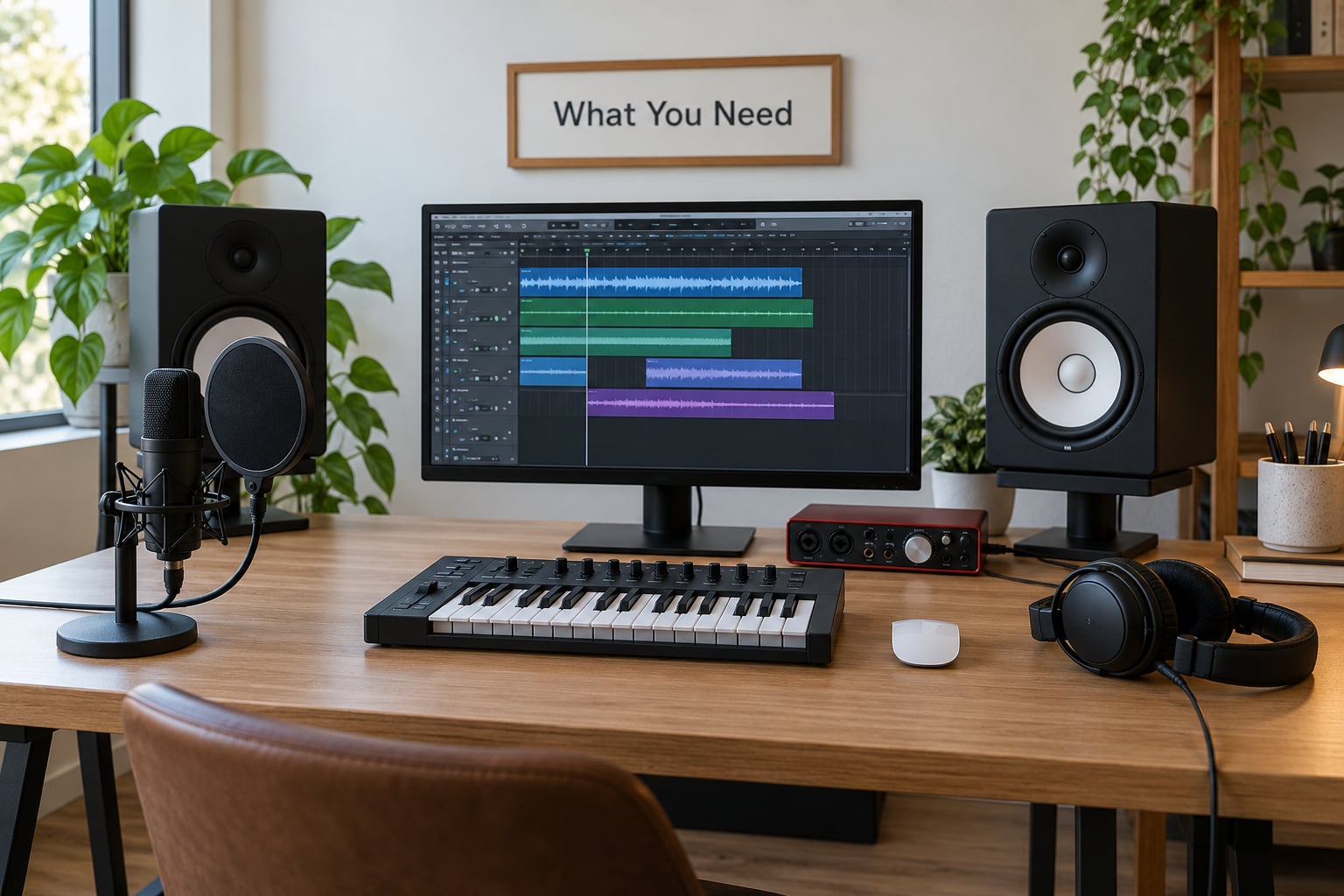
The gear list matters far less than people think. Nobody hires you because your interface has more inputs than the engineer’s. They hire because you can get a clean, musical recording on gear they already own.
Skills to have ready
- Signal flow and gain staging. Know where every signal goes and how hot to run it before anything clips.
- Microphone selection and placement. Match pattern and distance to the source instead of reaching for the most expensive mic in the room.
- Monitoring discipline. Set a reference level and keep it there for the whole session.
- Editing and comping. Build a rough mix fast enough to keep an artist engaged.
- Session management. File naming, versioning, backups, and delivery that another engineer can pick up.
- Talking to people. Explaining a problem to an artist without jargon, and asking for what you need before the session starts.
Tools
One DAW at a genuine working level, a two-channel interface, a condenser mic on a stand with a pop filter, closed-back headphones, and treated corners in whatever room you have. A treated corner beats expensive flat panels on a budget. If you plan to work in broadcast, learn Pro Tools first. For tracking and mixing work in smaller rooms, Logic Pro and Reaper cover a lot of ground.
Portfolio pieces
Three to five finished projects, not a folder of loops. A full song you tracked and mixed from start to finish, a remix where you only did the mix, and a spoken-word or podcast episode you produced end to end. Each one gets a short written note explaining the problem and what you did about it.
Resume and business basics
A one-page resume, a list of gear you have used rather than owned, a W-9 or the local equivalent, a simple invoice template, and a signed release form for any project where you recorded someone. If you freelance in the US, keep those current from day one.
How to Get a Job as a Recording Engineer, Step by Step
1. Choose a Recording Engineering Focus
Studios do not hire a generalist. They hire someone who solves a specific problem, so decide which problem you want to solve first and target the studios that need it.
| Role | What the work is | Usual entry point | How they get paid |
|---|---|---|---|
| Assistant or second engineer | Patching, mic placement, level riding, file management, running cables and tea | Open application to studios and post houses | Hourly, often with long hours |
| Tracking or recording engineer | Runs the session: pre-production, mic choices, takes, comping | Assistant hours, then freelance sessions | Per session, day rate, or flat project fee |
| Mixing engineer | Works from finished multitracks, delivers mixes with revisions | Self-initiated remix and spec mixes | Per song with a set number of revisions |
| Mastering engineer | Final level, tonal matching, delivery specs | Second engineer hours at a mastering house | Per track, priced by catalog size |
| Live audio or front of house | Sound reinforcement, monitors, stage work, load-in and tear-down | Local bands, churches, AV companies | Per show plus load-in, sometimes a retainer |
| Podcast producer | Multi-mic recording, editing, levels, loudness targets, hosting support | Local podcasts and small networks | Per episode or monthly retainer |
Podcast and post work is often the fastest door in, because those teams hire production-minded people rather than engineers with a pedigree. Live sound hires faster still, and the hours are brutal. Studio work pays best later and asks for the most patience.
2. Learn the Essential Audio Skills
Every session is a signal chain, and an engineer who understands the chain can fix problems while the artist is still playing. Learn where the signal goes from the microphone through the preamp, into the converter, through the DAW, and out to the monitors, and learn what each stage adds or takes away.
Gain staging is the unglamorous half of that. Set the preamp so the loudest moment of the take sits well under clipping, then leave headroom on the way to the interface. Most amateur recordings fail here, and knowing the number in decibels is a genuinely marketable skill.
Placement matters more than price. A large diaphragm condenser a foot off a singer in a treated room beats an expensive microphone shoved into a corner. Move it, listen, move it again. Do this for ten minutes a day until the sound stops surprising you.
Then practise the parts nobody trains you on: comping a vocal into one clean pass, naming files so the next person can find them, backing up twice before lunch, and telling an artist in one sentence that the mic is picking up chair squeak.
3. Build a Small but Professional Portfolio
You do not need a paid credit to have a portfolio. You need finished work and a clear account of your role on it.
The cheapest project is a remix. Take a track licensed for remixing, rebuild the mix yourself, and keep both the original and your version so anyone can flip between them. The next cheapest is a free session for a local artist: two or three hours, your own setup, a signed release, and a deliverable the artist can actually put out. That is a real credit even though nobody paid you.
Third, produce something nobody performs. A three-part spoken-word piece, an interview, or a short score for a student film forces you through recording, editing, cleanup, mixing, and delivery. Every step of a real session, without needing a band to show up.
For each project write three lines: the problem, what you changed, and what you would do differently. That note is what separates an engineer from someone with an interface. It shows judgment, which is the thing studios are actually buying.
4. Create a Resume and Online Portfolio
One page, no photo of your face unless you want one, no lists of plugins you own. Use this order:
- One line of positioning. Recording engineer tracking and mixing indie rock and spoken word. Mixes from multitracks.
- Session work. Artist, project type, your role, year. Include free sessions and remote mixes; nobody will check whether you were paid.
- Studio and assistant experience. Studio name, room, who you worked under, and roughly how many sessions you sat in on.
- Skills and gear. DAWs at a working level, consoles you have operated, mic collections you have used.
- Education. One line. A certificate gets one line too, not a paragraph.
Your online portfolio holds the audio, the notes, and the credits. Put the before-and-after first so a visitor hears a difference in ten seconds. Keep each page light enough to load on a phone, because most people who look at it are on one.
On a portfolio with no paid credits, an audio engineer on a Gearspace thread put it plainly: the standard advice was to start self-teaching, rent microphones and preamps for vocal sessions, and build credits that way. That is still true.
5. Get Experience Before Applying
The catch-22 is real. Nobody hires you without experience, and you cannot get experience without hours. Four routes break it.
- Assistant work. The traditional rung. Expect long hours and a low hourly rate, and ask in the interview how many sessions you will actually sit in on. Assistants in r/audioengineering describe months where they were lucky to see one session a week, so get the answer in writing before you accept.
- School and community studios. Colleges, churches, community media, and youth music programs often have a room and a working engineer who has no assistant. Offer to be the one who keeps the session file organised.
- Live and podcast work. Bands looking for a roadie who can also patch, small venues, and local podcasters are the fastest places to be handed responsibility on Thursday that you do not get in a studio for a year.
- Paid small gigs. Voiceover sessions, jingle work, and single vocal comps for independent artists. Small, real, and they count.
Turn every one of them into a credit the same day. Date it, describe your role, and archive the session files properly.
6. How to Get a Job as a Recording Engineer Without a Job Board
Most studio hires never appear on a job board. Owners find engineers through someone they already trust, so the practical version of applying is building a list of studios and contacting each one with something specific.
Build a list of twenty rooms within driving distance: commercial studios, project studios, mastering houses, live sound companies, and post houses. Note what each one actually works on. Then send a short message, under 120 words, that names something real about them.
Subject: Engineer available for assistant work, your room B
Hi Marcus, I mixed three artists on your Bandcamp page and noticed the vocal in track 4 sits back at 2 a.m. and the room mic placement in the live clips. I am an engineer working out of a small treated room, fluent in Pro Tools and Logic, and I am looking for assistant sessions where I can learn your workflow. I am free Tuesdays through Saturdays. If you ever need a second pair of hands during a session, I would welcome a conversation.
Thanks, Dana Ortiz
Three details make that note work: it references their actual work, it states what you can do, and it asks for something small and specific. It does not ask for a job in the first line, and it does not send a resume in the first email. Attach the resume once they reply.
For assistant and intern outreach, the same logic applies with less. Who is the engineer who runs sessions, what do they work on, and can you come in for a half day and observe and help for free in exchange for learning. Reply to a job listing within a day if you apply at all, name one piece of their work, and put your portfolio link in the first line.
If nobody replies, that is normal. Follow up once after ten days with one sentence, then move on. Volume matters more than polish here.
7. Network and Prepare for Interviews
The people who place you are the ones you have already talked to. Show up at local AES meetups, manufacturer demonstrations, and studio open days. Bring earphones and ask good questions afterward rather than pitching during the event.
Interviews usually include a practical test: mix a supplied multitrack, set up a session from a track list, or patch a small live rig. Treat it like a real session: level your monitors, take notes, and explain your choices as you go. The talking matters as much as the result.
Be ready to talk about rates and availability without flinching. Know your day rate, know how many sessions a month you can carry, and know what you will not do for free. Forum advice to new engineers lands on the same point repeatedly: emailing and calling local businesses works, but it works slowly, and the ones who keep going are the ones who send the hundredth email.
Common Mistakes
Listing gear instead of results. A wall of plugin names reads as a hobby. One finished mix with notes on what you changed reads as judgment.
Applying with no audio. If your portfolio link shows an empty page, the email gets archived. Build the page first.
Accepting unclear terms. Written scope, deliverables, revision count, and payment terms in writing before the session starts. If someone says the work is worth paying you in exposure, ask what they mean by exposure, and treat silence as a no.
Sitting in unpaid roles with no training. Some studios cycle through unpaid helpers while never letting them near a session. Ask how many sessions you will attend in the first month. A low number is a clear signal.
Paying for an expensive certificate. A long-running Gearspace thread on becoming an audio engineer keeps returning to the same complaint: large sums sunk into private recording programs that studios treat as nothing on a resume. Portfolios win. Where a credential helps is broadcast and film, where it is often an actual requirement.
Failing to follow through. One email, one follow-up, then a personal visit or a phone call. Most opportunities here come from repetition, not the perfect first message.
Frequently Asked Questions
Do I need a degree to become a recording engineer?
No, not for studio recording work. A four-year degree matters most in broadcast, film and television, where it is often a stated requirement, and it helps with network jobs. For tracking, mixing and mastering, studios read your resume short and want to hear work. Build three to five finished projects, get assistant hours, and apply directly.
How long does it take to become a recording engineer?
Six to twelve months of steady part-time work is realistic for a first paid session, using the path in this guide. Some people move faster by freelancing immediately, and some move slower because they are studying full-time or working a second job. The variable is not talent; it is how often you are sitting in a room where recording happens.
How much do recording engineers make?
It varies more by role and city than by talent. Assistant or second engineers are usually paid hourly and often work long hours. Freelance engineers are paid per session, per day, or per song with a set number of revisions included. Those bands differ widely between a small market and a city with a busy commercial studio scene, so research the studios you want to work in before naming a rate.
Can I get a recording engineer job with no experience?
Paid studio staff roles with no experience are rare, but the first rung is still available: assistant work, school and community studio hours, live sound with local bands, and podcast production. Each one puts you in a room with a working engineer, and each one gives you something to list. Freelance mixing and mastering for independent artists is also open to beginners with strong self-initiated work.
Is it hard to find a job as an audio engineer?
Yes, and the survey data supports that. A CareerExplorer survey of 160 recording engineers found 46% working full-time and 54% part-time, and described finding work in the field as quite difficult. Most of that part-time group built their own client list, which means the work exists but it is rarely posted. Direct outreach and a visible portfolio matter more than applications.
Do I need my own studio to get hired?
No. A treated corner, an interface, one microphone and closed-back headphones are enough to track demos and produce spoken word. What you need from a home setup is proof you can get a clean recording, not a room that sounds expensive. Studio and client work both ask the same question: can this person be trusted with a take.
Conclusion: Start With a Portfolio and a Target Studio
The path to getting a job as a recording engineer runs through evidence rather than credentials. Pick one role you actually want, finish one project properly, and put it somewhere people can hear it.
This week, do three things. Choose your specialty from the table above. Complete one polished portfolio project, with notes. Then list twenty studios near you and contact five of them with a short message that references their actual work.
Six months from now, you will either have session hours behind you or you will have twenty more emails to send. Most people in this field got there by doing the second thing until the first one happened.