Running a home studio as a business comes down to three numbers: what a session costs you in time and overhead, what you charge for it, and how many of your available hours you actually sell. Get those right and a spare bedroom turns into a real income stream. Get them wrong and you can be busy every weekend and still be behind.
The honest version is that most new studio owners fail on business plumbing, not on sound. Nobody loses their first year because their monitors were a tier below ideal. They lose it because they priced by feel, worked without a deposit, and let revision requests roll in unpaid.
Below is the operating system I would hand a producer-engineer in 2026: pick one niche, set up the legal and financial layer, price against overhead rather than against what feels polite, run every project through the same workflow, and track utilization monthly. Each stage below says what to do and how you know it worked.
Table of Contents
- What You Need
- Step-by-Step: How to Run a Home Studio as a Business
- 1. Choose a Profitable Studio Niche
- 2. Set Up the Business Foundation
- 3. Build a Repeatable Service Workflow
- 4. Create Packages and Set Your Prices
- 5. Build a Portfolio and Marketing System
- 6. Fill the Calendar Without Undercharging
- 7. Deliver a Professional Client Experience
- 8. Track Profitability and Reinvest
- Common Mistakes
- Frequently Asked Questions
- Conclusion: Start With One Paid Session
What You Need
You need four stacks: production gear you already own, business administration, delivery and client management, and marketing. Most beginners over-invest in the first stack and under-invest in the other three, then wonder why the work does not pay.
The production side needs a room that survives your own monitoring, an interface, microphones you know well, and a DAW you can navigate without thinking. Treatment matters more than microphones. A treated room with ordinary mics beats an untreated room with expensive ones, because bad reflections follow the mic everywhere it goes.
The business stack is where the unavoidable costs live. You need a business entity registered where you operate, a tax identification number, a separate bank account, a bookkeeping system, a written client intake form, and a contract or session agreement you send before every job. None of that is expensive. All of it is non-negotiable, because an unincorporated solo operator with no written terms has no protection when a client disputes a fee or claims a session damaged something.
The delivery stack covers file transfer, scheduling, invoicing, and contracts. Free tiers handle the first year for most people. Pay when the free limits start costing you sessions, not before.
Marketing needs almost no budget early. Three finished portfolio pieces, a short reel or post showing a before-and-after, and a list of twenty local artists you can actually reach are enough to fill the first month.
Mark the truly optional items: an outbuilding studio, a high-end converter, a large monitor purchase, and paid advertising. All of those come after the first repeat client, not before.
Step-by-Step: How to Run a Home Studio as a Business
1. Choose a Profitable Studio Niche
Pick one customer and one outcome before you pick a rate. Mixing for independent hip-hop artists, recording podcast intros for local coaches, and producing regional R&B acts are three completely different businesses with three different buyers and three different prices.
A focused offer makes promotion almost trivial, because you know exactly who to message. It also makes pricing defensible, because you can point to comparable work rather than arguing about your general worth.
How you know it worked: a stranger can read your service page and tell within one sentence whether or not you are the right fit for their project.
2. Set Up the Business Foundation
Register a business entity, get your tax identification number, open a business bank account, and start categorising every expense from day one. Rules and rates vary by country and state, so check with a local accountant about entity type, registration, and quarterly tax estimates rather than copying a stranger’s setup.
What you need to open a studio is shorter than most people expect: an entity, a dedicated account, a bookkeeping habit, any required local business registration or licence, and permission from your landlord or HOA if you rent or live in a controlled community.
Add insurance next. Homeowners or renters coverage usually excludes commercial activity and income equipment. Ask your insurer about a business liability policy and a separate equipment or inland schedule for the gear.
Check your local zoning and noise rules before you take a single paid session. Residential recording is restricted in some areas, and a noise complaint from a neighbour can become a lease problem or a code issue. You also want written landlord permission where you rent.
How you know it worked: any bookkeeper could open your account and tell you what came in and what went out last quarter without asking you a single question.
3. Build a Repeatable Service Workflow
Map every step from first contact to final invoice, and give each one a deadline and a template. A workable order is intake form, discovery call, quote, deposit, scheduling, file collection, production, revisions, delivery, invoice, follow-up.
Write the templates once. An intake form that asks for genre, reference tracks, track count, deadline, and who owns the instrumental removes an entire round of email. A quote template stops you from pricing differently depending on how tired you are.
Set a revision rule before work starts, such as two rounds of notes on one deliverable, with anything beyond that quoted separately. Scope creep is the most common way a profitable job turns into a loss, and the only reliable defence is a written limit stated up front.
How you know it worked: you can start a job from a saved template and finish it without inventing a step on the fly.
4. Create Packages and Set Your Prices
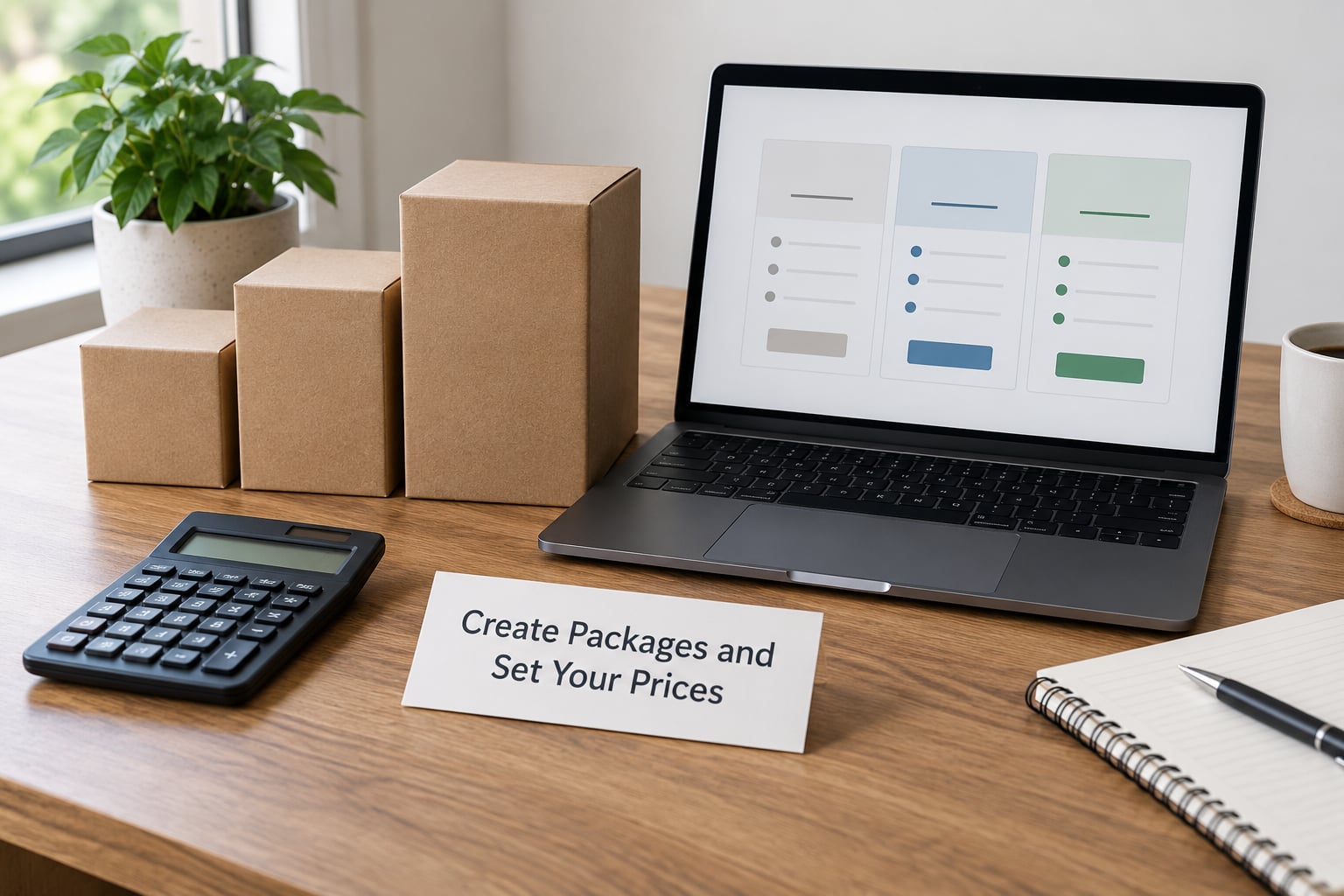
Price by project, not by the clock, because clients buy an outcome. Estimate the hours honestly, add a margin, then add the share of overhead the job should carry.
A senior operator on the HomeRecording.com boards describes a formula that still holds up: your rate is what your time is worth, plus gear depreciation, plus occupancy costs such as rent, financing, and electricity. That same operator doubled his rate, lost roughly a third of his clients, and still made more money. That result is common enough to plan around.
Build three tiers. An entry package with fewer deliverables, a standard package that most clients buy, and a premium package with extras such as extended revisions, stem delivery, tuning, or a rush turnaround. The middle tier does most of the work; the tier structure lets a client trade up instead of negotiating down.
Add a minimum booking length. Short sessions rarely cover the setup, the warm-up, and the teardown, and many studios set a three-hour floor for exactly that reason.
How you know it worked: you can say your price out loud without apologising, and you know roughly how many of those jobs you need each month to cover your fixed costs.
5. Build a Portfolio and Marketing System
Three strong samples beat thirty mediocre ones. Choose pieces that sound clearly different from each other, and pick work you actually finished rather than work you secretly wish you had received.
Artists on r/makinghiphop are actively posting looking for engineers willing to work with local artists, and separately for mixing help. That is your lead list, and it refreshes every week whether you engage with it or not.
Outreach works better as a conversation than an advertisement. Mention something specific about the artist’s release, say what you would change technically, and offer a low-risk entry point such as a mix review of one track.
Ask every satisfied client for a written testimonial and permission to post the work. Then keep a simple rhythm: one short piece of finished work each week, one useful tip each week, and one direct outreach each day.
How you know it worked: at least one client booked you without you chasing them.
6. Fill the Calendar Without Undercharging
Publish a booking window instead of an open calendar. Most working engineers book two to four weeks out, and saying so protects you from the client who assumes you are free tonight.
Qualify before you quote. Ask who the artist is, what the project is, what the deadline is, and what they have already tried. That conversation filters out clients looking for a miracle on a hobby budget.
Take a deposit before the session. One operator launching a mobile studio in the Netherlands required payment before service was provided, and that single policy removes most of the cancellation and no-show risk.
Run a pipeline rather than reacting to each enquiry: new lead, qualified, quoted, deposit paid, booked, delivered, invoice sent, follow-up due. Knowing how many deals sit at each stage tells you whether your problem is marketing, pricing, or follow-up.
How you know it worked: your deposit terms are stated on your booking page and nobody argues with them.
7. Deliver a Professional Client Experience
Send a short onboarding message before the session with the address, parking, arrival time, and what to bring. Then treat the file management as part of the service: a consistent folder structure, clear version naming, and a dated archive of every project.
Communicate on a schedule rather than continuously. Clients who message you twenty times a day for six weeks will drain you faster than any bad mix.
Deliver through a link with an expiry, list exactly what is included, and state the revision limit again at handoff. Close with the invoice, the archived session, and a short request for a testimonial.
Because you work from your home, protect your address. Describe the location as a private studio, list it on the listing by neighbourhood only, and meet first-time clients in public the first time. That advice comes straight from home-business forum consensus and it costs you nothing.
How you know it worked: the client knows what they got, what happens next, and when you will need anything from them.
8. Track Profitability and Reinvest
Compute four numbers every month: your real hourly earnings after overhead, revenue per project, profit margin, and the share of clients who come back. Then calculate utilisation, which is booked hours divided by hours available, because utilisation is the variable that actually decides whether you break even.
Here is the arithmetic. Take your fixed monthly costs, divide by your realistic hourly rate, and you get the billable hours you must sell to cover them. If your fixed costs total the equivalent of, say, forty billable hours at your rate, and you have one hundred and sixty available hours, you need twenty-five percent utilisation just to pay the bills, before paying yourself.
When clients come back, raise rates for new work rather than holding old clients at old prices. Quote a small annual increase and explain it as a normal adjustment.
Reinvest only where a specific job was limited. If mixes are slow, buy time. If revision rounds are long, tighten the written limit. If the bottleneck is finding work, spend on outreach volume rather than on gear.
How you know it worked: you can state what one hour of your time earned last month and what you are changing as a result.
Common Mistakes
Pricing by what feels fair. Fair has nothing to do with your rent. Price against your overhead and your time, then let the market push back if it pushes.
Buying gear early. The gear will not find clients, and a depreciating asset sitting in a spare room earns nothing. Fix this by freezing equipment spending until your monthly revenue covers your monthly costs.
Offering unlimited revisions. Write a limit, charge for extra rounds, and say the number out loud when you quote.
Using one account for everything. Personal and studio money in the same balance makes bookkeeping guesswork at tax time. Open the business account first.
Skipping deposits. Non-payment hurts far more than a lost deposit would have. Require payment before the session or at least half before work starts.
Accepting vague briefs. If nobody can describe the reference tracks and the deadline, the project will grow during the work. Send an intake form before quoting.
Growing by adding hours. If utilisation is already high and income is still flat, the answer is a higher rate, not more hours. One operator discovered after two years that he was effectively earning pocket change per hour while working seventy hours a week, and the fix was the rate, never the calendar.
Short operating tips: keep a written scope on every job, put the revision limit in writing, invoice the same day you deliver, and review your numbers on the same date each month.
Frequently Asked Questions
How much does it cost to start a home recording studio?
Most home studios start with an existing computer, a used interface, two or three microphones, basic treatment panels, and software the owner already owns. Because so much of the gear is already paid for, the real starting cost is usually the business layer: entity registration, a liability and equipment insurance policy, treatment materials, a contract template, and a few months of operating runway. Costs vary widely by region and by whether you rent or own, so build a twelve-month budget that covers insurance, utilities, software, and replacements before quoting a single rate.
How do I price recording or mixing services?
Price by project. Estimate the hours honestly, add your margin, then add the share of overhead that job should carry. A senior operator’s formula is your time’s worth plus gear depreciation plus occupancy costs. Package your work into an entry, standard, and premium tier, set a minimum booking length, and include a fixed number of revisions. Raise rates for new clients rather than repricing the clients you already have.
Do I need a business license to run a home studio?
Requirements vary by country, state, and city, and some jurisdictions require registration for any home-based business while others exempt small service businesses. Start by checking your city or county business office and your homeowners association or lease. Two things are worth settling early regardless: written landlord permission if you rent, and confirmation from your insurer that commercial activity and income equipment are covered. Rules change, so verify locally rather than relying on general advice.
Should I charge by the hour or by the project?
Charge by the project and quote from an internal hourly estimate. Clients buy a finished record, not an hour of your life, and hourly billing invites arguments about time you cannot defend. An hourly rate still belongs in your pricing, because it is what converts a scope into a number. Publish the project rate, hold the hourly figure behind it, and charge extra for rush deadlines and revision rounds beyond your written limit.
What equipment do I need before taking paid clients?
You need a room you trust for monitoring, an interface, microphones you know thoroughly, closed-back headphones for tracking, and a DAW you can operate without thinking. Treatment panels matter more than microphone quality, because a room with reflections will follow even an expensive mic. Everything else is optional until your revenue covers your costs. Buy the interface or the converter only after a specific job has been limited by the gear you already own.
How do I get my first home studio clients?
Start with a focused offer and three finished portfolio pieces. Post where artists already ask for help, since forums like r/makinghiphop regularly feature engineers looking for local artists to work with. Send short, specific outreach that references the artist’s actual music and offers a low-risk first step, such as reviewing one track. Ask every satisfied client for a testimonial, and describe your location as a private studio without publishing your address.
Conclusion: Start With One Paid Session
The whole system reduces to five habits: one niche, one written scope, a deposit before work, a rate that covers overhead, and monthly numbers you actually look at. None of them require a bigger room or a better console.
So do one thing today. Write down a single service you will sell, list exactly what the client receives, decide the price using your own overhead as the baseline, and then recruit one person who fits that description for a first paid session. The second session is easier than the first, and the twentieth is a business.