Learning how to make a trap beat step by step comes down to five sounds and one workflow: set the tempo around 140 BPM, program kick and snare into a half-time pattern, layer fast hi-hats, write and tune an 808 bass that shares notes with the melody, then arrange and mix the whole thing. A first beat takes most beginners two to four hours if they stay focused on one technique at a time.
The trap sound came out of Atlanta in the late 2000s, built on the Roland TR-808 drum machine, and it now stretches from melodic trap to rage to drill. The hardware changed. The fundamentals barely did.
Table of Contents
- What You Need
- Step-by-Step: How to Make a Trap Beat
- Step 1: Start With Tempo, Key and a Clean Project
- Step 2: Design the Kick and Sub Bass
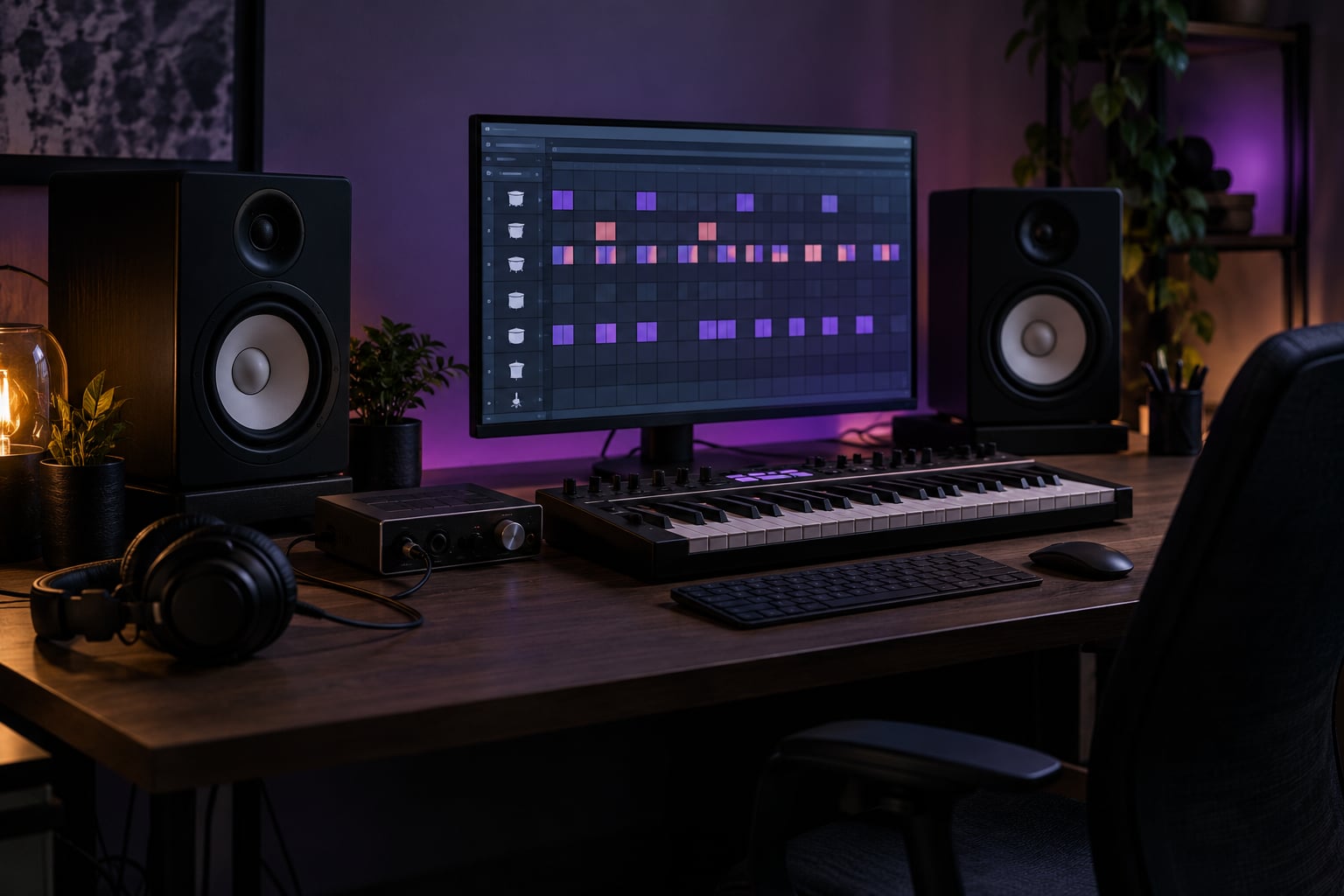
- Step 3: Build the Trap Drum Pattern
- Step 4: Choose or Create the Melody
- Step 5: Add Texture and Movement
- Step 6: Arrange the Beat
- Step 7: Mix and Master the Track
- Step 8: Export and Test the Finished Beat
- Common Mistakes and How to Fix Them
- Frequently Asked Questions
- Conclusion
What You Need
You need three things, and only one of them costs money. Most beginners spend far too long shopping for gear before they have made a single drum pattern.
- A DAW — the free or paid software where you arrange everything. This is the one thing you actually need.
- A sample library — a folder of kick, snare and hat sounds. Every DAW ships with some, so you can start before you buy anything.
- A MIDI controller — optional. It speeds up melody writing but has nothing to do with drums.
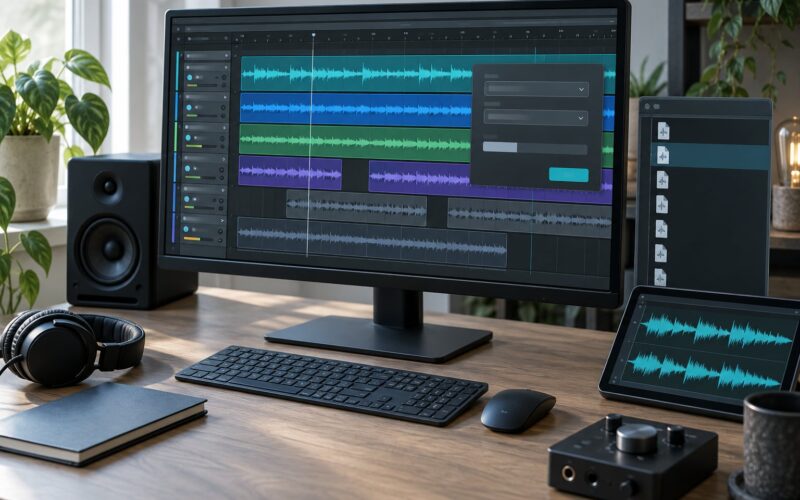
Any DAW handles trap fine because the genre needs very little. FL Studio, Ableton Live and Logic Pro all cover tempo, a step sequencer or piano roll, a sampler, EQ and compression out of the box, and the menus differ in name only. In FL Studio the channel rack handles drum programming, in Ableton Live a drum rack with a sequencer view does the same job, and in Logic Pro the Step Sequencer and Sampler play that role.
If you have zero budget, download a free DAW and use its bundled drum sounds. Beat-making skill comes from repetition on the fundamentals, not from a bigger library. One producer explaining his approach on r/trapproduction put it simply: learn one new technique per session instead of trying to finish full beats.
Here is the short version of what makes up a trap beat, so you know what you are building:
| Core sound | What it does | What to listen for |
|---|---|---|
| Kick | Punch on beat 1 | A tight click at the top and a body that ends fast |
| 808 bass | Holds the key and weight | Long decay, tuned to the melody’s note |
| Snare and clap | Backbeat on beat 3 | Crisp crack, layered with a noise tail |
| Hi-hats | Energy and tempo feel | 16ths with varied velocity, occasional rolls |
| Melody | The hook | A short minor loop, 2 to 4 bars, dark bells or piano |
Step-by-Step: How to Make a Trap Beat
Work through these eight stages in order and you will end up with a finished, exportable beat. Each stage has a specific job, and doing them out of order is what makes beginner sessions stall.
Step 1: Start With Tempo, Key and a Clean Project
Set your tempo first, because everything else sits on top of it. Trap traditionally lives near 140 BPM, which produces the half-time feel: the snare lands on beat 3 of every bar and the listener hears four bars as one long beat. If 140 feels slow when you clap along, try 150 and hear it the same way.
| Subgenre | Tempo range | Sound traits |
|---|---|---|
| Atlanta trap | 135-145 BPM | Deep sliding 808s, sparse bells, heavy snares |
| Melodic trap | 130-140 BPM | Piano or string lead, emotional, slower hats |
| Rage | 145-160 BPM | Distorted 808s, aggressive synth stabs, harder transients |
| Drill | 130-145 BPM | Sliding 808s, rapid hat patterns, sparse and tense |
| Plugg | 140-150 BPM | Rolled kicks, off-beat snare placement, clipped low end |
Pick a key and note it. F minor and D minor show up constantly because they sit comfortably low, but any minor key works. New project folders matter more than beginners expect: name it, group your tracks as Drums, 808, Melody and FX, and label every sample inside the drum folder as kick, snare, hat or clap. Saving a beat you cannot find again feels exactly like losing it.
Finally, choose a reference track and keep it on a muted playback so you are matching energy rather than copying notes. Listening at half-time is the fastest way to hear where the gaps are.
Step 2: Design the Kick and Sub Bass
Build the kick and the 808 together, since they compete for the same low end. Drop a kick on beat 1 of a one-bar pattern and listen. A good trap kick is punchy rather than long, so if it booms for half a bar, find a shorter sample or shorten its decay.
For the 808, load a sine wave into your sampler, since that is the pure sub tone the Roland machine was known for. Use a long decay, set the pitch to the root note of your chosen key, and place the note on beat 1 to hold the bar down.
Tuning the 808 to your key is the single most valuable trick in trap production. Take the root note of your melody, find the same note on the 808, and match it. A pitch or tuning plugin set to roughly 1-5 cents of correction takes any sample that drifts back in tune, and a short glide between two adjacent notes creates the slide that makes the low end feel alive.
Give the 808 its own volume control and start it lower than you think it needs to be. On small speakers it will sound enormous, and a level that hides the melody on a phone will distort on a club system.
Step 3: Build the Trap Drum Pattern
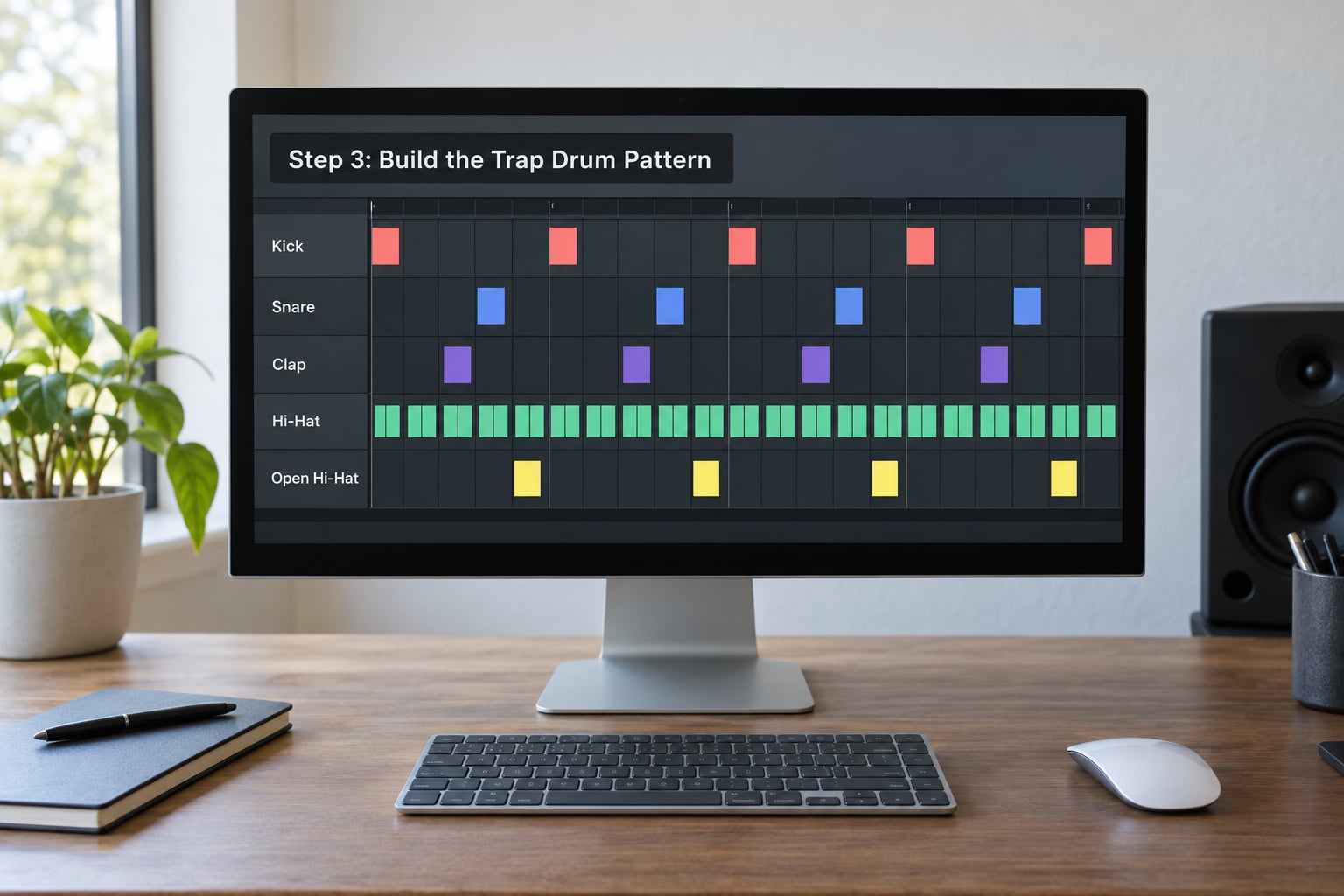
The drums are the skeleton, so program them before adding anything melodic. Kick on beat 1, snare on beat 3, and treat anything else as a choice you make deliberately.
Here is the basic trap grid. K is kick, S is snare, C is clap, x is a closed hi-hat and o is an open hi-hat:
1 e + a 2 e + a 3 e + a 4 e + a
K . . . . . . . S . . . . . . .
. . . . . . . . . . . . C . . .
x x x x x x x x x x x x x x x o
Clap usually doubles the snare an octave later so the backbeat gets brighter. Put a second kick on the “and” of beat 2 or the “and” of beat 4 for movement, and open a hi-hat on the last sixteenth to frame the bar.
Velocity is what stops a programmed pattern sounding like a machine. Kick and snare around 110-120, hi-hats between 60 and 100 with no two 16ths matching exactly. Drop the velocity on every fourth hi-hat to about half, which is the classic shuffle feel.
For rolls, raise the hat pattern from 16ths to 32nds for one bar or use a three-step triplet grouping at the end of a phrase. Then mute some hats instead of adding more. Beginners lose their groove by filling every gap, and sparse patterns leave room for a vocalist to sit.
Step 4: Choose or Create the Melody
Use a minor scale. Bell, pluck, piano and dark synth leads are the standard trap palette, because short decaying sounds leave space for the 808 underneath them.
Load a minor scale in your sampler and play a 2 to 4 bar loop. Keep the notes inside one octave, land the melody on the snare or the kick, and repeat. If you cannot play, scribble a rhythm first and assign notes afterward; beginners on r/makinghiphop often report that scat singing over a finished beat teaches them bar writing faster than any tutorial.
Chord progressions work too. Am to F to C to G or i to VI to III to VII in a minor key give you a hook without a lead line. Either way, stay near the root your 808 is already playing.
Step 5: Add Texture and Movement
Now fill the space around the drums, carefully. Short percussion layers, vinyl noise and reverse cymbals add width, and a riser or reverse crash on the bar before a hook gives the transition a lift.
Pads and string layers bring emotion to melodic trap, while a chopped vocal sample adds attitude to a rap beat. Keep added layers quieter than your melody and quieter still than your snare, since anything louder starts competing with the words.
The rule of thumb: one element per job. If two sounds are fighting for the same space, mute one and listen before deciding.
Step 6: Arrange the Beat
A finished beat needs sections, not one loop repeated sixteen times. A workable structure runs intro, hook, verse, hook, bridge or breakdown, hook, outro, with bars counted so you can hear the shape.
Build tension by subtraction. Remove the hats for two bars, drop the melody in the second half of a verse, or leave a bar of silence before the hook lands. Producers on r/trapproduction frequently describe overproduction as their biggest problem, and the cure is removing layers rather than adding them.
Use automation on volume or filter cutoff to lead into each section, and give the 808 a re-trigger or a short note length change in the breakdown so the low end changes shape between sections.
Step 7: Mix and Master the Track
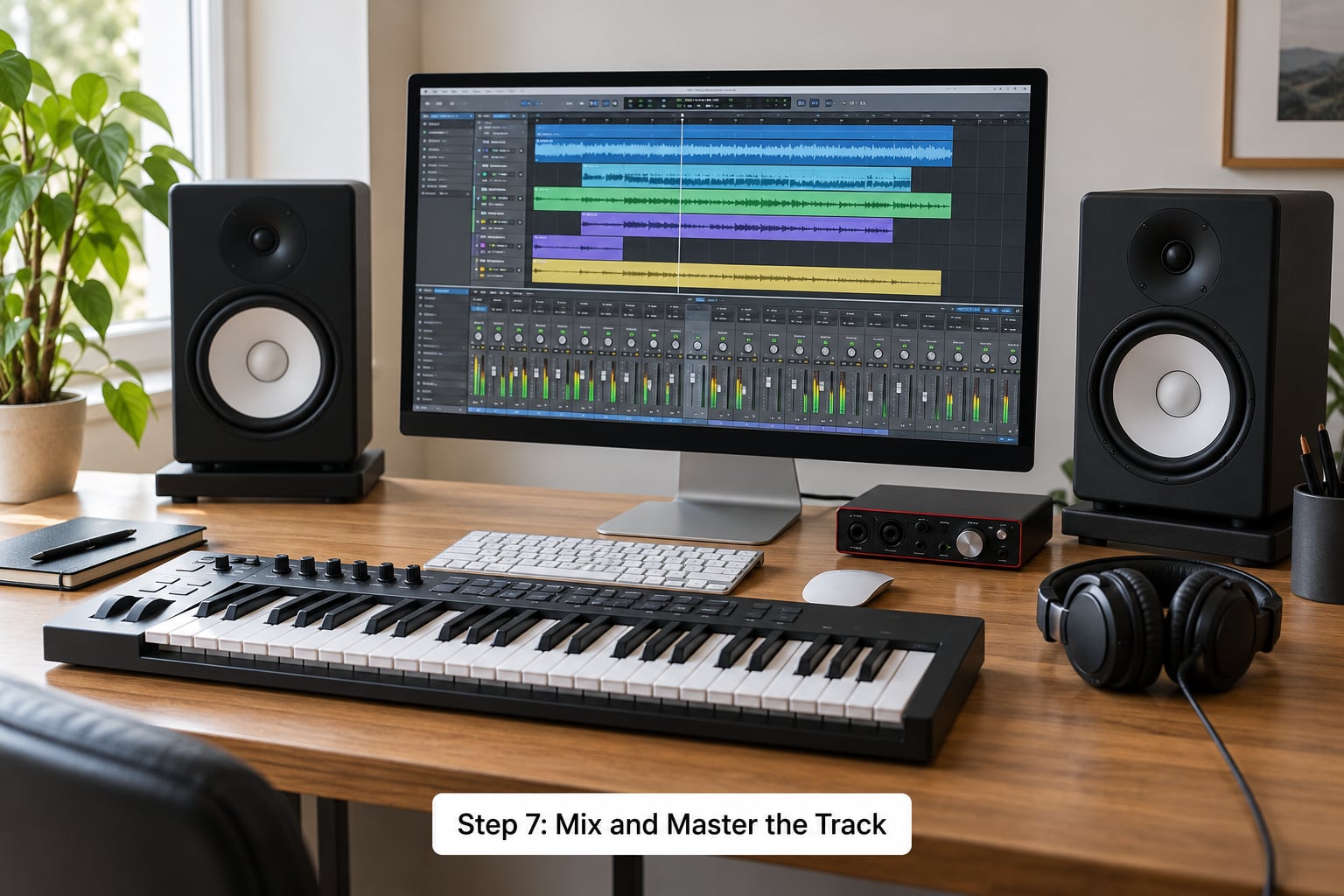
Mix in gain stages so each fader sits near unity and you can raise or lower anything without surprises. Then work top-down.
- EQ carve the kick and 808. High-pass everything except your sub around 25-30 Hz, and cut a small amount around 200-300 Hz where mud lives.
- Sidechain compression. Route your kick into the 808 and melody as a sidechain trigger so they duck slightly on every kick. About 4-6 dB of reduction feels right, and 30 ms attack keeps the bass punchy.
- Group the drums. A drum bus with mild saturation around 2-4% glues the kick, snare and hats into one hit.
- Balance for the voice. Open space with EQ cuts around 2-4 kHz or by using a delay throw on a phrase, and keep your snare from getting buried.
Watch the master fader and the master output meter at the same time. If the meter sits in the red, lower the drum bus rather than adding a limiter, since that gives you control later. Trap is meant to sound loud, but clipping is distortion you did not choose.
Step 8: Export and Test the Finished Beat
Export as 24-bit WAV at your project’s sample rate, 44.1 kHz or 48 kHz. Use the full mix buss rather than individual tracks unless a collaborator needs stems.
Then test it in three places: headphones for detail, your phone speaker for the low end check, and a real speaker or car system if you have access. Anything that disappears on a phone is buried, and anything that annoys you after four listens is a mix problem, not a music taste problem.
Keep the project file. Most beats need revision within days, and rebuilding from scratch wastes the session you already finished. Saving a tagged, dated copy as you go prevents duplicate projects from piling up.
Common Mistakes and How to Fix Them
The 808 clips the master bus. This is the most common beginner failure. Lower its velocity or gain, shorten the decay, check that your sidechain is set up correctly, and lower the master before reaching for a limiter.
The beat sounds muddy. Your kick and 808 share the low end with nothing controlling it. Sidechain the bass to the kick, high-pass the sub at around 30 Hz, and cut 200-300 Hz on the kick.
Kick and hi-hats fight each other. High-pass your hi-hats around 300-500 Hz so the kick owns the low end, and keep hats quieter than you think they should be.
The mix sounds cluttered. You layered too much. Mute everything except drums, 808 and melody and listen; add back only what you miss.
The beat sounds robotic. Your velocities match. Change them one by one, drop every fourth hi-hat, and slide your 808 instead of leaving it static.
Two samples clash in different keys. Find the root of each sample and pitch it to the beat’s key, or drop it. Badly tuned layering is worse than silence.
A few habits carry more weight than any plugin. Start every session with drums and 808 only. Learn one new technique before you chase a finished beat. And write over your own instrumental right away, because a melody that clears space for bars is a melody that works.
Frequently Asked Questions
What is the best DAW for making trap beats?
FL Studio, Ableton Live and Logic Pro all handle trap completely well, since the genre only needs a step sequencer, a sampler, EQ and compression. FL Studio’s channel rack suits fast drum programming, Ableton Live’s drum racks suit live layering, and Logic Pro ships with a large library of usable sounds. Pick whichever you can learn fastest and stay there for a few months.
What BPM should I use for a trap beat?
Classic Atlanta trap sits around 140 BPM, which creates the half-time feel where the snare lands on beat 3. Rage runs faster at 145-160 BPM, drill sits at 130-145 BPM, and melodic trap often drops to 130-140 BPM. Start at 140, then move the tempo to match the energy you hear in your reference track.
How do I make trap hi-hats sound more interesting?
Vary the velocity on every hi-hat instead of leaving them all identical, and drop every fourth 16th to roughly half strength for a shuffle. Add occasional rolls by moving from 16ths to 32nds or three-step triplets for one bar. Open a hat on the last sixteenth of each bar and keep the whole pattern quieter than your snare.
Do I need a bass to make a trap beat?
Technically no, but a beat without low end usually feels empty. Most trap relies on a sustained bass note that holds the key under the melody, and that is normally an 808-style sine wave with a long decay. If you only have stock samples, a long sustained kick can stand in, but a real 808 gives you the sliding low end the genre is built on.
Can I make a trap beat with free software?
Yes. Every major free DAW includes a drum machine, a sampler, EQ and compression, which is everything a first trap beat needs. Start with the bundled kick and snare sounds, synthesize your own 808 from a sine wave, and use a stock sampler with a minor scale for the melody. Paid plugins improve the polish, never the fundamentals.
How long does it take to make a trap beat?
A beginner who already knows their DAW can finish drums, 808 and a melody loop in two to four hours. Expect the first week of sessions to be slower while you learn the interface. Arrangement and mixing take the longest, since that is where judgement matters more than technique, and most producers rebuild the same beat several times before it feels right.
Conclusion
Open your DAW and build a kick on beat 1, a snare on beat 3, eight hi-hats and one long 808 note in a minor key. That four-part skeleton is where the learning is, and getting it to sound good takes longer than adding layers ever will.
Once the groove sits, tune the 808 to your melody, add a two-bar minor loop, and arrange an intro and a hook with space between them. Mix last: high-pass the low end, sidechain the bass to the kick, and keep the master out of the red. Repeat that loop tomorrow with a different tempo and one new technique, and the process of how to make a trap beat step by step turns into a habit rather than a tutorial you keep reopening.