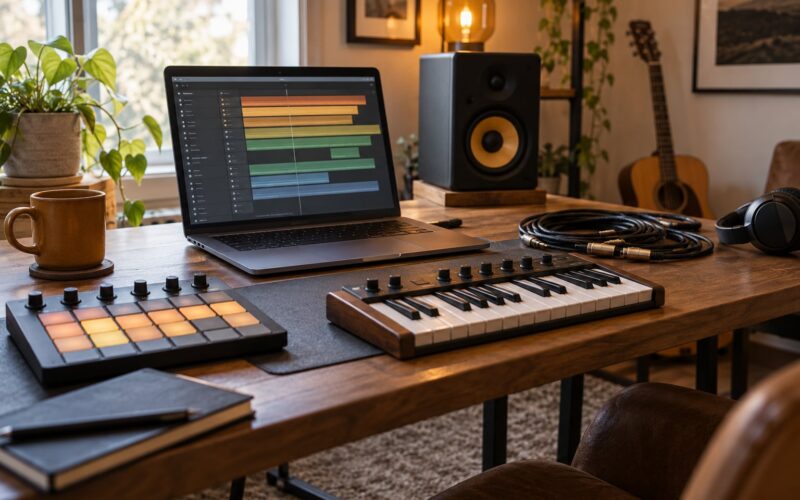
Reading a crowd as a DJ means watching how people physically and verbally answer what you are playing, then changing tracks, energy and direction while the set is still running. It is a feedback loop you can practice, not a gift you either have or don’t. Six to twelve months of regular gigs will make it second nature.
Most new DJs try to do it with instinct alone, and instinct is usually the guy who shouts requests over the mic. The reliable version is boring in the best way: arrive early, know what the room looked like ten minutes ago, know what it looks like now, and have a small number of musical moves prepared for each state.
What follows is the workflow I would hand a DJ with six months of experience who is stuck at the same level every time.
What You Need
You need four things, and none of them are expensive. The first is a sightline. Position the booth or laptop so the dancefloor is visible without turning your head, and check where the speaker stacks are pointed too, because a badly aimed system kills the front row no matter what you play.
The second is a way to feel tempo and energy without staring at the screen. Your hands already know the BPM; what they need is permission to lead. Practise nodding through the bar count so your body tracks the pulse while your eyes stay on the floor.
The third is preparation that survives contact with a real room. Bring more music than you need for the slot, sorted into three groups: openers that work on a half-full floor, builders for a room that is warming up, and peak material you have not touched yet. Add three rescue tracks on hot cues, something recognisable in five seconds for when the floor empties out mid-set.
The fourth is the habit of pre-reading, which is the single most repeated piece of advice in DJ forums. Arrive 20 to 30 minutes early, watch the outgoing DJ, ask bar staff what the room has been drinking and how loud they like it, and glance at the venue’s recent social posts to see who walks through the door. On a resident night you can ask the previous DJ directly; most will happily tell you what worked and what emptied the floor.
One more piece of kit that pays for itself immediately: somewhere to write. A phone note with a timestamp and two words per track is enough to build the clearest picture of your own sets you will ever get.
How to Read a Crowd as a DJ: Step-by-Step
Observe the room before you start
Before the first record drops, count heads and note where they are standing. People bunched near the speakers and moving are your engine. People along the walls, at the bar or near the door are your audience waiting for a reason, and they are usually the same people who will leave early if the set stays flat for too long.
Watch conversation volume. A loud room at the start is usually two things at once: people who have been there a while and people who are being fed a bad sound system, both of which need different responses. Look for phones held up in the air, which is a very different signal from phones held low at a table.
Then play your opening track and watch the reaction rather than the mixer. Count how long it takes before movement appears, whether people who were dancing stopped, and whether anyone turned around. You are looking for a change in behaviour over about 30 seconds, not a single raised hand.
Identify the crowd’s current energy
Energy comes in four recognisable states, and each one calls for a different set of musical choices.
Low means people are present but not committed, talking, checking coats, holding drinks with two hands. Do not fight it with an aggressive peak-time track. Match a lower BPM, something familiar or vocal, and a slower build.
Steady means a consistent head nod and no signs of strain. This is the best place to make a decision, because the room is neutral and will follow a clear idea. Introduce a new element here, one per track at most.
Rising means bodies moving in time and people moving closer to the floor. Push now. Add a harder drop, raise the vocal density, extend the track length by looping the intro of something you know works.
Overheated means arms everywhere, shouting over the track, people dancing through the breakdowns. Ease off deliberately with a filter sweep, a tempo reduction of a few BPM, or one calm record you have saved for exactly this. Overheating is how rooms crack and empty.
Track selection follows the state, not your taste. Tempo, genre, vocal density and track intensity are four dials, and you only need to move one or two per track to shift the room.
Choose a deliberate starting point
Your opener tells the room what kind of night this is, so choose it on purpose. Play something that fits the venue and the time slot without spending material you need later.
The most common mistake is opening with your best peak-time track because you are nervous and want to prove yourself. It works for four minutes and then leaves you with nothing above it. A better pattern is a familiar opener, one track to establish the genre, then a build.
If the room is already at peak energy when you start, do not climb. Sustain for two or three tracks, then take the peak up a level later when the room has settled into your set.
Test tracks and read the response
To test a track is to play it and read the answer honestly. Movement is the main signal: are people bouncing, swaying, standing still, or walking away. Sing-along, clapping on the drop, smiling at friends, and people choosing to stay on the floor for the full track all carry more information than any reaction you get in the first eight bars.
Read the intro, the drop and the chorus separately, because a crowd will accept a slow start and reject a disappointing drop. If movement increases after the chorus, the track is working even if the intro looked flat.
Give each track a fair 30 to 45 seconds before deciding. Long intros and slow builds fool people who quit too early, and one person clapping near the back is not a verdict.
Adjust the set without losing momentum
When something works, do not immediately change it. DJs panic out of a good groove. Extend the working sound with one more track in the same register, or ride a loop for eight or sixteen bars while you look again.
When something stalls, decide between contrast and commitment. Contrast means a deliberate short dip: a familiar record, a filtered intro, a breakbeat, something that resets the room’s attention. Commitment means you were simply too timid, and the fix is to hold the harder version for another track.
A useful rescue pattern is a three-step correction. First, strip back: same genre, less intensity, no new element. Second, re-engage: bring in something recognisable that most of the room has heard before. Third, rebuild upward from there. Most dead floors come back from the second step.
Keep the transitions physical. A quick mix, a short EQ filter sweep, or a clean fade during a chorus gives the room a moment to reorient, which is often all a drifting floor needs.
Recheck the crowd throughout the set
Re-read the room after every meaningful change: a new genre, a big drop, a long breakdown, a mic announcement. Take one deliberate scan every few tracks and compare it with your last note.
Watch the outer edge of the floor as well as the centre. People standing against the back wall or near the exit are your earliest and most honest signal, and they respond to a change in genre faster than anyone already dancing.
One good moment does not mean the whole set is working. A packed floor during a single track can hide two hundred people who have already decided to leave. Judge the trend across several tracks.
Common Mistakes
Treating the loudest person as the whole room. There is usually one group at the front going hard. Play exclusively for them and you will lose the rest of the floor within twenty minutes. Read the middle and the edges instead, because the people already moving are usually moving to the tempo, not to your choice.
Chasing every request. One loud request does not equal a room request. Three or four people asking for the same artist or era is a pattern, and a pattern is worth responding to. Play it, and play it well, then go back to your own arc.
Switching direction every track. Changing genre or energy on every single record gives the room no time to settle. Most of the time one direction should hold for three to five tracks before you change anything.
Ignoring negative signals. Phones coming out, drift toward the bar, thinning edges and people checking the time are all real. Treating them as noise is how a set quietly dies for twenty minutes.
Over-reading a floor that is already working. This one bites experienced DJs. Normal movement fluctuates track to track, and if you react to every wobble you will wreck a set that was fine. Change direction only when a pattern holds across two or three tracks.
Staring at the laptop. The most common complaint on DJ forums is that new DJs lose the room behind a screen. Angle the display away from you, use the jog wheel feedback instead of the track list, and give yourself a glance-check rhythm every couple of minutes.
Spending your peak material in hour one. Build an energy arc and hold the strongest material for the part of the night when the room has earned it. Running out of gas at midnight because you peaked at ten is a planning problem, not a reading problem.
Writing nothing down. A timestamp and two words per track, kept during or straight after the set, is how you find out that your last three peaks all landed in the first eight minutes.
Frequently Asked Questions
What is crowd reading in DJing?
Crowd reading is the skill of observing how an audience physically and verbally responds to music, then adjusting tracks, energy and direction in real time. You look at movement, singing, clapping, phones, and where people are standing, form a quick read on what the room wants, test it with the next track, and keep the direction that worked. It is a feedback loop, not a talent.
What is the rule of 32 in DJing?
The rule of 32 is a working heuristic rather than a law: a typical club night has roughly 32 people on the dancefloor at its busiest point. DJs use it as a sanity check on what is achievable and on how hard they should be pushing. It is also handy as a gauge of whether a room feels busy or empty, though real numbers vary hugely by venue, slot and night.
Is reading a crowd instinct or a learnable skill?
It is learnable, and experienced DJs mostly do it by repetition rather than intuition. The observation habits described here, arriving early, watching the outgoing DJ, writing notes on what worked, and rereading the floor after every change, become automatic after enough consistent gigs. Expect months rather than weeks, and expect it to feel effortful before it feels natural.
How do I know when to change a track?
Change when a pattern holds, not when one track disappoints. Give every record a fair 30 to 45 seconds past the intro, then judge movement, singing and whether people stay on the floor through the chorus and drop. If two or three tracks in a row show drifting attention, or people are walking to the bar mid-song, it is time to strip back to something familiar and rebuild.
Should a DJ take requests?
Take them selectively and on your terms. A single loud request from one person is not a room, but repeated requests for the same artist or era tell you something real about who is standing there. Confirm that you will play it, play it well, and then return to your own arc. Agree on a slot or a card system for larger events so you are not taking calls all night.
How do I fix a dead dance floor mid-set?
Work in three steps. Strip back to the same genre with less intensity and no new element. Then play something recognisable that most of the room has heard before to pull attention back to the floor. Then rebuild upward from there with one new idea per track. Avoid jumping straight to a harder record, since a thinning floor usually needs commitment to something familiar before it needs intensity.
So the first move is small: arrive at your next gig half an hour early, watch the room before anyone asks you to do anything, and write down three timestamps with two words each. Everything else in how to read a crowd as a DJ grows out of that habit.