Running a studio session as an artist means owning every creative and performance call in the room: what the song is, how each part should be played or sung, which take is the one, and when a part is finished. The engineer owns microphones, gain, routing, and the technical chain. If you show up knowing the difference, a two-hour block turns into a finished vocal instead of a day of polite confusion.
The honest part is that most first sessions do not fail on talent. They fail on preparation, unclear feedback, and clock blindness. Ten minutes of setup the night before removes an hour of dithering on the day.
Here is what I bring, how I run the room from setup to sign-off, and where sessions most often go sideways. A full release-ready single usually needs three to six hours once the arrangement is locked; a two-hour block is realistic for vocals on a finished instrumental or a tight demo, and tight enough that your scope has to be honest.
Table of Contents
- What You Need
- How to Run a Studio Session as an Artist: Step-by-Step
- Set the Session Goal and Choose the Songs
- Create a Simple Reference and Arrangement Plan
- Check the Room, Microphones, and Playback
- Agree on the Performance and Communication System
- Record the Core Performance in Controlled Passes
- Review Takes and Make Specific Decisions
- Finish with Notes, Approvals, and a Backup Plan
- Common Mistakes
- Frequently Asked Questions
- Conclusion
What You Need
Everything below is something you can have in hand before you walk through the door, and none of it requires you to own studio gear.
A one-page session goal
Write down what leaves the room. Is it a demo for pitching, a release-ready vocal comp, or a full band track-out? Is the engineer only tracking, or also editing, mixing, and mastering? The same eight hours produce very different results depending on that answer, and writing it down is what stops the scope drifting sideways at hour five.
A rough demo and two reference tracks
The demo is the translation layer. A phone voice memo with the melody, tempo, and rough arrangement is enough, and it protects the song from being rebuilt in the room by people who have never heard your intent. References work best at two: one for vocal tone, one for production or arrangement. Ten references read as indecision, and an engineer will quietly pick the two they like best.
Printed lyric sheet and chord chart
Paper, in the right key, with the section labels written on it. Phone screens fail in a vocal booth for obvious reasons: notifications, a dead battery, a locked screen, and a lyric you cannot find at the moment your take is falling apart. Print doubles if you have them.
Tempo map, structure, and arrangement notes
One page with the BPM, the key, the song structure (verse, pre, chorus, bridge, outro), and anything you already know you want: a half-time second chorus, a stacked harmony, a stripped acoustic ending. This is also where you note what you do not want. Silence is a decision someone else will make for you.
Session agreement basics
Before you book, confirm the rate structure, the minimum block, how overtime is charged, whether an engineer is included or billed separately, and who owns the recorded files. Studio rates vary hugely by city and room, so get the actual number in writing from the studio directly rather than assuming. If there is a cancellation window, know it. These are five questions, and every one of them prevents an expensive afternoon.
Your own performance basics
A water bottle, something warm to wear over your clothes so you can strip layers, comfortable shoes, earplugs for loud tracking or acoustic bleed, and any instrument or vocal gear you need. Do not pack a laptop full of unlabelled mixes you might want to audition. Pick the one demo and the two references before you leave the house.
How to Run a Studio Session as an Artist: Step-by-Step
This is the chronological path. Follow it in order and the room runs itself.
Set the Session Goal and Choose the Songs
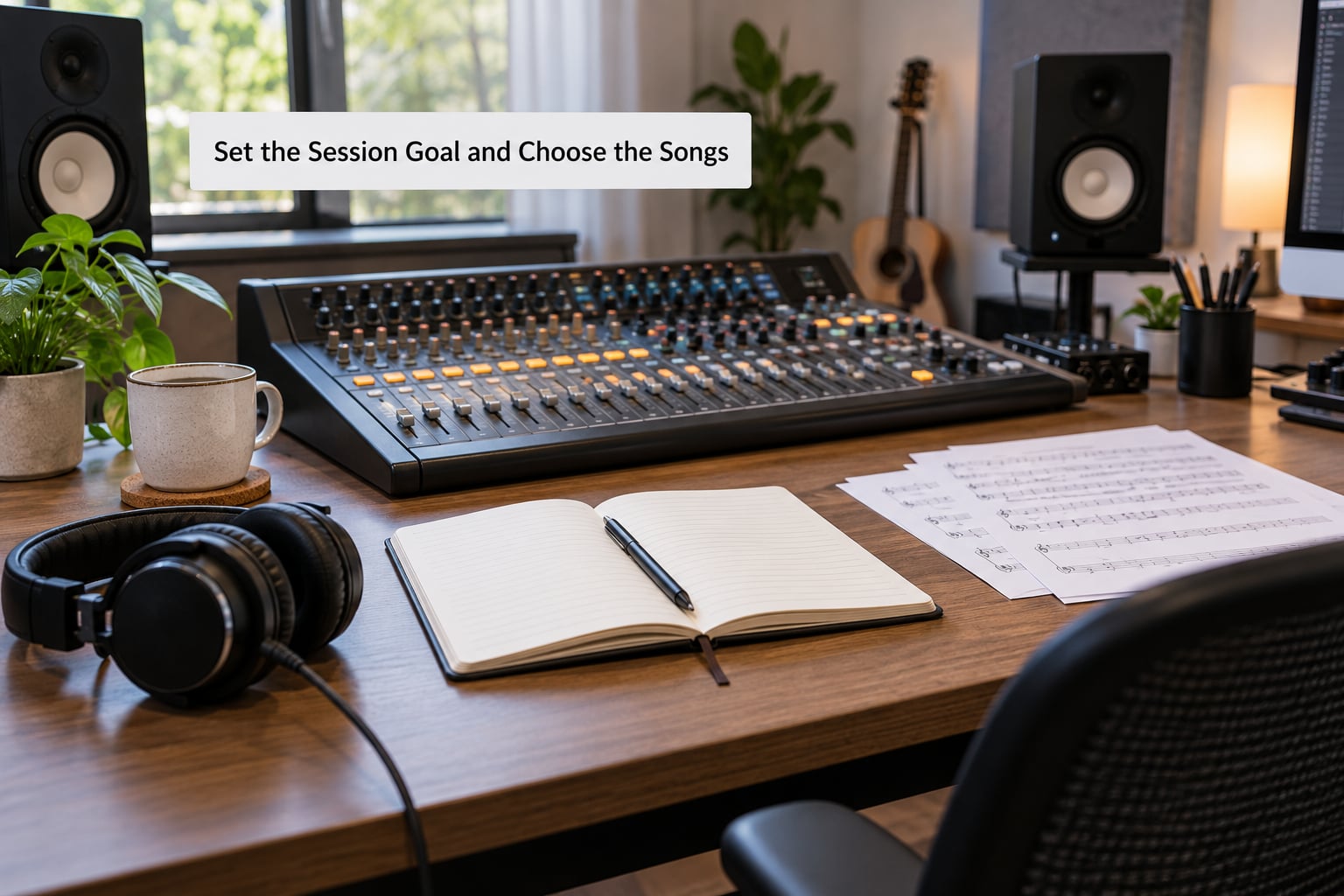
Start with the deliverable, then rank the songs by priority. Priority matters more than it sounds: the song that most needs the studio attention should be recorded first, while everyone is fresh and the clock is not the pressure. If you have three hours and four songs, something has to be demo territory. Decide which one out loud, in the first ten minutes, rather than discovering at hour three that you have been quietly attempting a record.
Say the goal back to the engineer and producer in one sentence. If they repeat it back to you correctly, you are aligned. If they do not, fix the sentence now.
Create a Simple Reference and Arrangement Plan
Put the two references in a folder with a one-line reason for each, and give the engineer the file paths before the session rather than during it. “Track two, the vocal production on the second verse” is a note. A folder called New Final folder 3 is a problem.
Build the session order yourself and put it in writing: song, target, who plays it, and how long you think it will take. The order is usually: guide track or drum and bass first, the hardest and most exposed parts next, fills and layers last. Experienced engineers reshape your order constantly, and that is exactly the sort of judgment you are paying for.
Lock the arrangement before the clock starts. If a chorus has a lift in it, decide now whether that lift is a doubled guitar, a harmony stack, or just a louder drum fill. Changing the arrangement after the rhythm section has tracked costs real money.
Check the Room, Microphones, and Playback
You do not need to understand gain staging, but you should watch where the microphone goes and where you will stand. For vocals, ask to hear the level in your headphones before you sing, and ask for it to be set while you are actually in the room rather than on a preset. Headphone level that is too high or too low is one of the most common reasons artists say they cannot sing in studios, and it costs nothing to fix at the start.
Play the reference through the monitors and say whether the voice sits where you want it. If there is hum, a dead channel, an uncomfortable low end, or a headphone mix that is louder on one side, say it in the first ten minutes while it is cheap to fix. Engineers are not waiting for you to find problems later; they are waiting for you to tell them.
A small etiquette question comes up constantly: engineers differ on whether the artist sits in the control room or stands in the live room. Ask which they prefer, and follow it. Some engineers want you out of the control room entirely so the playback stays honest. Others want you in there. Both answers are legitimate, and asking takes five seconds.
Agree on the Performance and Communication System
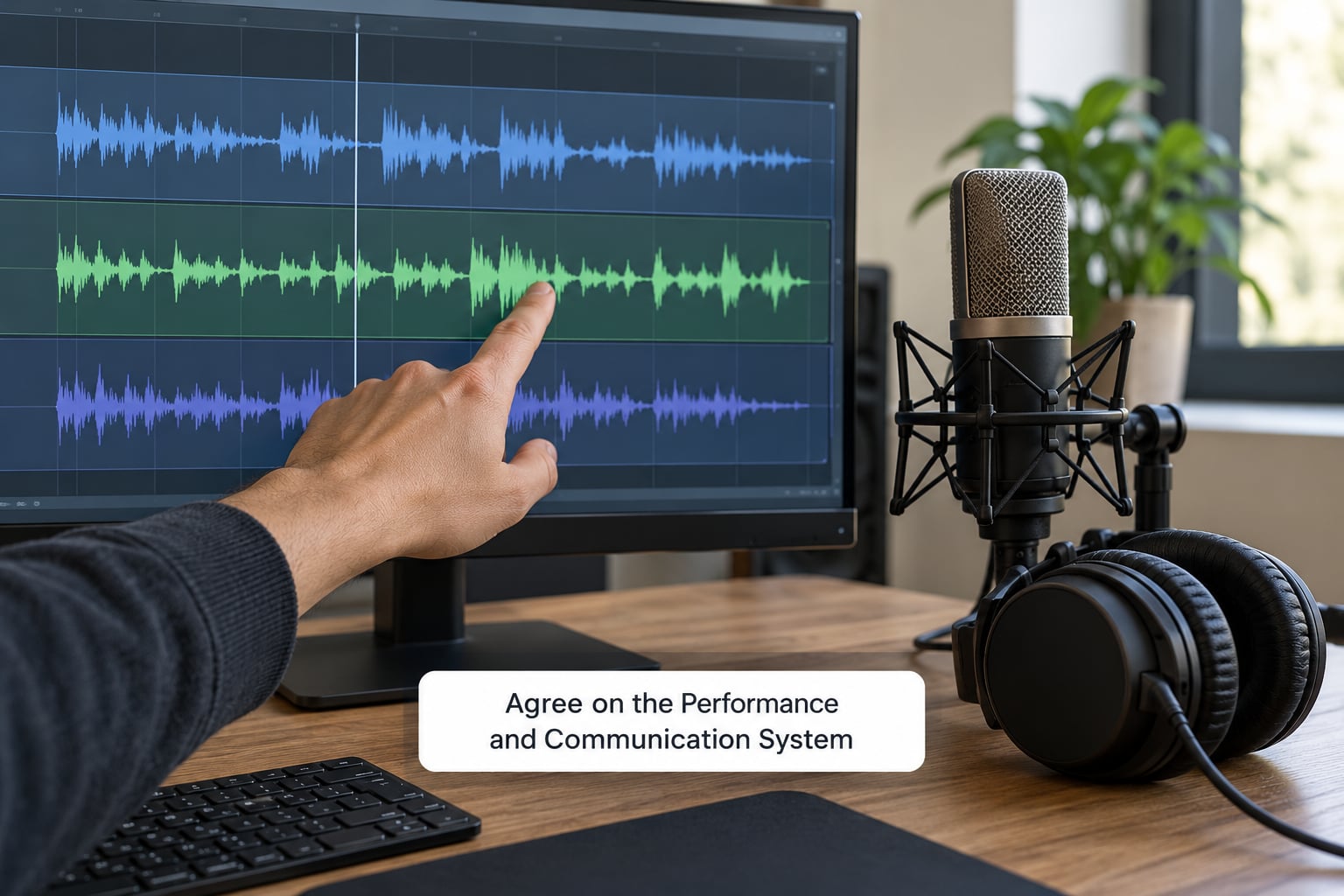
This is the part almost nobody plans, and it is where sessions either flow or stall. Before tracking, agree on how you will talk to each other for the next few hours.
Pick a simple rule: one note per take, and it has to be specific. “That was good in the second half, but the first phrase drifts flat and the last word gets swallowed” is a usable note. “It felt off” is not, and it puts the burden of guessing on the person who cannot fix the feeling for you.
Agree on signals too. A raised hand, a thumbs down, a hand on the headphone cup. Decide whether you want a reference vocal playing in one ear while you track, or dry cans for your first take. Engineers describe their job between takes as a listen-and-direct loop: they play your last take, you react, they adjust, you go again. Artists who enter that loop quickly get more usable material per hour.
Also agree on the stopping point in advance. Something as simple as “we stop after eight attempts unless you think it is genuinely close” stops both of you from drifting into take twenty-five territory.
Record the Core Performance in Controlled Passes
Warm up before the first take, not during it. Five to ten minutes of humming, gentle lip trills, and a scale or two on mic does more for a take than any gear change. Hydrate, and keep water in the booth. A dry voice is a thin voice, and the fix is water and time, not a different microphone.
Track full passes first. Get the whole thing down as a performance, flaws included, so the engineer has real material to comp from. Then do targeted passes: fix the one line that keeps drifting, double the chorus for width, stack a harmony. This ordering is the opposite of what most nervous artists do, which is to drill one line for twenty minutes and never capture the surrounding context.
Watch your own consistency more than your own perfection. Energy that lifts or drops by half across a verse is a bigger problem than a single late word, and it is the thing listeners actually hear. If you notice your level drifting, step back and redo the section rather than pushing the whole song through the same wall.
Review Takes and Make Specific Decisions
This is the step that separates artists who feel in control from artists who feel like spectators, and it is also where a lot of session hours quietly disappear.
When a take comes back, name one thing that worked and one thing that did not. Engines need that specificity to move anything, and you get far more out of a take that way than from ranking takes as good or bad. Take three may have a better chorus than take one but a worse verse; a comp is exactly the tool for that decision, and choosing the best of each is normal practice rather than an admission that you cannot sing it straight.
Know when to stop. If takes six through ten sound the same, the problem is not the singer and it is not the microphone; it is usually the arrangement, the pitch of the line, or the fact that you are tired. Say so out loud and change something other than your voice. A session where everyone notices that pattern and adjusts is a good session.
One point worth naming plainly: a professional session is harder than rehearsal, and the first ten minutes of setup anxiety is a big part of why. That is common, not a sign that you are bad at this, and it is one of the things first-time artists most often describe after their first booked session.
Finish with Notes, Approvals, and a Backup Plan
Do not walk out of a good room and hope you remembered it. Spend ten minutes on the paperwork while everything is still fresh.
Ask the engineer to star or flag your best takes in the session, and take a photo of that list. Confirm which parts are done, which need comping, and who is handling that. Agree in writing what you receive and when: rough mix, comped vocals, printed lyrics, stems, and how many revision rounds are included.
Get the files the same day if you can, and keep two copies in different places. Session files are the actual product of the day. Ask for stems in whatever format your engineer recommends for the next stage, and confirm you own the performance and the recording.
Common Mistakes
Most wasted studio hours are not dramatic technical failures. They are small avoidable delays, repeated all day.
Arriving with an unlocked arrangement
The fix is the pre-production page: structure, tempo, key, and the decisions you have already made. The session should be performance, not problem-solving.
Giving three notes at once
Three notes become one vague note, and the next take is recorded without any of them resolved. Fix: one specific note, then one take, then the next note.
Chasing take 25
Over-recording is the most expensive habit in the room. If three attempts in a row produce nearly identical results, stop and change something other than your performance.
Standing in silence after every pass
Between takes is not dead time. It is the listen-and-direct loop, and the artists who enter it quickly get more usable material per hour than the ones who wait to be asked.
Refusing the headphone mix by reflex
Some artists distrust headphones and insist on dry cans, then spend the session fighting their own tuning. Try the engineer’s mix for a pass and compare deliberately before ruling it out.
Leaving without agreeing the deliverables
A verbal handshake about comps and revisions is how arguments start a week later. Write the list down while the engineer is still in the room.
Two habits worth keeping
First, plan your day backwards from the call time, and build in a fifteen-minute break every ninety minutes. Fatigue is a technical problem before it is a musical one.
Second, let one person drive. If you are the artist and you are also producing, decide in advance that your self-producing hat comes off in the room, or that your producer hat stays on, and tell the engineer which one they are working with. Wearing both at once is the quiet tax on every self-produced session, and it is the thing self-producers most often regret.
Frequently Asked Questions
How do I know if a take is actually good?
Listen for one thing that works and one thing that does not, instead of deciding whether the whole take is good. Name both out loud so the engineer knows what to change. If takes six through ten sound nearly identical, the problem is usually the arrangement, the pitch of the line, or your voice fatigue rather than the performance itself.
Should I stay in the control room or in the live room?
Ask the engineer at the start, because practices differ. Some want the artist in the control room for honest playback, others want the artist out of it. During tracking, a booth or headphone setup is standard, while overdubs are often done from the control room. Follow the engineer’s preference and you will never be wrong.
What does the engineer actually do while I am singing?
They listen, not just operate. Between takes they play your last pass, react to your notes, adjust levels or mic placement, and set up the next one. Entering that loop quickly is the main reason some artists get more usable takes per hour. Staying quiet until asked, by contrast, wastes paid time.
How many takes should I record for a good vocal?
There is no magic number, but three to six full passes on an exposed part is a normal working range before you start selecting and comping. Set an attempt limit with the engineer before tracking so nobody drifts into the teens. Once attempts stop changing the result, change a different variable rather than repeating the same pass.
What files should I walk away with?
Ask for your best takes marked or starred, the comped or raw vocal files, a rough mix of what was tracked, and stems of the parts you own. Agree the delivery date and the number of included revisions in writing before you leave, then copy the files to a second location the same day.
Conclusion
Start with one action tonight: write the one-page session goal and the pre-production page, then pick two references. That document is the highest-leverage thing in the whole process, because it converts a booking from a negotiation into a performance.
Everything after that follows the same discipline. Decide the goal, lock the song, check the room early, agree how you will talk, give one specific note at a time, stop when the takes stop improving, and leave with marked files and a written list of what happens next. Artists who run sessions that way get better records and pay less for the same result, which is the whole game.