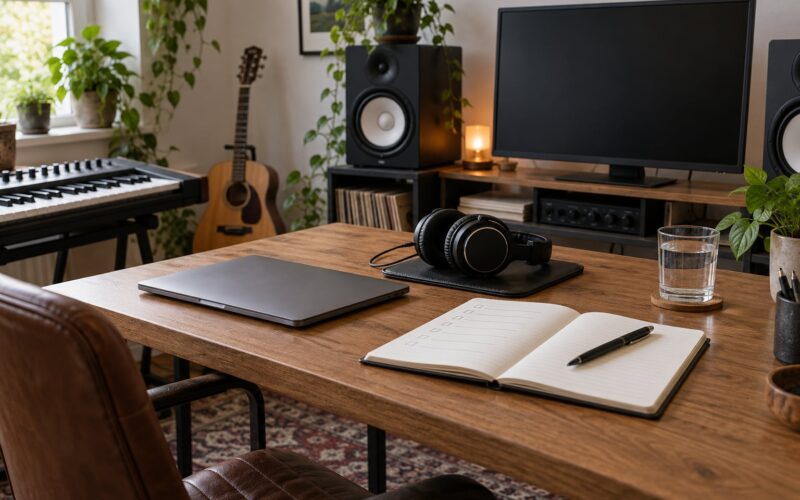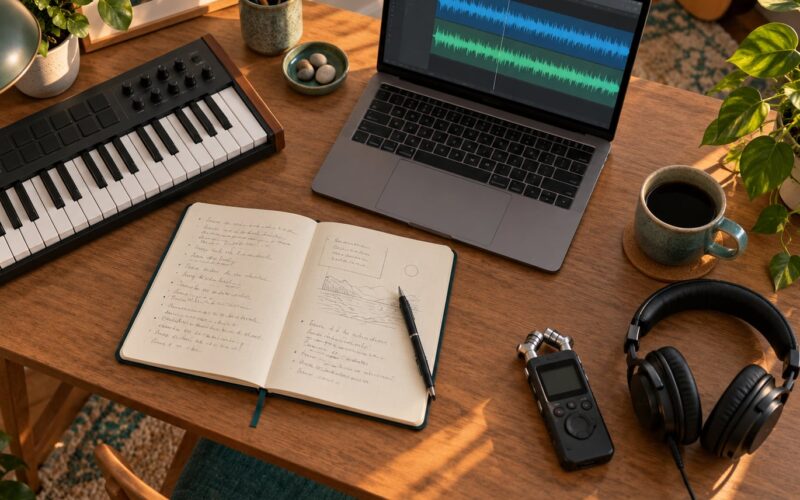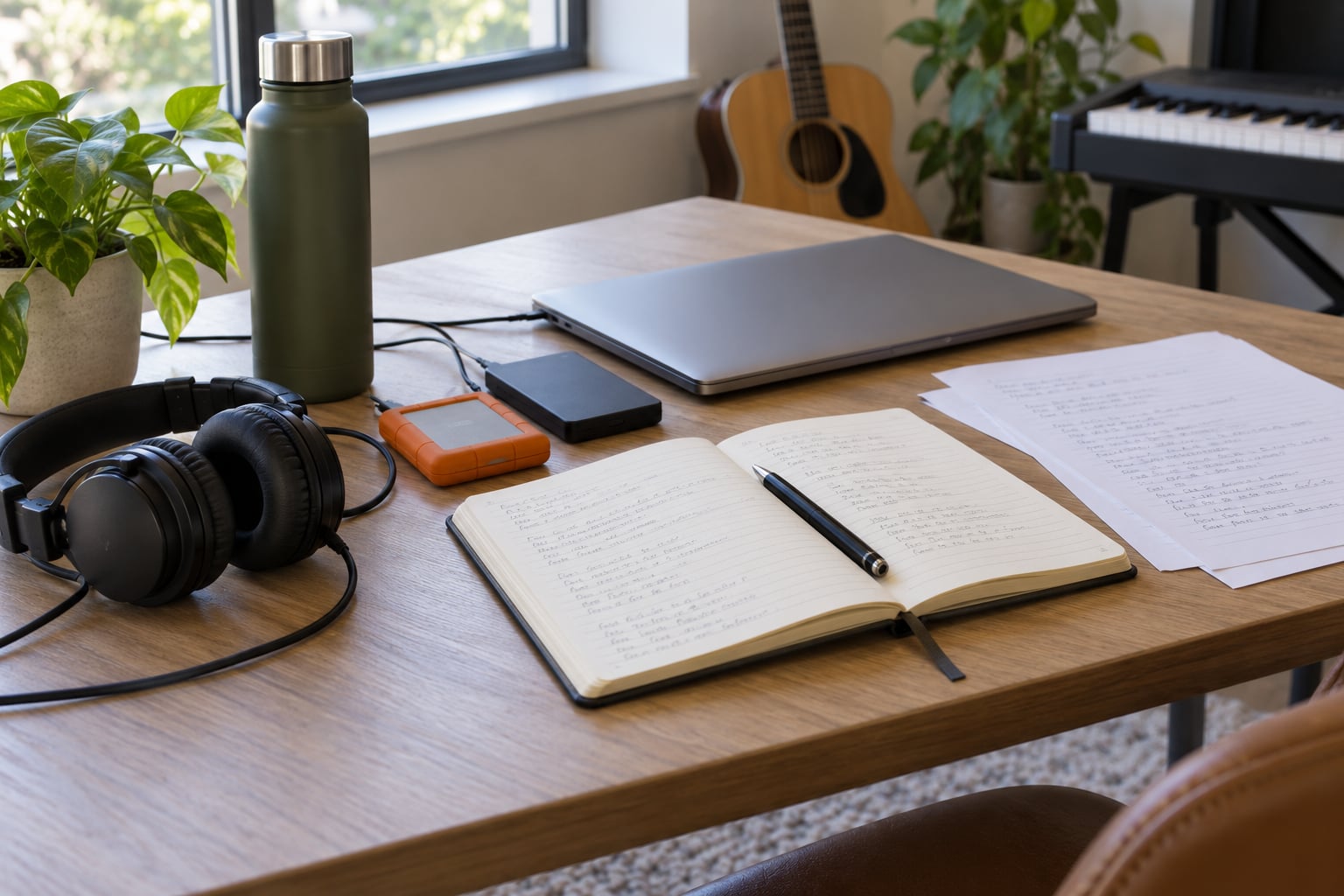
Working out what to bring to a recording session comes down to three layers of preparation: the information the engineer needs before you arrive, the files and gear that cannot fail, and the personal items that keep your voice and focus intact. Studios bill by the hour, and the clock runs whether you are ready or not, so anything you settle at home is money you keep.
The full run-through below takes about an hour the night before, plus ten minutes in the morning. I have watched sessions stretch from a planned four hours to eight, and almost every time it was something small that could have been handled before the car left the driveway.
Start by defining the session. Tracking, overdubbing, mixing, and voiceover sessions need different things, and so do professional studios versus project rooms versus a home setup. Once you know which one you are walking into, the list stops being generic.
Table of Contents
- What You Need
- Step-by-Step
- Confirm What to Bring to a Recording Session With the Engineer
- Prepare Two Complete Sets of Music Files
- Back Up Every Important File
- Pack the Gear You Will Actually Use
- Prepare Lyrics, Notes, and Performance Details
- Handle Identification, Releases, and Payment
- Pack Personal Items for Comfort and Focus
- Run a Final Session-Day Check
- Common Mistakes
- Frequently Asked Questions
- Conclusion
What You Need
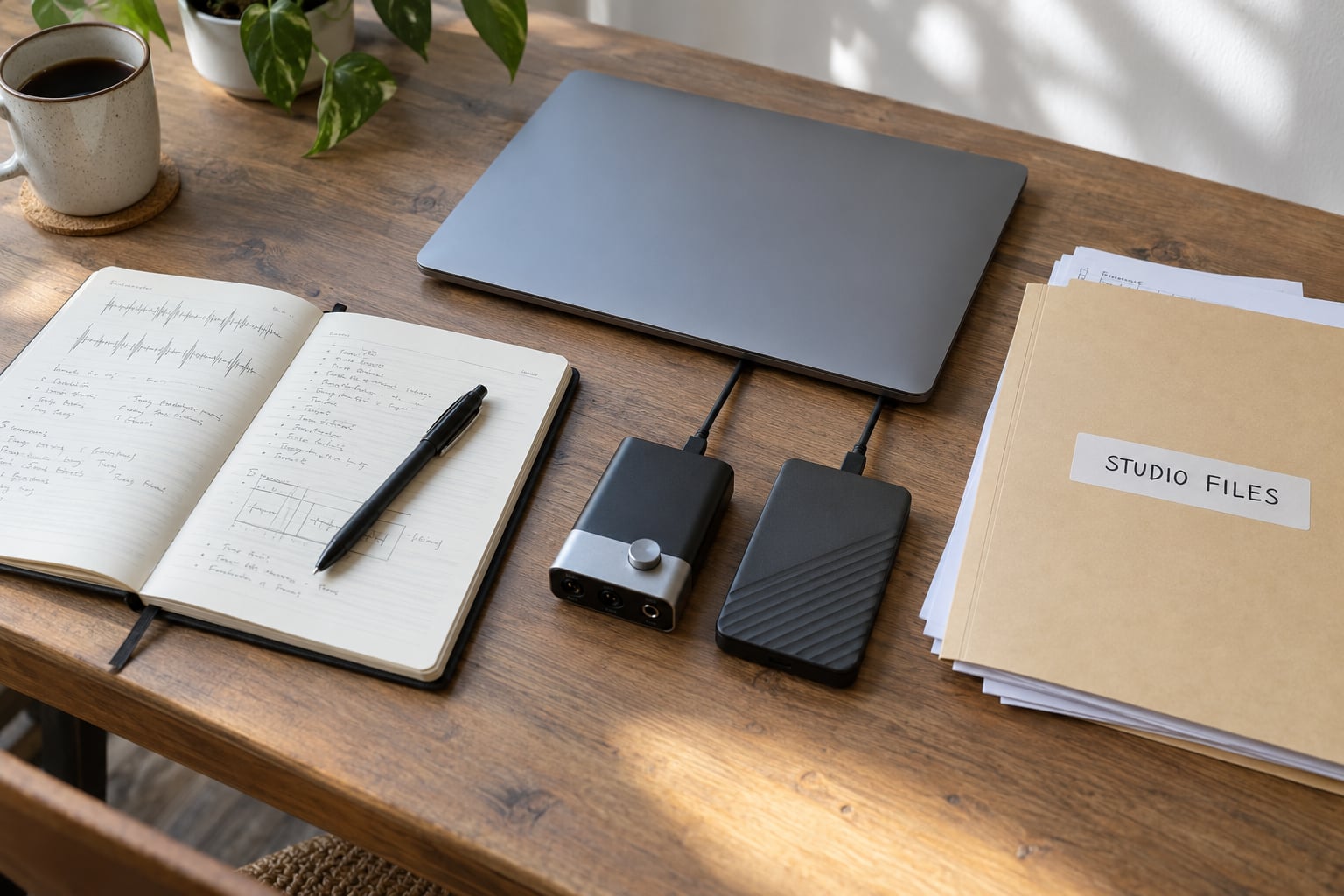
Before you pack a single case, you need four categories settled, and most first-timers only think about two of them.
- The session format. Full band tracking, solo vocal overdubs, guitar re-amps, a mixing review, or a voiceover pickup. Each one changes what sits in your bag.
- The engineer’s requirements. File format, sample rate, tempo, key, how the arrangement should be interpreted, how many breaks, and what the room already has.
- Your music materials. Project files, consolidated stems, a reference mix, lyric sheets, chord charts, and the one track whose sound you are chasing.
- Paperwork and logistics. Identification if the studio asks for it, split sheets, work-for-hire paperwork, licences, invoices, receipts, payment details, and the contact numbers for the engineer and the producer.
On the technical side, send audio at 24-bit/48kHz unless the engineer asks for something else, give files descriptive names a stranger could follow, and make sure every stem starts at the same point on the timeline. If you are working in a DAW, deliver a flattened or consolidated print rather than a session full of plugins the room does not have.
Logistics catch people more often than gear. Ask whether the clock starts at load-in or at the first take, what the overtime rate looks like, whether the room has a kitchen or a food policy, where you can park, and whether the load-in route can handle a full kit. A Leslie speaker coming up six flights of stairs is a bad surprise.
One last thing belongs in this category: who makes the final call on the take. Settle the chain of creative authority before the first take, not halfway through an argument about a chorus.
Step-by-Step
Confirm What to Bring to a Recording Session With the Engineer
Send one message and ask the short questions: session type, file format and sample rate, tempo and key, any arrangement notes, break schedule, access and load-in details, and what equipment the room already provides. Ask whether you should send files ahead or bring them on a drive.
How you know it worked: you get a written list back. Engineers running their own rooms consistently say the most valuable preparation is information, not objects. Artist name, song titles, run times, target release date, gear used, and two or three reference tracks tell them what you want before you speak a word.
Prepare Two Complete Sets of Music Files
Export consolidated instrumentals and reference tracks, plus a rough or final mix when it helps someone hear the intent. Name the files so the engineer can tell them apart at a glance, and put them in one folder rather than forty.
How you know it worked: every file opens, plays from the top, and matches the format you agreed on. Play each one on a machine that is not your own laptop. A file that only opens in your session because of a missing plugin is not a delivery.
Back Up Every Important File
Keep the session materials in at least two places, and treat one of them as the real copy. A cloud folder plus a physical drive, or two drives in different bags, is enough. Leave 16 to 32 GB free so nobody has to delete something mid-session.
How you know it worked: the engineer opens the backup on their machine without installing anything. Hand them the backup first, not the original. There is no quick-recovery version of a lost session, and a drive that needs a strange cable or adapter is a single point of failure.
Pack the Gear You Will Actually Use
Microphones, interfaces, cables, headphones, controllers, adapters, batteries, storage and hardware go in the case, but only what you will genuinely play. Tuner, spare instrument cable, spare strings or picks, sticks or brushes, and a quarter-inch headphone adapter belong in the bag permanently.
How you know it worked: you can lay out every cable you need for the session on a table at home. Active pickups and pedalboards need fresh batteries, and a pedalboard power supply plus a couple of patch cables prevents a silent signal path. Leaving instruments at home that the room already has a backline for saves your back and the load-in.
Prepare Lyrics, Notes, and Performance Details
Print lyrics, chord charts, and any arrangement marks, and keep a digital copy as well. Note pronunciation of names and unusual words, the ad-libs you want, the reference recordings, and every change made since the last rehearsal.
How you know it worked: you can perform the song without needing to scroll a phone in a dim live room. Notifications, screen glare, and mid-take scrolling have ruined more takes than nerves have. Bring parts your band has played until they are automatic, because rehearsing inside a billed session is the most expensive rehearsal you will ever attend.
Handle Identification, Releases, and Payment
Carry whatever identification the studio requires, plus split sheets, work-for-hire agreements, licences, invoices, receipts, and payment details relevant to the session. Producers and engineers usually have paperwork handled, but artists do not always.
How you know it worked: you can answer the question “who gets paid, and how” without hesitating. Settle it before the session, and you avoid the mid-session stall where nobody wants to be the one who brings it up. Keep copies of everything you sign.
Pack Personal Items for Comfort and Focus
Water at room temperature, a light meal, snacks, any medication, a phone charger, a power bank, hearing protection, and a weather-appropriate layer. Studios run air conditioning hard, so a hoodie is standard kit rather than an indulgence.
How you know it worked: you can get through a ten-hour day without a headache, a dry throat, or cold hands. Skip rings, bracelets, chains, and anything that jingles or rustles; that handling noise ends up on the take. Supportive shoes matter more than people expect when you are standing for a mic check.
Run a Final Session-Day Check
The night before: files delivered, backups verified, lyrics printed, instrument condition checked, gear packed, food planned, real sleep. The morning of: water bottle filled, layers on, phone charged, directions and contacts open, earplugs in the bag.
How you know it worked: you leave with time to spare and you are not the reason the clock starts late. Confirm the room rules on the way in. Ten minutes at the door of the studio is enough to check gear, confirm breaks, and make sure the person you are paying is the person making calls.
Common Mistakes
Arriving with incomplete files. Half a song, stems that start at different points, or a session that needs plugins the room does not have. Fix: play the whole delivery on someone else’s machine the night before.
Trusting one drive. One cable, one adapter, one laptop, one copy. Fix: two independent locations, and you hand over the backup.
Packing a full gear case for a room that already has a backline. You are hauling amps down a stairwell for nothing. Fix: get the written gear list first, then pack only your own instrument and the spares.
Skipping paperwork. Split sheets and releases sorted out at the microphone. Fix: sign before you travel, keep copies, and know who holds creative authority.
Ignoring food and water. A voice on an empty stomach and cold studio air is a rough combination. Fix: eat a normal meal a couple of hours ahead, bring snacks, and drink steadily.
Not confirming the technical requirements. Wrong sample rate, no reference tracks, no tempo. Fix: one message at booking, one written answer before you leave home.
Two quieter habits pay off just as well. Warm up for 10 to 15 minutes before you sing, using lip trills, hums and scales, and start before you leave the house so the voice is open on arrival. And arrive with your parts automatic. Nerves are normal, but arriving with nothing to hide behind turns billed studio time into rehearsal.
Frequently Asked Questions
How early should I arrive for a recording session?
Most engineers ask for 15 to 20 minutes before the scheduled start, and first-timers should aim for 30. That leaves time to unload, meet the engineer, warm up, and run a quick mic check without eating into the clock. Ask whether the session clock starts at load-in or at the first take, because some rooms start it when you walk in the door.
Do I need to bring my own microphone and recording equipment?
Usually not. Studios provide microphones, preamps, mic stands, DI boxes, headphone sets, backline instruments and amps, and often wired internet. Bring your own instrument, instrument cable, tuner, spare strings or picks, batteries, pedalboard power supply, and adapters. Confirm the gear list in writing first, because listed gear is floating inventory that can be reassigned to another session.
What music files should I send to the recording engineer?
Send consolidated stems as 24-bit/48kHz WAV files, all starting at the same timeline point, with clear file names, plus a reference mix and two or three tracks that show the sound you want. Deliver at least 48 hours ahead when you can. Most confusion about what to bring to a recording session is really file confusion, and a plain delivery beats a DAW session full of plugins.
What should I eat or drink before a recording session?
Eat a normal meal two to three hours before and avoid alcohol, caffeine, dairy, and anything spicy or heavy. Drink room-temperature water steadily through the day, and for singers, warm non-caffeinated tea or honey water before and during the session. Bring snacks for the breaks, and ask the studio about its food policy, since low-budget rooms rarely provide refreshments.
What if the studio does not have a backup of my instrumental?
Bring your own. Keep consolidated stems on at least two drives or locations, confirm the engineer can open them before the session starts, and be ready to play them into the session from your own system. If a file is missing or will not open, the session clock keeps running while somebody hunts for a working copy, and that is exactly the hour you paid for.
Conclusion
A good recording session checklist has three layers: information the engineer gets in advance, files and gear that cannot fail, and personal items that protect your voice and your attention. Begin by confirming the session requirements in writing, then build redundant backups of every music file before you pack anything else.
The rest takes ten minutes the night before and ten minutes at the studio door. Do that and the billed hours turn into takes instead of troubleshooting.