How to find your sound as a producer comes down to one habit: making a lot of finished tracks with a deliberately narrow set of choices, then keeping only the decisions you repeat. Your sound is not a preset you download and it is not a genre label. It is the fingerprint left by the sounds you pick, the processing you apply and the way you arrange everything over time.
The producers people recognize got there by deconstructing records, running small experiments and finishing far more music than they release. This guide breaks that process into seven steps you can start working through this week, whether you have been producing for six months or six years.
A note on expectations before we start. The forum threads on this topic are full of people asking how long it takes, and most of the discouraging answers come from measuring against someone else’s decade. Developing a recognizable sound is measured in finished tracks, not weeks. Expect months before you can hear it in your own catalogue, and treat the first few months as raw material collection rather than a verdict.
Table of Contents
- What You Need
- Step-by-Step: How to Find Your Sound as a Producer
- 1. Define the emotions and genres that pull you in
- 2. Study the elements you want to emulate
- 3. Build a reference map of your influences
- 4. Create deliberate limitations
- 5. Produce short experiments instead of full tracks
- 6. Compare, revise, and define your signature
- 7. Apply your sound across finished projects
- Common Mistakes
- Frequently Asked Questions
- Conclusion
What You Need
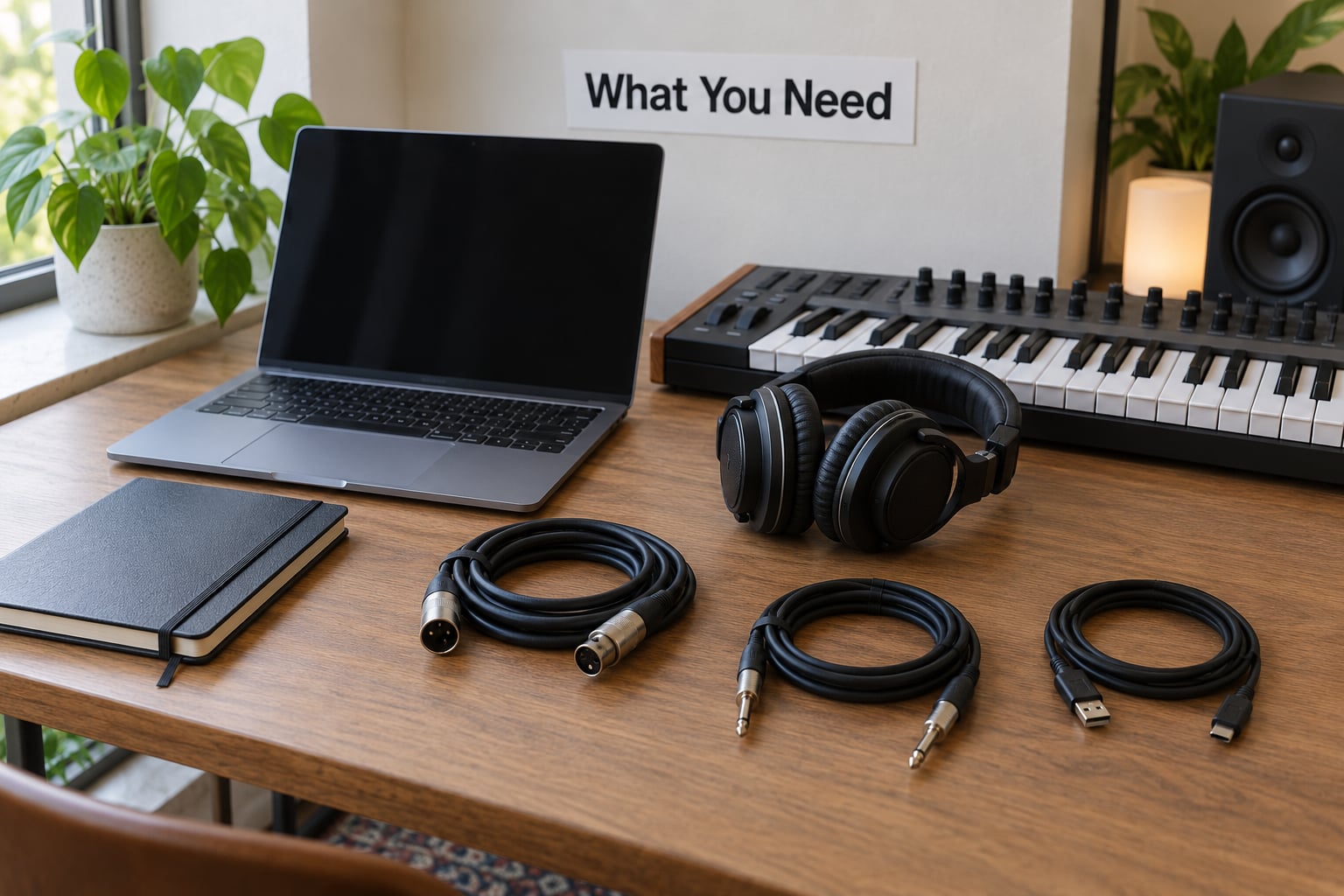
Not much, honestly. The tools are the easy part, and buying another plugin has never moved anyone’s sound anywhere. What you actually need is a small amount of structure around the making.
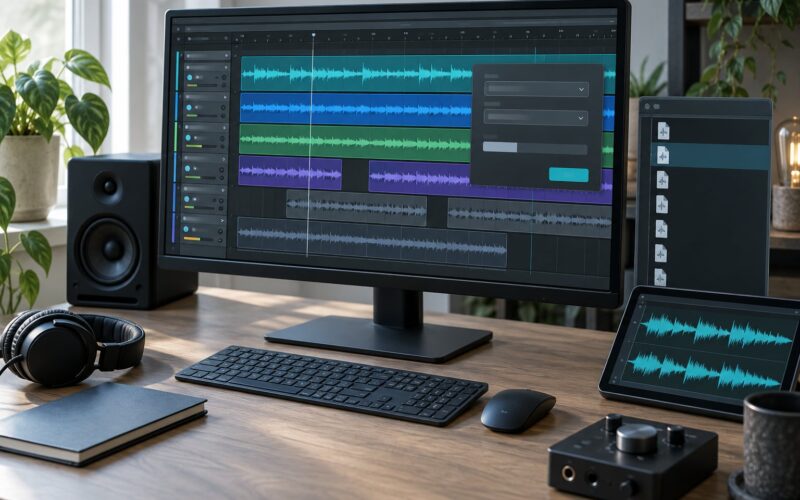
Monitoring you trust. You need a pair of headphones and, ideally, one decent pair of speakers or monitors. Everything else is optional. If you are making decisions on a laptop speaker, half of what you think is a sound choice is actually a translation artifact.
One place for reference tracks. A single folder or playlist. Producers who keep a running reference list get better at this purely because they stop relying on memory, which is unreliable and biased toward whatever they heard last week.
A written log. A plain text document is fine. Record the sounds, plugins, settings and rough tempo you used on anything you like about a track. This is the single most underrated habit in the whole process, because it turns an instinct you cannot name into a decision you can repeat.
A constraint. Pick one now, before step four. A single drum kit, one synth, a fixed tempo range, one sample source. Producers who report a distinct sound tend to be the ones who restricted themselves on purpose rather than by accident.
Time to finish things. This one is genuinely the hardest requirement. The most common reason someone never develops a sound is that they never complete enough tracks to have anything to compare. An unfinished beat teaches you almost nothing.
What you do not need: a huge sample library, music theory, or an expensive interface. Large libraries are actively a problem for most beginners, because browsing a massive folder of sounds is the least productive hour in the week and it produces decisions based on novelty rather than on the track.
Step-by-Step: How to Find Your Sound as a Producer
Each step feeds the next. The order matters because the early steps are about narrowing your attention and the later ones are about committing to what you find. Skipping ahead to step six and writing a list of aspirations instead of observations is how producers end up with a manifesto they never use.
1. Define the emotions and genres that pull you in
Start with feeling, not gear. Think about the last twenty tracks that made you stop what you were doing, and write down what each one did to you. A lot of beginners skip this and go straight to asking which plugins made the track, which misses the part that actually matters.
Then get specific about the qualities, because “I like hip-hop” is not a starting point. Loose drum timing? A vocal chopped into a melody? Bass that sits under everything rather than on top? Dark pads with a lot of reverb but dry drums? Cold synths with warmth in the low end? Write down the production traits, not just the genre names.
Make this a written list. Something like “drumless, warm and washed out, minor keys, lots of tape wobble, vocals always present even when they are not the focus” is a usable brief. A list of fifteen producer names is not, because it tells you nothing about what they have in common.
How do you know it worked? After writing the list, you should be able to describe three records that fit it and explain in one sentence each why. If you cannot, keep listening and narrow again.
2. Study the elements you want to emulate
This is the step that separates people who find a sound from people who collect reference tracks and never use them. Take one record you love and pull it apart into its pieces.
Listen to the drums on their own. Is the kick layered or single? Does the low end have a long tail or a tight click? Are the hats swung or straight? Now listen to the bass. Is it a reamped instrument, a synth, a sample? Does it follow the kick or the snare?
Then look at the melody and the harmony. What is the chord progression doing, and how long does it stay there? Where does the bassline sit relative to the chords?
Move on to texture and arrangement. How many elements are playing at once in the loudest section? Does the track open sparse or start full? How long is the intro before anything happens? Where do the transitions come from?
Finally, listen to the vocal treatment and the mix decisions. Is the vocal dry or saturated? Is it doubled? Is the low end mono? Does the reverb sit behind or on top of the beat?
The question that comes up constantly in producer forums is whether a sound you hear is a preset or something the person built from scratch. The honest answer is that it is almost never from nothing. People start from a sample, a recorded instrument or a stock patch, then modify it until it no longer sounds like the source. Resampling, pitching, filtering and re-enveloping are doing most of the work.
How do you know it worked? You can describe a stranger’s mix in detail, and when you listen to it again, you hear the decisions rather than just the feeling.
3. Build a reference map of your influences
Once you have studied individual records, stop treating your influences as a list of names and start organizing them by what they sound like. This is a step most people skip, and it is where the pattern usually shows up.
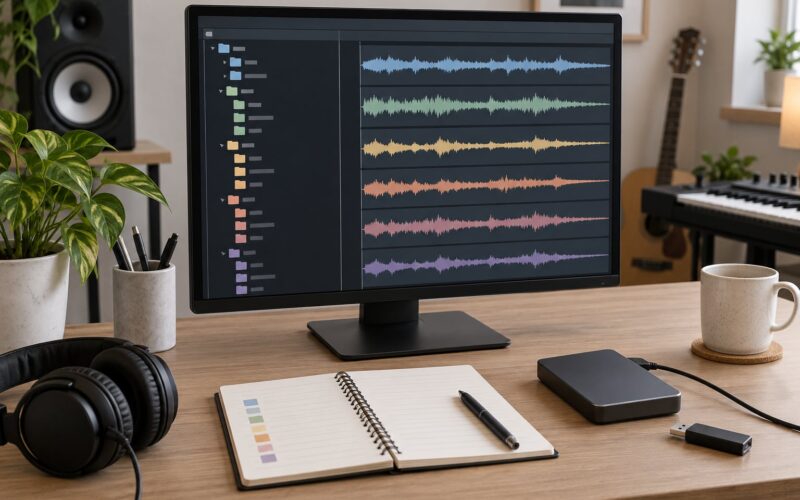
Sort your references into columns: shared sonic qualities on one axis, contrasting production choices on the other. The producers you return to will cluster somewhere on that map even if they sit in different genres.
Then look for the common thread. Often it is something narrow and slightly odd, like a love of mono low end, or a preference for instruments that sound damaged, or an obsession with recordings where the room is audible. That thread is more useful to you than the genre, because it is the part you can actually reproduce.
Write down two or three influences and one thing you dislike about each. Knowing what you are not copying is what stops a project from turning into a cover of a record you love.
How do you know it worked? You end up with a short map you can hold in your head, and a sentence describing your own approach that does not need a genre label to make sense.
4. Create deliberate limitations
Constraints are the cheapest way to find out what you actually think. With an unlimited palette, most producers default to whatever sounds biggest in the moment, which is exactly why so many tracks come out interchangeable.
Pick one kind of limit and hold it for a month. A single drum kit you have never swapped. A tempo window, for example nothing outside 80 to 100 BPM. One synth. One sample folder you curated yourself. A rule that every track must have at least one acoustic or found sound in it.
The point is that you stop making accidental decisions. When you have four options, you choose because you like the sound. When you have four thousand, you choose because the preset name sounded clever.
A practical version of this is to build a personal palette of about thirty sounds total and learn all of them properly. Thirty is small enough that you will genuinely know what each one wants to do, and it is restrictive enough that combinations start to feel like yours.
How do you know it worked? You finish a track without opening the plugin browser once, and the track still holds up.
5. Produce short experiments instead of full tracks
Full tracks are the wrong unit of work when you are still discovering. They take too long, and by the time you reach the end you have forgotten why you started.
Work in small pieces instead. A loop, an eight-bar sketch, a single drum variation, a chord progression played two different ways. One idea per experiment, and give it a short deadline so you make decisions rather than tweaking endlessly.
This also makes comparison possible. Two four-bar experiments can sit right next to each other and you can hear the difference. Two finished tracks from different weeks cannot.
Producers who report a distinct sound tend to describe producing a high volume of short pieces with a self-imposed deadline rather than perfecting one long project. Twenty experiments in a month beats one track you spent the month on, and it is not close.
How do you know it worked? After each experiment, you can write one sentence about what you learned. If you cannot, the experiment was too vague and the next one should test a single variable.
6. Compare, revise, and define your signature
Now you need a method, not inspiration. Put your experiments in one folder and play them in sequence without touching anything. You are listening for repetition.
Which choices showed up more than once on its own? Which drum sound keeps ending up on top? Which tempo range? Which kind of chord movement? What did you do to the vocal every single time, even without deciding to?
Those repeated choices are the beginning of a signature. The rest is drift, and drift is what makes a catalogue sound scattered.
Then remove the accidents. If every track has a sudden filter sweep because that is what you reach for when you cannot think of anything, that is a habit, not an identity. Delete it and see whether anything breaks.
Write down what remains as a short rules list. Something like: no more than eight elements, one bass sound, low end always mono, at least one found recording per track, vocals processed before drums, no more than three plugins on the master bus. Rules that are this specific are the ones you will actually follow.
Keep that list visible for a month and revise it once, deliberately. A rules list you never edit becomes a gimmick, which is a different and much less interesting problem.
How do you know it worked? You can describe your production style to another producer in under a minute and they would recognize the description.
7. Apply your sound across finished projects
A sound that only shows up on one beat is an accident, not a signature. Holding it across a body of work is the harder part, and most producers underestimate it.
Work project by project. Write the rules list before you start, keep it next to you, and follow it on every track even when a particular song seems to want something else. Deviating once is a decision; deviating on every fourth track is a pattern.
At the same time, guard against the opposite failure, which is every track sounding the same. Pick one element per project to vary on purpose. Change the tempo range, or the drum feel, or the amount of processing, or the structure. Hold the rest steady so the varying part is what the listener notices.
Finishing is part of this. An unfinished beat gives you no data, so set a deadline, bounce it, and let it go. A rough mix that somebody else heard teaches you more than another week of solo tweaking.
How do you know it worked? Put your last ten finished tracks in one playlist and press play. If a stranger could not tell which producer made them, the work is not consistent enough yet. If the tracks sound like the same ten minutes of music, vary something.
Common Mistakes
Copying one producer for too long. Studying a producer for a few months is study. Doing it for a few years is something else, and the imitation quietly becomes your default before you notice. The fix is a fixed study period followed by a ban: pick a different reference set for a month and produce without going back to your old favorites.
Trying to absorb everything you like. Fifty influences is not taste, it is indecision. Keep two or three working references and let the rest sit in a folder you are not currently drawing from. Most of what you loved will still be there when you come back.
Changing direction every few weeks. New genre, new DAW, new plugin, new idea about your own name. Sound develops over finished tracks, so every reset throws away the evidence. Pick a lane for a quarter and get twenty tracks down before you judge it.
Treating workflow as a side issue. Disorganized sessions, unreported changes and default project settings make your own work hard to return to, which quietly stalls the whole process. A template with your rules already loaded, plus version history, saves hours and makes your past choices visible.
Skipping feedback or taking it literally. Nobody else can hear your intentions, so unreleased work drifts. Send a finished track to two or three people whose taste you respect and ask one question: does anything here sound like somebody else you know? Then decide what to change yourself.
Defining your sound by genre alone. Calling yourself an ambient or boom-bap producer describes the market you are in, not the choices you make. Push it further: a genre plus a specific set of production decisions is an identity, a genre name is a category.
Browsing libraries instead of making. The hardest part of producing, according to producers in the forums, is finding sounds quickly, and the usual response is to keep looking. Cap browse time and force yourself to use the first thing that was close enough.
Frequently Asked Questions
How long does it take to find your sound as a producer?
It takes as many finished tracks as it takes, which is usually months rather than weeks. Most producers notice something shifting after thirty or forty completed pieces, and something a stranger can hear after a year or two of steady output. The number that matters is finished tracks, not sessions or months. If you can hear a pattern in your last twenty, you are already further along than you think.
How do I know if I have my own sound?
Play your last ten finished tracks in one playlist, in order, without editing anything. If a small set of decisions shows up on most of them, you have a sound. If the only consistency is the genre or the tempo, you have a style of music rather than a production identity. The other test is description: can you explain your production choices to another producer in under a minute so they would recognize the description?
Is it bad to use presets as a producer?
No, but unmodified presets are the fastest way to sound like everyone else, because thousands of producers downloaded the same ones. The useful move is to treat a preset as a starting point you have to alter. Resample it, filter it, change the envelope, pitch it and re-record it, and the preset stops being a preset. If a sound works before you apply any plugin, you are in good shape.
Do I need music theory to find my sound?
Not at the level people assume. Theory helps most with melody and arrangement, and it is genuinely useful once you are building a consistent harmonic palette. It is not what is stopping most beginners from developing a sound, though. Finishing tracks, choosing fewer sounds and studying what you admire will move you much further at the start than scales and chord inversions.
Should I stick to one genre while finding my sound?
Not necessarily. Blending genres is one of the more effective ways to get a recognizable identity, because a shared trait across two unrelated genres is far less common than the genre itself. The rule is that the blend has to make sense. If you cannot name the sonic quality both halves share, the crossover will sound like two songs rather than one idea.
How do I get feedback without copying other people’s opinions?
Ask narrow questions. Instead of what do you think, ask whether anything reminded you of another artist, whether the low end works on headphones, or which section you skipped. Specific questions return usable information, and vague questions just tell you what someone liked. Then make the changes yourself rather than handing over the decision, and send the revised version back so you learn what actually landed.
Conclusion
Finding your sound is a process of narrowing and then committing. Study records closely, group your influences by what they share rather than what they are called, limit your palette, work in short experiments, and let repetition tell you which decisions are actually yours.
You do not need to solve it this week. You need to finish enough music to have something to compare, which is the part most people skip.
So pick one recurring sonic quality from your list, and make two four-bar experiments that use it in opposite ways. Play them back to back tomorrow and ask which one sounds like something you would put your name on. That single comparison is a better start than another month of browsing presets.