Learning how to use short video platforms to promote music is a system, not a lucky break: pick one song, write a one-page brief, cut vertical clips made for each platform, post them in a fixed order, and read the signals that tell you whether views are becoming listeners. Once the footage exists, the whole routine takes a couple of hours a week.
That matters because the discovery model changed. Listeners no longer find new music through a playlist editor or a blog roundup, they find it because a fifteen-second clip stopped them mid-scroll. For an independent artist without a label budget, short-form feeds are the only realistic path to people who have never heard your name.
What follows is the workflow I would hand an artist on release week: what to gather first, the eight steps from brief to measurement, the mistakes that quietly kill a release, and the handful of numbers worth tracking. It applies to TikTok, Instagram Reels and YouTube Shorts, and it works on a budget of zero.
Table of Contents
- What You Need
- Step-by-Step: Using Short Video Platforms to Promote Music
- Define the song, audience, and objective
- Choose the short video platforms that fit your audience
- Create a bank of music-focused content angles
- Hook viewers in the first seconds
- Film and edit clips for sound-on viewing
- Publish consistently and interact with responses
- Measure the right promotion signals
- Common mistakes that kill a release
- Frequently Asked Questions
- Conclusion
What You Need
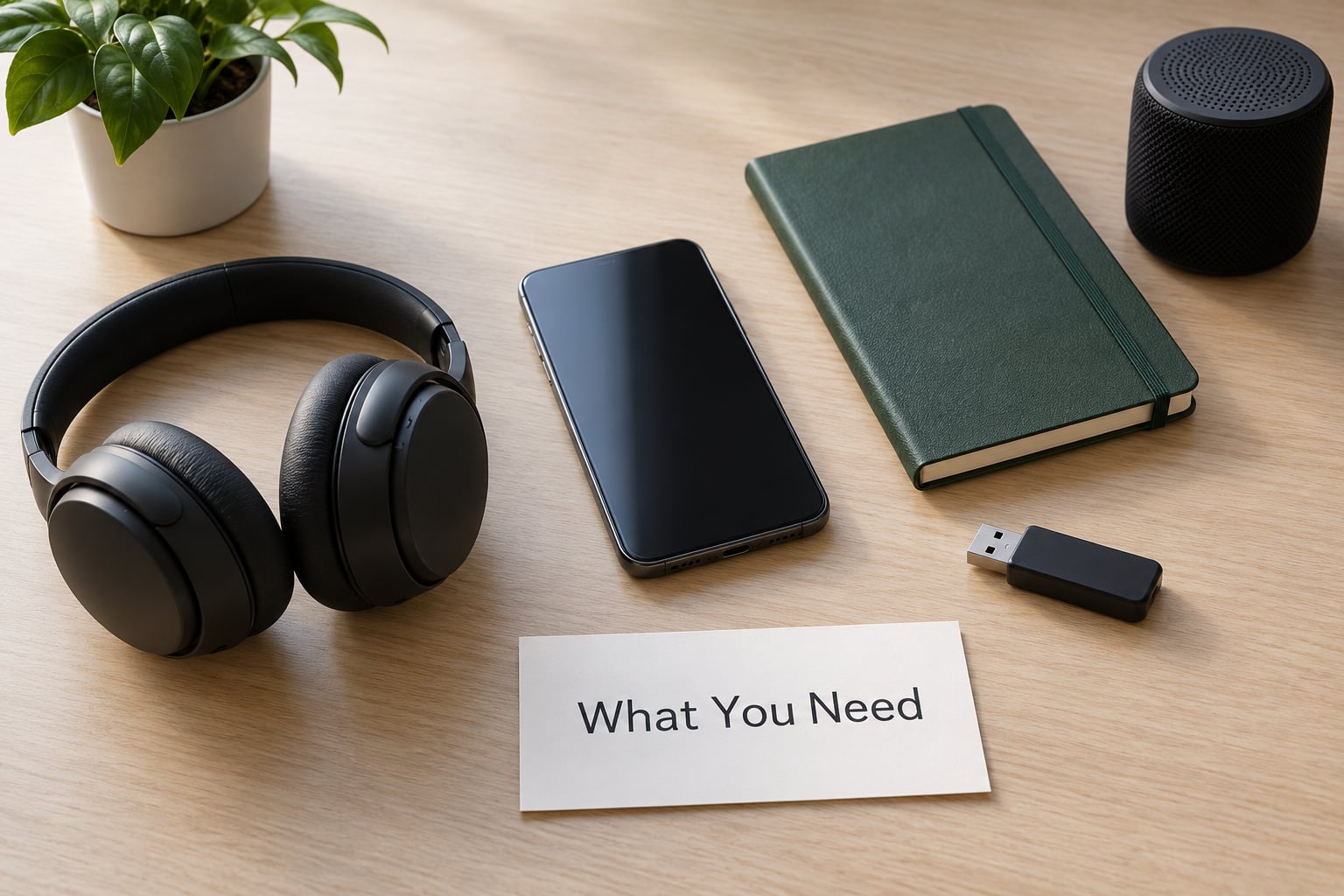
None of this is expensive. The list is short because the work is mostly decisions, not gear.
- A finished or nearly finished track. Not an idea. You need something you can cut a hook from, even if the final mix lands later.
- One clear listener. Name them. A 22-year-old who listens to slowcore on the way to a night shift is a target; everyone is not.
- A single release objective. Pre-saves, streams, ticket sales, merch, or a mailing list. One per clip batch, or you will not know what worked.
- Raw footage. Studio sessions, live takes, writing-in-progress clips, sound desk shots, even phone video of the commute. Twenty minutes of honest material beats a polished video nobody watches.
- A phone and a tripod or stand. Vertical 9:16, rear camera, daylight or one cheap light. Audio quality matters more than image sharpness.
- An editor. CapCut, Premiere Rush, DaVinci Resolve, or the native editor on your phone. You need captions, trimming and audio ducking, nothing exotic.
- A link destination. The pre-save page, a smart link with per-platform tracking, or a landing page. One place, tagged per platform, so you know which feed produced the clicks.
- A tracking sheet. A single spreadsheet with one row per clip: platform, date posted, views, saves, shares, comments, profile visits, link clicks, streams the following week.
If two of those are shaky, fix those two. A strong hook with sloppy tracking still beats a polished setup you cannot measure.
Step-by-Step: Using Short Video Platforms to Promote Music
Define the song, audience, and objective
Write the brief before you open the camera app, on a single page. Three sentences: what is the strongest moment in this song, who is most likely to care, and what exactly should a viewer do after watching.
The strongest moment is usually not the chorus. It is the ten seconds before it, the lyric line that means something to one group of people, or the moment in the studio where the track snaps into place. Find it and mark it with a timecode.
The ask should be small. Ask for a save, not a purchase. Ask people to comment their city, or to check the link, or to listen on the way home. A clip that asks for too much gets ignored, and the person who watches without acting is still worth having in the audience.
Choose the short video platforms that fit your audience
Two platforms done properly beat five done badly. Here is how the main ones behave, so you can pick.
TikTok runs an interest-based feed. Every upload gets tested with a small group of non-followers, and what happens in the first hour decides whether it reaches anyone else. That makes it the cheapest testing ground for a hook: if a clip holds a stranger’s attention there, it will hold it anywhere. Artists also use duets and stitches to attach a performance to someone else’s larger clip.
Instagram Reels leans on your existing followers plus the saves and shares signals. It is slower at handing you new strangers, but better at turning them into people who keep an eye on you. For merch, announcements and community building, that behaviour is worth more than raw reach.
YouTube Shorts behaves closer to a search engine. A decent clip keeps pulling viewers for months, sometimes years, and it sits next to your catalogue where people can watch one thing and find the next. Treat it as your long shelf rather than your launchpad.
Snapchat Spotlight overlaps with the others and does less for music discovery today, but it reaches a genuinely different and younger audience, which matters if your listener is under twenty-two.
A workable split: TikTok first to test the hook, Reels two or three days later to convert, Shorts a week after that to catch search traffic. Cut separate versions. Artists in music marketing communities report that watermarked cross-posts get pushed down, so upload the raw file each time rather than a TikTok download.
Create a bank of music-focused content angles
One idea cannot carry a release. Build six repeatable formats and rotate them, so a quiet week still has a post.
- Performance hook. Ninety seconds of the actual track, no intro, lyric subtitle on screen. The simplest one that works.
- Story clip. The thing that happened to write the song, told in fifteen seconds with a payoff at the end.
- Before and after. The bounce, the demo on a phone, the finished master playing back to back.
- Beat breakdown. Screen the session, name the one element that carries the song, and show how the producer built around it.
- Reaction or relay. Send the track to another musician, a producer or a fan and film their honest first listen, without scripting the praise.
- Release update. Mixing this week, mastering done, artwork landed, tour date announced. People follow along with unfinished work.
Behind-the-scenes and personality content is what usually pulls a floor out of an account that only posts finished songs. One artist described in a forum thread saw roughly a thousand new followers after switching to that mix, with no hit involved.
Hook viewers in the first seconds
Decide what happens in the first one to three seconds before you film anything. Movement, a face, a loud hit, or a line of text that creates a question. The song’s best sound goes there, not after eight seconds of channel branding.
Burn captions into the video. A large share of views start muted, and captions also survive the compression that eats thin text. Keep the frame clear of the interface: the middle sixty to seventy percent of a vertical frame is what stays visible once buttons, captions and the search bar are laid over it.
Check that the first frame alone makes sense as a still. If it needs the audio to be worth looking at, it does not work.
Film and edit clips for sound-on viewing
Frame vertical, put the subject in the centre band, and lock the phone instead of holding it. Clips that read as shot for the platform perform better than a horizontal video squeezed into the shape.
Record audio separately if you can. Room noise in a phone clip is the fastest way to lose a viewer, and on a music account they notice the room before they notice the picture.
Plan three lengths from the same idea. A fifteen-second cut is one moment with no setup. Thirty seconds adds a hook and a payoff. Sixty seconds can hold a full verse and chorus, which is the length that works for performance and story content. Write the caption text separately for each; the same three lines do not fit all three.
Export without a watermark, upload natively, and let each platform’s editor add its own captions, stickers or audio. Watermarked or visibly re-encoded uploads get less reach, and reusing another platform’s audio layer is the fastest way to make a clip look like an ad.
Publish consistently and interact with responses
Three to five posts a week is the working range most artists land on. Cadence matters more than volume because each post gives the algorithm another set of people to test against, and long gaps reset that process.
Batch the filming once a week and let the schedule do the reminding. Burnout from reformatting clips for every platform is the most common reason artists stop, and batching kills most of it.
Reply to comments inside the first hour. Early replies push the clip into front of other people who have commented too, which is the cheapest distribution on these platforms. Answer as yourself, not as a press release, and let the conversation carry on after you stop posting.
Pin one comment with the ask and the link, so nobody has to hunt for it. Use collaborations, remixes and duet features to borrow an audience that already exists. Every bit of back-and-forth in the comments builds more than the post itself.
Measure the right promotion signals
Saves and shares are the two numbers that tell you a clip worked. Likes are cheap and easy; a save means someone wanted to come back to it.
Track profile visits and link clicks next, then the streaming numbers that follow in the three days after posting. If views climb and streams do not, the problem sits with the ask or the link, not with the video. Artists describe the classic version of this: five thousand followers and a million likes with under a thousand streams per song. Views are a top-of-funnel measure and nothing more.
Watch where the listeners are. If one region keeps converting and another only scrolls, spend your effort there. Save results for release week so you can compare clips against each other instead of against some idea of what normal is.
Then change one thing per batch. Keep a note of what you tried, because the reason a clip worked is rarely the reason you think it was.
Common mistakes that kill a release
Here are the eight errors that show up again and again, with the fix for each.
- Deleting a clip early. These feeds test over days, not hours. Give a clip at least a week before you decide it failed.
- Posting the identical edit everywhere. Re-cut the opening for each platform and upload the raw file, not a downloaded one.
- Captions full of emojis and marketing language. Write like a person talking. Plain captions in your own words get read.
- Asking for streams in every post. Vary the ask: a save, a comment, a share, a pre-save. One clear action per clip.
- Skipping analytics. If you cannot say which clip produced streams, you are guessing at the next one.
- Chasing unrelated trends. A borrowed audio that fits nobody’s version of you brings viewers who never become listeners.
- Going quiet for two weeks. Momentum dies faster than a bad post does. Post something small rather than nothing.
- Ignoring the genres that do not fit. Anthemic folk, ambient and jazz usually fail as a sound bite. Lead with story and performance instead of the beat, which is the adjustment that makes the format work.
If you are not comfortable on camera, the angles that carry music fine without a face are the lyric card, the beat breakdown, the studio screen, the sound desk, and hands on an instrument. Several artists running a release without ever appearing say the format still works, it just looks different.
Frequently Asked Questions
Which platform is best for promoting music?
For a new release with no audience, start with TikTok because it tests clips with strangers, then move the winner to Reels for follows and Shorts for long-term search traffic. Reels is the stronger home if you already have followers who buy merch. Shorts is the best fit for catalogue and evergreen work.
Is TikTok promotion still worth it for music?
Yes, if you treat it as testing rather than as a press slot. Organic reach there is smaller than it was a few years ago, but the feed still shows clips to non-followers, so a hook that works reaches people who have never heard you. Artists who post three to five times a week see steady discovery; those who post twice a month see none.
How do I use short video platforms to promote music with no budget?
Batch your filming once a week, cut three clip lengths from each idea, and use the platform’s own editing tools for captions and audio. Post on two platforms instead of four, reply to comments in the first hour, and track results in one free spreadsheet. Paid boosts are optional and best reserved for a clip that already performs well on its own.
Why does TikTok suppress my music posts?
Posts that read as marketing get pushed down, as do low-retention uploads and files carrying another platform’s watermark. Promotional links in captions are restricted too, which is why the link usually goes in your bio. Post performance or story instead of a pitch, upload the raw vertical file, and let the pinned comment carry the ask.
How often should I post on short video platforms?
Three to five times a week on your main platform is the range most independent artists sustain without burning out. Each post gives the algorithm another small test group, and long gaps restart that process. Quality matters more than count, so a weekly batch of four solid clips beats daily posting that goes quiet for a month.
How do I turn short video views into streams?
Give viewers one action they can take in a second, such as saving the clip or checking the link in your bio, then make the landing page fast and specific to that song. Track link clicks against streaming numbers three days later. High views with no clicks means the ask is missing, not the video.
Conclusion
Choose one song. Pick two platforms, usually TikTok and one of the others. Build three content angles from footage you already have, publish the first batch, and give it a full week before you judge it.
When you do, look at saves, shares, link clicks and the streams that follow, not the view count. Then change one thing for the next batch. That loop is the whole of it, and it is how short video platforms turn into a promotion channel rather than a slot machine.