Building an email list as an artist takes one weekend of setup and then a few hours a month of sending. You pick a platform, decide what fans get for signing up, put one signup form where people already find you, and start a short welcome email followed by a regular newsletter. No follower minimum, no label deal, no website overhaul required.
The reason to do it now is simple. A streaming profile or an Instagram audience can shrink overnight when an algorithm changes, and you never see the email addresses. A mailing list is different: the people on it gave you permission to write to them, and they gave you their address.
Here is the whole process in short form:
- Choose one clear promise, such as first access to new music or the story behind each release.
- Pick an email platform and send from an address on your own domain.
- Build one signup page with a benefit, an email field, consent language and a single button.
- Place that signup link at every touchpoint fans already use, including show QR codes and streaming profiles.
- Send a welcome email the moment someone subscribes, and deliver what you promised.
- Send something useful every two to four weeks, with promotion in the minority of emails.
- Track delivery, opens, clicks, replies and unsubscribes, then improve one variable at a time.
What You Need to Build an Email List as an Artist
Six pieces have to be in place before the first subscriber arrives. Skipping any one of them is why most lists stall at forty names and go quiet.
A specific audience promise. Not “stay in touch” but “every subscriber gets a 24-hour head start on new releases and a monthly breakdown of how each track was made.” You have to be able to deliver it every time.
A signup offer worth something. Fans hand over an email address for a reason. Early access, a subscriber-only demo, studio notes, a print, a discount on a first order or presale ticket access all work.
A realistic sending schedule. Decide now whether that is one email every two weeks or two a month. Artists who pick a cadence they can sustain for a year will beat artists who launch with a weekly plan and abandon it in March.
An email service provider and a sending address on your own domain. Every platform listed below can create the signup forms, list management and sending for you.
Permission basics. In the United States, CAN-SPAM requires a real sender address, accurate subject lines, a physical address and a working unsubscribe link. Under GDPR rules in the EU and UK you need clear consent, a stated purpose and a simple way to withdraw it. Requirements differ by country and change, so treat this as a working standard rather than legal advice.
Step-by-Step: Build an Email List as an Artist
What follows is the working order I would use, from the promise to the first campaign. The point is not to collect addresses once. It is to build a system that turns a first-time listener into someone who shows up, buys a ticket and stays for the next release.
1. Define What Subscribers Will Receive
Write the promise in one sentence before you touch any software. It should be specific enough that a fan could hold you to it.
- First listen to every new single before anyone else
- A monthly email breaking down one track from the mix
- Presale ticket codes before public sales open
- Unreleased demos and voice notes from the studio
- Subscriber-only merch windows before each drop
Pick one and stay with it. Two strong promises beat five vague ones, and one promise beats a bundle that asks fans to do four things at once.
2. Choose an Email Platform and Sending Address
Most major platforms have a free tier, so cost is not the deciding factor for a small list. The differences that matter for artists are the size of the free audience, how easy the templates are, whether automation is included, and whether you can export your subscribers if you ever want to leave.
- Mailchimp: the full feature set for a small first audience. Good if you want every tool in one place, though the interface gets dense once you go past the basics.
- MailerLite: a generous free audience with landing pages included. Good for building a signup page and a simple site together; fewer deep segmentation options on the free tier.
- Kit (ConvertKit): a free tier aimed at new creators. Good for producers who want strong visual customization, though tag-based lists take a little setup time.
- Beehiiv: a free tier built for a growing publication. Good if you want the newsletter to read like a small magazine, at the cost of less email automation.
- Brevo: a free tier with a reasonable contact allowance. Good for bands splitting one list across several artists or projects, and deliverability tools take work to configure.
- Buttondown: plain, fast sending on a free tier. Good if you dislike complexity, with fewer design options than the bigger platforms.
Free-tier limits and pricing change often, so confirm current numbers on each provider’s own page before you commit.
Set up a sending address on your own domain rather than sending from a personal free account. A free personal address limits how many people you can email, offers no automation, and quietly damages deliverability when the same address also handles personal conversations. Buy one cheap domain if you have to, then send as something like [email protected].
3. Create a Simple Signup Page or Link
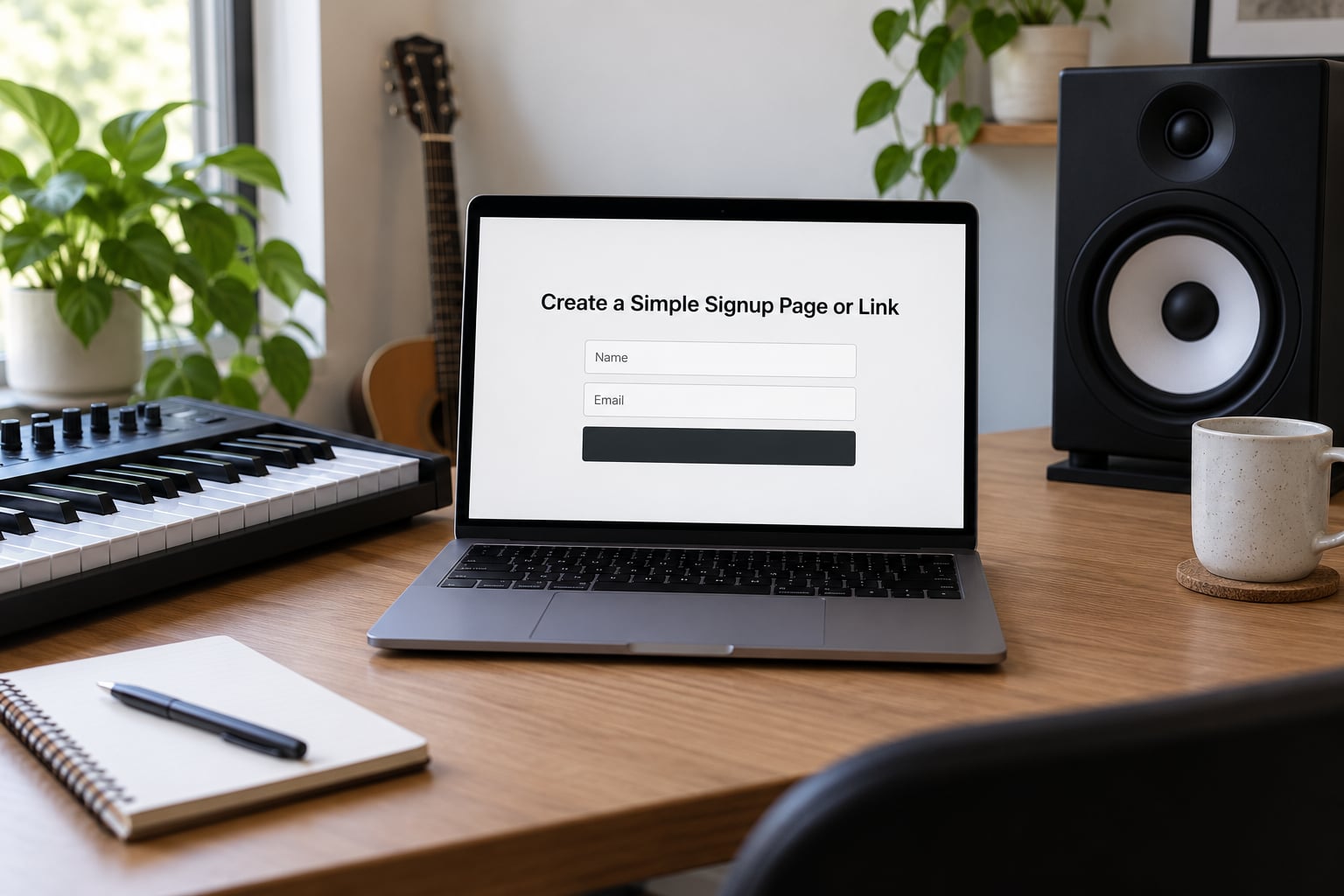
Your first signup page needs five things and nothing else: a headline stating the benefit, one email field, one button, a line of consent language, and an unsubscribe note. Most platforms generate this from a template in about twenty minutes.
Headlines that work name the payoff instead of the feature. “Get the new single 24 hours early” beats “Subscribe to our newsletter.” One email field beats a name field, a genre dropdown and a birthday question, because every extra field costs you signups.
4. Add the Signup Form to Your Music Touchpoints
One page will not grow a list on its own. You need the same link sitting in every place a fan already meets you.
- Your website or a single landing page
- Your link-in-bio, pinned at the top and included with each release post
- Your YouTube description and about section
- Streaming profiles, where the platform allows an artist announcement link
- Tour and ticket pages, where a mailing list is often a separate opt-in
- A QR code on show posters, merch table cards, stickers and email signatures
- Bandcamp or merch pages, if you sell directly
Give each location its own trackable link so you know which one works. Two platforms and a month of data will tell you more than a guess.
On social, mention the list roughly once in every six or seven posts. Artists on Reddit consistently report that steady, low-pressure reminders bring in subscribers without annoying the audience, while daily posts about it get muted.
5. Run a Welcome Email
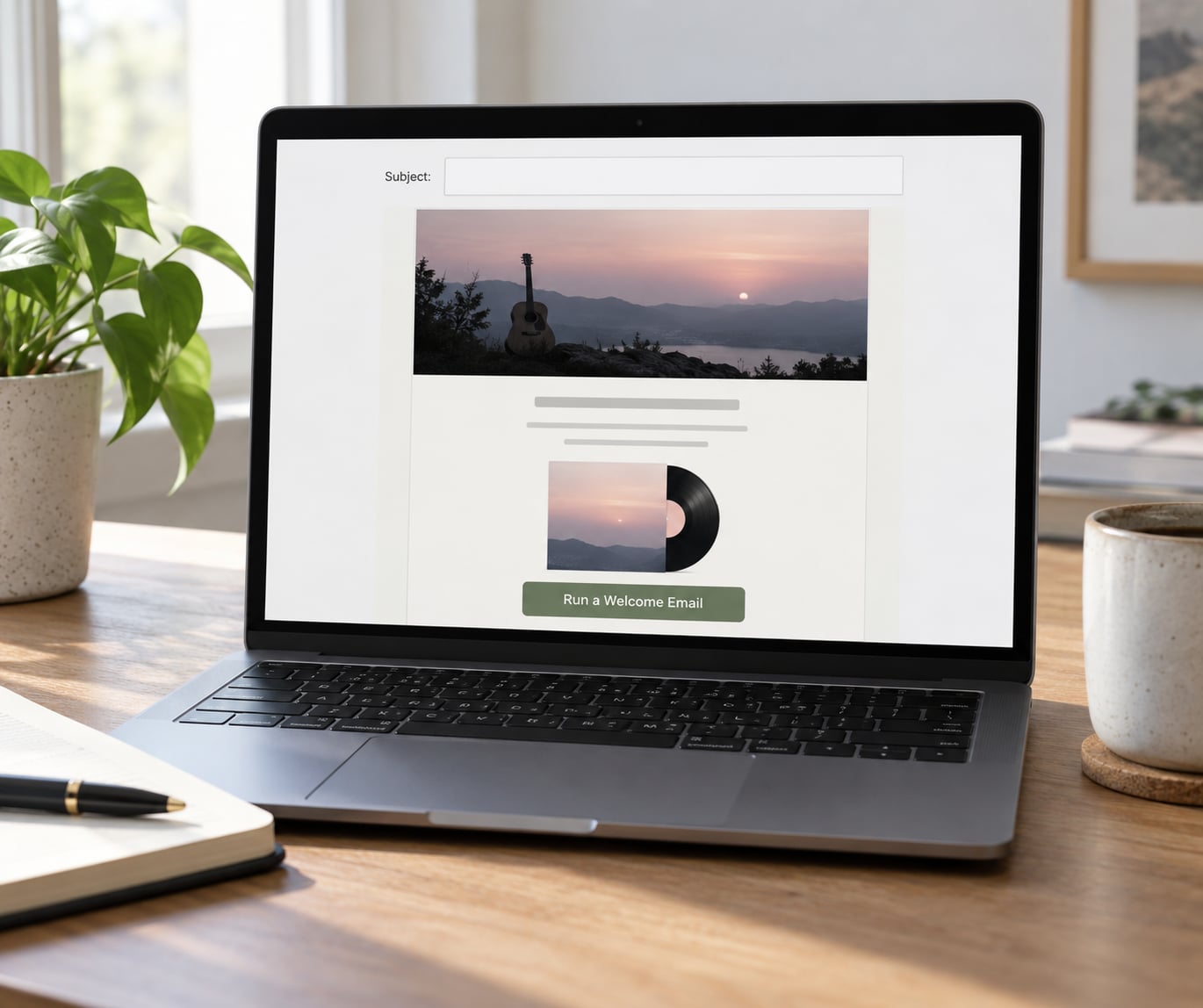
The welcome email goes out automatically the moment someone subscribes, and it does four jobs: confirms the signup, delivers the thing you promised, introduces yourself, and sets expectations for how often you will write.
A short version looks like this. Thanks for subscribing, here is the link to the demo you promised, a line about who you are and what you are working on, an honest note about sending every two or three weeks, and one ask: hit reply and tell me where you found the show or what you want to hear next. Replies are the most valuable thing a small list produces.
Turn on double opt-in while you are setting things up. It costs a few signups and removes a chunk of undeliverable addresses, which protects your sender reputation from the start.
6. Send Useful Campaigns on a Sustainable Schedule
Every two to four weeks is a solid starting point. Artists with lists under a thousand names often do well with one message a month that is worth opening, rather than a weekly send that gets ignored.
A workable mix: new music and pre-save links, show announcements with ticket details, a studio or production story, a short tip you learned this month, a question from the list, and a subscriber-only preview before a release. Aim for roughly three out of four emails carrying real value, with the fourth making an ask.
The rule of thumb that keeps this healthy is simple: no email should exist only to sell. There is a thread on r/artbusiness about a mailing list of decent size where the owner sends a handful of emails a year, only when something important happens, and regrets not having a steady rhythm. A list that only appears when you want something tends to produce slow clicks and quick unsubscribes.
7. Measure Growth and Improve the List
Most small lists land somewhere in the 30 to 60 percent open range and the 2 to 5 percent click range, and those numbers are normal enough that chasing them is a waste of time. Watch the direction instead of the single number.
Delivery tells you whether addresses are real. A sudden drop usually means spam complaints. Open rate tells you whether your subject lines earn attention. Click rate tells you whether the content matched what you promised. Replies tell you who actually cares, and replies are worth more than any metric.
Unsubscribes after a specific email send you straight to that email. Track that and change the thing you changed: the subject line, the send time, the ask at the end. Change one variable per test, or you will never know which one worked.
Legal Rules and Why You Should Never Buy a List
Buying a list is the fastest way to destroy the asset you are trying to build. Those addresses never opted in, they will not open, and they drag your delivery rate down until legitimate fans stop receiving your email.
Get permission instead, every time. Show your physical address, keep an unsubscribe link in every email, honor the request immediately, and keep a short privacy policy page that says what you collect and why. When you collect addresses in person at a show or an open studio, use a signup sheet or QR code where people clearly sign up, and never pre-tick a consent box. It is legal in the United States to send to some lists you did not build directly, under narrow CAN-SPAM conditions, but the deliverability damage is real and the rule set differs outside the US.
Common Mistakes to Avoid
Buying a purchased list. Replace it with a giveaway, a show QR code, or a collaboration with another artist. Slow and clean beats fast and toxic.
Asking without offering anything. “Sign up for updates” is not a reason. Name the specific thing they get.
Sending from a free personal address. You get caps, no automation and weaker deliverability. Use a domain-based address.
Going silent for three months. Consistency matters more than volume. If life is busy, halve the frequency rather than stopping.
Overpromoting. Every email should be mostly story, process or access. Fans forgive a miss; they do not forgive a storefront.
Collecting emails with no privacy policy. One page describing what you collect and who you share it with covers the basic expectation everywhere.
Asking for too much at signup. One email address, one promise. Bundling an email request with a pre-save and a follow lowers completion sharply.
Treating opens as the only score. Privacy features mean opens are an estimate. Clicks, replies and ticket or merch sales tell the real story.
Frequently Asked Questions
How many subscribers do I need before sending emails?
There is no minimum. Artists regularly send to lists of 25 people, and a small engaged list beats a large cold one every time. The first fifty subscribers usually come from your own network, your shows and your existing audience, so start there and let the list grow through consistent sends rather than a single campaign.
How often should artists send emails?
For a small list, one useful email every two to four weeks is the most sustainable range. Weekly sends work once you have enough material and a clear reason to write. Pick a rhythm you can hold for a year, and if you fall behind, cut frequency instead of stopping entirely.
What should I offer new subscribers?
Offer something specific you can deliver on repeat: 24-hour early access to releases, a subscriber-only demo, studio process notes, presale ticket codes or a print or discount on a first order. Early access and behind-the-scenes material are the most requested options in artist communities.
Do I need a website to collect emails?
No. A single signup page from your email platform plus a link-in-bio page covers most artists at the start. A website becomes useful once you are selling tickets, merch or digital downloads and want a permanent home for the whole funnel.
Is buying an email list legal?
Rules vary by country, and there are narrow US cases where you may email a list you did not build yourself under CAN-SPAM conditions. In practice, buying lists destroys deliverability because those addresses never consented. Rules are stricter under GDPR in the EU and UK, and this is general information rather than legal advice.
Are artist newsletters still relevant in 2026?
Yes, and the shift in how people find music has made them more useful. Social reach depends on algorithms that change without notice, while an email list is a direct line you own. Artists who write regularly report steadier presales and ticket sales than artists who rely only on platform posts.
Conclusion
Start with three things this week. Write down one benefit you can deliver every month, pick a platform from the list above and set up a sending address on your own domain, then publish one signup page with a single button and put its link in your bio, your YouTube description and a QR code at your next show.
The rest is repetition. Send something useful on the schedule you chose, watch the replies, and add one new touchpoint each month. An artist mailing list does not grow from one big push; it compounds from the same small system running week after week.