Most opening acts never set the ticket price for the show they open. The promoter or headliner names a headline price, the opener slot is folded into that bill, and by the time the poster goes up your only input was the number you said when you picked up the phone. So if you are searching for how to price concert tickets as an opener, the honest starting point is this: what you can actually move is the deal structure and the fee you name, not the face value of the ticket. Your own number is the break-even figure, the range you will accept, and exactly what goes in writing before anyone buys anything.
Below is the sequence I walk through with artists booking their own support slots. It takes an evening of research and one conversation, and it prevents the two expensive mistakes: turning up already underwater, or quoting a number you cannot defend when the headliner asks why.
Table of Contents
- What You Need
- Step-by-Step: How to Price Concert Tickets as an Opener
- Common Mistakes
- Frequently Asked Questions
- Should an opening act set the ticket price?
- How much does an opener get paid for a concert?
- Should I take a guarantee or a door split?
- Is it normal for an opener to pay for their own travel and backline?
- What do I do when the show does not sell out?
- How should I handle taxes and bookkeeping on opener income?
What You Need
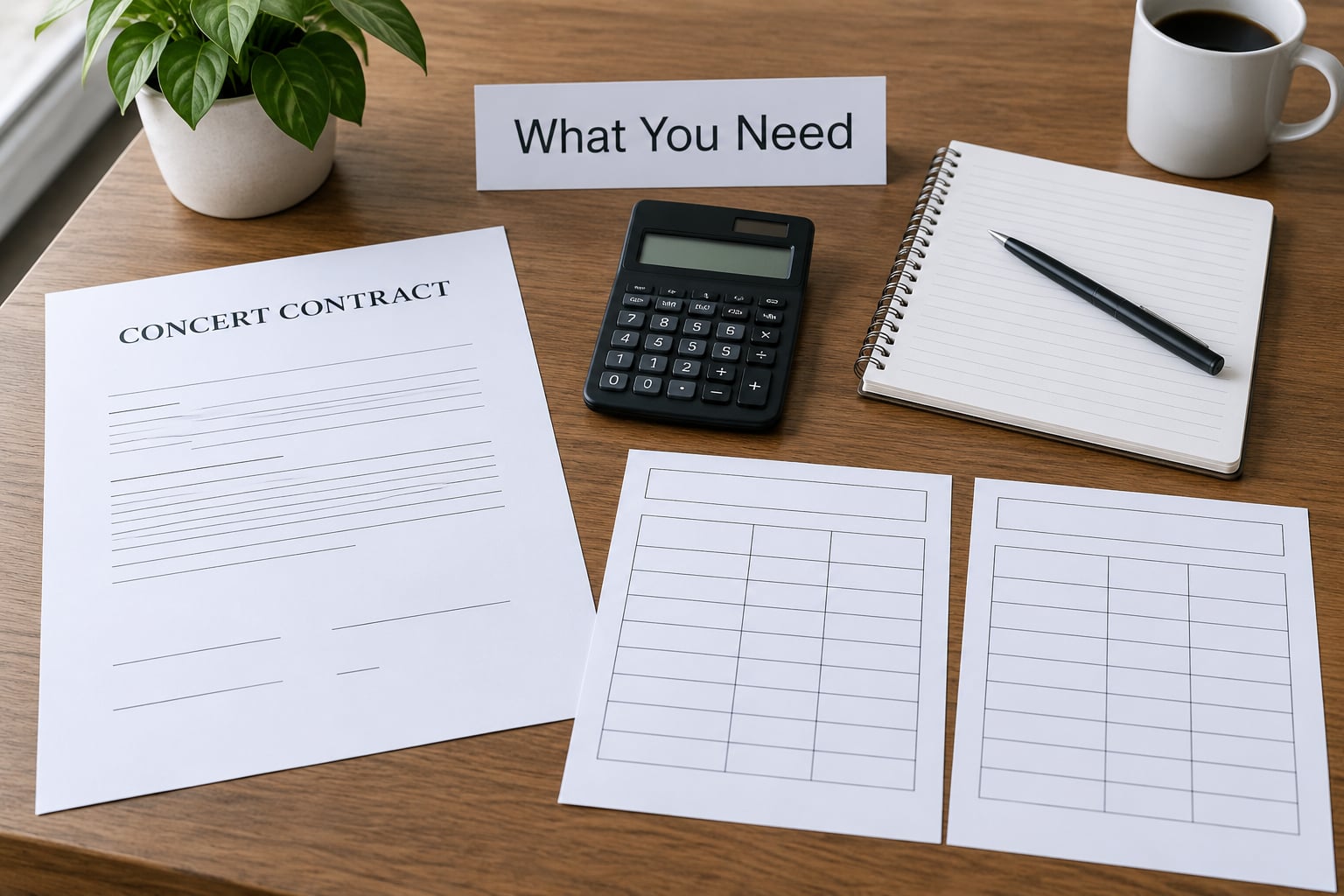
Before you talk about a number with anyone, get four things onto paper. Skipping this step is how openers end up agreeing to terms they never fully heard.
- The fee on offer and how it is structured. Flat guarantee, percentage of the door, guarantee plus percentage above a threshold, or a flat fee minus expenses. Ask which one, in dollars, before you ask for more.
- Venue economics. Capacity, seating or standing configuration, room dimensions, sound and backline provided or not, and the commission or facility fee deducted before any split is calculated.
- Headliner strength and billing. Local draw, recent ticket prices on the same routing, whether you are the only support or one of three, and where your name sits on the poster.
- The cost side. Guaranteed fee, split or pay for band members, van and fuel, lodging, per diem, promotion, and any backline or PA rental you are covering yourself.
Two more details matter more than bands expect. Ask who controls the advertised price and how long after the show settlement happens, because those two answers tell you whether you are negotiating a fee or a partnership.
Step-by-Step: How to Price Concert Tickets as an Opener
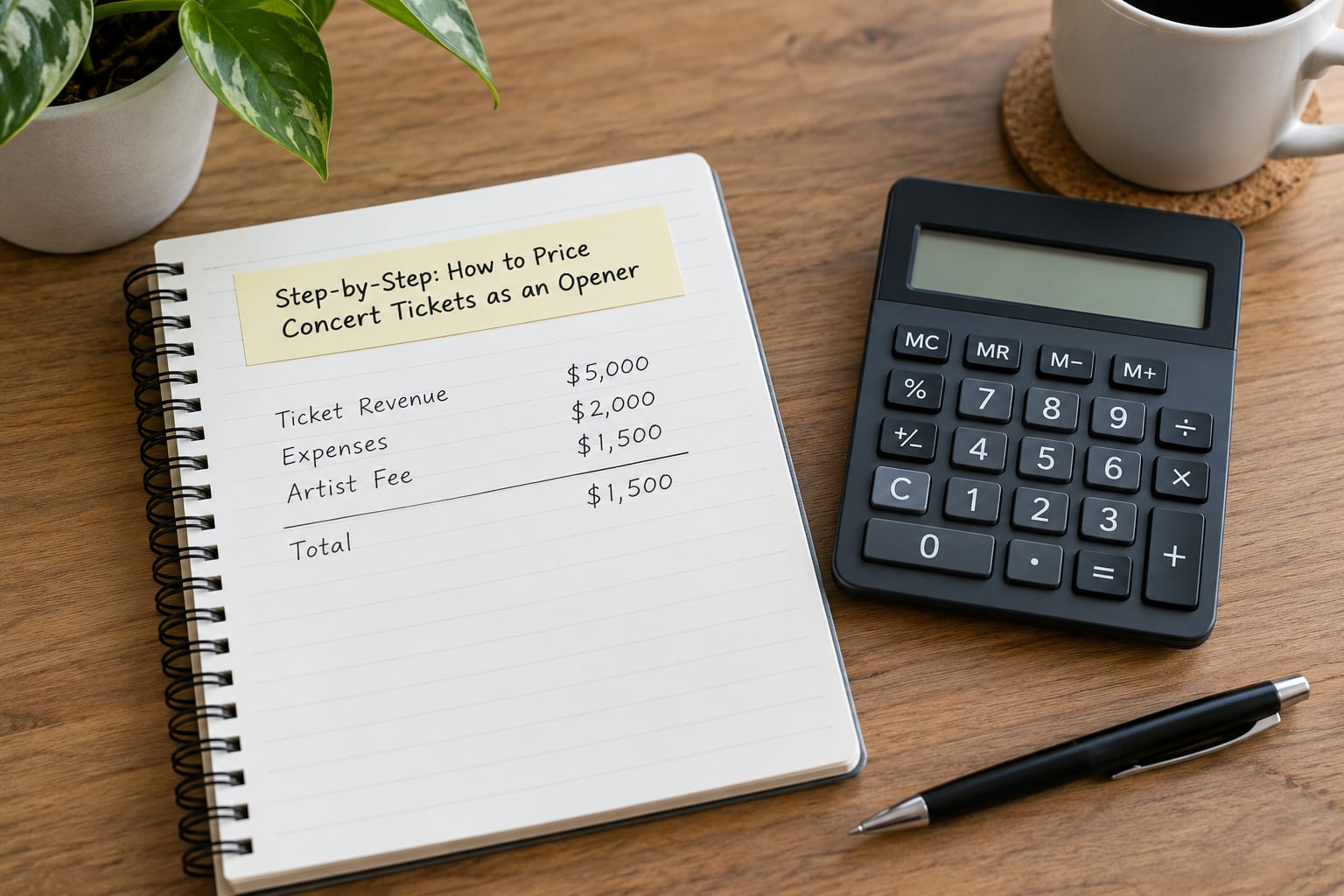
Here is the working order. Do them in sequence, because each one feeds the next and skipping ahead is what produces bad numbers.
How to Research the Venue and Show
Start with the room, not the band. A 350-capacity club with a low ceiling and a bad sightline cannot charge theater money, and neither can you. Capacity sets the ceiling, room quality and neighborhood set the ceiling below that, and the headliner’s recent draw sets the floor.
Look at what comparable shows have actually charged in that city, not just the headliner’s largest rooms. Artists on tour in 2026 often price a 400-seat club off a 2,000-seat theater run, which is how a small room ends up with a price nobody local will pay.
| Venue tier | Rough capacity | Typical opener fee per show (USD) |
|---|---|---|
| Club | 150-400 | 150-400 |
| Small theater | 400-1,200 | 300-900 |
| Mid-size regional room | 1,200-4,000 | 800-2,500 |
| Arena support slot | 8,000-20,000 | 2,000-7,500 |
These are rough US ranges, not promises. They move with region, draw and the state of touring costs, and a slot in a city you have never played sits at the low end until you prove otherwise.
How to Estimate Your Break-Even Point
Break-even is the number where the show stops costing you money. It is the only figure you can defend in the room, because it is arithmetic rather than ambition.
List every approved cost for the date, then divide the total by the percentage you are taking off the top.
| Line item | Example (USD) |
|---|---|
| Flat fee or guaranteed floor | 400 |
| Split or fixed pay for band and crew | 200 |
| Van rental and fuel | 180 |
| Lodging, two nights | 140 |
| Per diem | 90 |
| Promoted shows and posters | 75 |
| Backline rental not covered by the venue | 120 |
| Total cost to play the date | 1,205 |
Now work backwards. If you are taking 15 percent of net revenue, you need 1,205 divided by 0.15, which is about 8,033 in net. At a 65 percent net-to-gross ratio, that is roughly 12,360 in gross ticket sales, and at a 45 dollar ticket that is 275 paid seats, or about 69 percent of a 400-cap room.
Do that math before you pick a number, because it tells you whether the show can realistically work. If break-even needs 90 percent of the room, the fee is wrong for that room.
How to Choose a Ticket Price Range
There are two pricing worlds here, and confusing them is the most common pricing error.
In the first world, you are opening on someone else’s bill. They set the advertised price, and your slot is bundled into it or sold cheaper as an add-on. You are not pricing a ticket at all, so your range is the fee range from the table above, adjusted for room and draw.
In the second world, you are headlining your own show or curating a showcase. Here you do set the advertised price, and you work from comparable local shows, the all-in cost of the room, and what the audience gets. Price to sell the room, not to recover one bad night.
Two guardrails on the range. Fans expect a support act to be the value ticket, and pricing above what they consider reasonable for an opener reads as gouging to the very crowd you are trying to win. Dynamic ticketing also means the advertised number is not the final number, so build your break-even on the realistic average after adjustments rather than the headline.
Then set a floor, a target and a walk-away. Stating all three in advance is what stops a flattering conversation from turning into an unpaid load-in.
How to Discuss the Price With the Headliner
Keep it collaborative and specific. Say the number, say what it covers, and say why.
A workable version: I need 400 to cover the band split and travel, and I want a percentage above that so a strong room is worth something. If that is over budget, tell me and we can look at a lower guarantee with a higher percentage instead.
Three structures come up most. You receive a flat guarantee, you take a percentage of the door, or you take a guarantee plus percentage above a break-even threshold. The hybrid is usually the one to aim for, because the headliner caps risk and you keep upside.
Be careful with the language of the split itself. Is the percentage calculated on gross ticket sales, or on net revenue after venue costs are deducted? The same number means very different money, and that distinction is where disputes are born.
If you have to push back, push on structure rather than on the headline number. A better merch table placement, a longer soundcheck, a poster with your name large, or a guest list for people who will come back next time are all worth real money to a small band.
How to Confirm the Agreement in Writing
Get it in writing before the show, not after settlement. Community consensus across touring forums is blunt on this: written confirmation is the single strongest protection you have.
Record the advertised ticket price and who controls it, the opener allocation if a separate ticket exists, the guarantee and any percentage, the exact threshold that triggers the percentage, which costs are deducted before the split is calculated, payment timing after settlement, and what happens if the show is cancelled or moved.
Also agree on the door count. Reported attendance is the least trustworthy number in grassroots touring, so ask to witness the count or have someone you trust do it, and request an itemized statement at settlement showing gross, deductions and the split percentage applied.
Common Mistakes
Accepting an unclear guarantee. If the deal says a flat fee minus expenses without naming the expenses, you have agreed to an open-ended deduction. Name every cost in the memo, and cap the deductions at an agreed total.
Copying another show’s price. Someone’s USD 600 in a 1,500-cap theater tells you nothing about a 300-cap club in a different market. Work from your own break-even and your own room.
Ignoring the all-in cost. A 500 fee with no backline, an unfunded van, and a two-night hotel commitment is not a 500 fee. Total the date before you react to it.
Competing with the headliner in the conversation. Openers who lobby for their own ticket price or headline billing usually lose both. Your leverage is the swap you offer the room and the value you bring to the bill.
Changing the price after promotion starts. Once your name is on the poster and people have bought, a price move is a broken promise to the audience that came for you. Settle the number before the announcement, not after.
Treating an unpaid slot as free money. Exposing a new band to a headliner’s audience is genuinely valuable, and there is a point where it pays for itself in future dates. There is also a point where you are simply funding someone else’s tour from your own savings.
Frequently Asked Questions
Should an opening act set the ticket price?
Usually not. On a headliner’s bill, the promoter or headliner sets the advertised price and your slot is bundled into it, so your real leverage is the fee and the deal structure rather than the ticket price. When you headline or curate your own show, you set the price yourself and work from comparable local shows and your own cost of the room.
How much does an opener get paid for a concert?
Rough US ranges run 150 to 400 dollars for a club, 300 to 900 for a small theater, 800 to 2,500 for a mid-size regional room, and 2,000 to 7,500 for an arena support slot. Region, draw, billing and touring costs move these numbers a long way, and a first slot in a new city sits at the low end until you prove yourself there.
Should I take a guarantee or a door split?
Take the guarantee when you cannot afford an empty room and your costs are fixed. Take the split when the headliner has strong local draw and your costs are low. A guarantee plus percentage above a break-even threshold is the safest option for most openers, because the headliner caps risk while you keep upside on a good night.
Is it normal for an opener to pay for their own travel and backline?
It is common, not free. On lower-fee or unpaid slots, the band frequently covers van, fuel, lodging and per diem out of pocket, and sometimes backline rental too. Price that into your break-even before you accept the date, and ask what the venue provides so you are not paying twice for the same drum kit or backline.
What do I do when the show does not sell out?
Nothing dramatic, as long as you wrote the deal down first. A guarantee pays regardless of attendance. A percentage deal pays less, and that is the risk you accepted. The real problems show up when attendance is reported badly or expenses are deducted without an itemized statement, which is why you should witness the door count and request the settlement breakdown.
How should I handle taxes and bookkeeping on opener income?
Treat support-show income as self-employment income and keep every settlement statement, invoice and expense receipt by date. Irregular small amounts still need to be reported, and the deductions you genuinely paid travel, lodging and backline costs against are usually the ones that matter. Rules and rates vary by country and state, so ask an accountant about your own situation.
Calculate your break-even number first, then name a fee that clears it. Confirm the revenue arrangement, the deductions and the payment timing in writing before anything is announced, and the ticket price stops being the thing you have to worry about.