Learning how to split royalties with a producer comes down to one page of numbers and one signature from each collaborator. Most artist-producer deals land somewhere between 15% and 25% of master revenue for a full production, with a beat-only lease often priced at 50% of publishing instead. The part that causes real trouble is not the percentage, it is the difference between owning the master and earning a share of it.
Both sides usually agree on the number in the room. Then nobody writes it down, the split sheet gets signed eleven months after release, and the argument starts when the track is finally earning something. That is the version this guide is designed to prevent.
What You Need
Before you talk numbers, gather six things. Working through them in order means the conversation is about the deal rather than about trust.
- Percentages for the master and, separately, for the composition.
- Contribution categories — songwriting, composition, production, engineering, mixing, arrangement, session playing.
- Payment triggers — what event causes a payout, and how often statements arrive.
- Recoupment terms — whether an upfront fee comes out of later royalties or stands on its own.
- Credits — the exact name, role and ordering each person wants on the release.
- Documents — a split sheet, a beat licence or work-for-hire clause, and a demo or sample clearance if one exists.
If you cannot fill in those six lines, you do not have a deal yet. You have a hopeful conversation.
Step-by-Step: How to Split Royalties With a Producer
1. List Each Person’s Contribution
Sit down and write separate lines for songwriting, composition, production, engineering, mixing and arrangement. Do not collapse them into one label like “producer”, because a producer who only beat-makes and a producer who rewrote your chorus have very different claims on the same track.
Roles overlap constantly. One person can write the hook, produce the record and mix it, and that is completely normal at the independent level. The point is precision rather than exclusivity. If the producer only built drums, the agreement should say drums and arrangement rather than “production”.
How you know it worked: every person involved can read the list and recognise their own contribution without asking you to explain it.
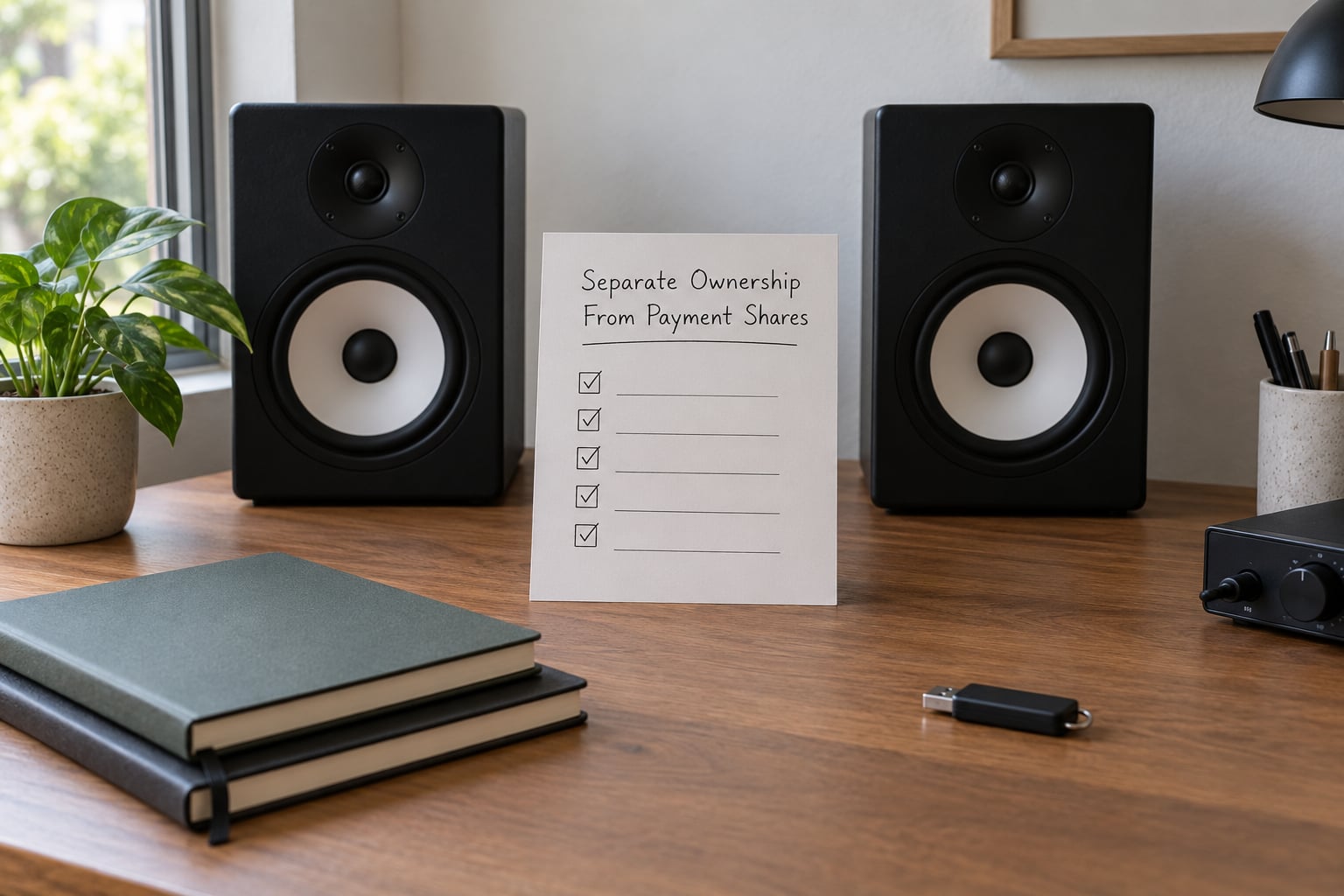
2. Separate Ownership From Payment Shares
There are two copyrights sitting on every released song. The master recording covers the fixed audio file, and the composition covers the underlying words and melody. They are registered separately, collected by different organisations, and paid out on different schedules.
A very common structure is that the artist owns the master outright and the producer receives a defined producer royalty from it — a percentage or a set number of points. Meanwhile the composition is split between whoever actually wrote parts of it, and a producer who wrote nothing gets nothing from the publishing side.
How you know it worked: the agreement answers two separate questions — who owns what, and who gets paid what. If only one number appears, it is not finished.
3. Document How to Split Royalties in Writing
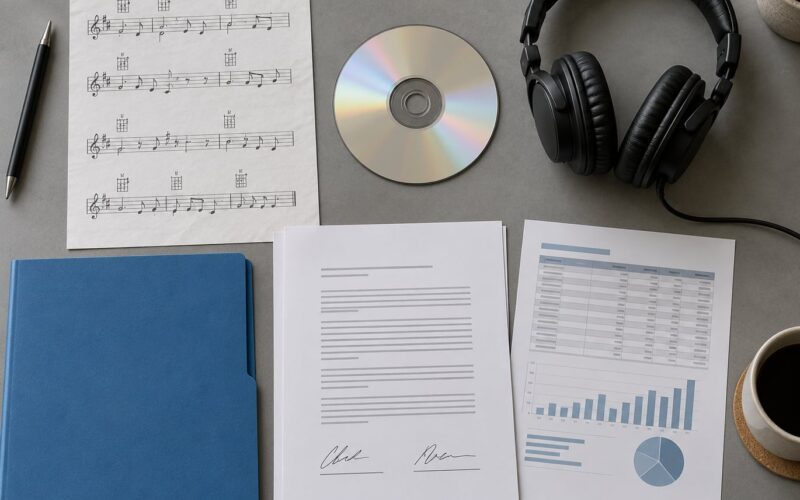
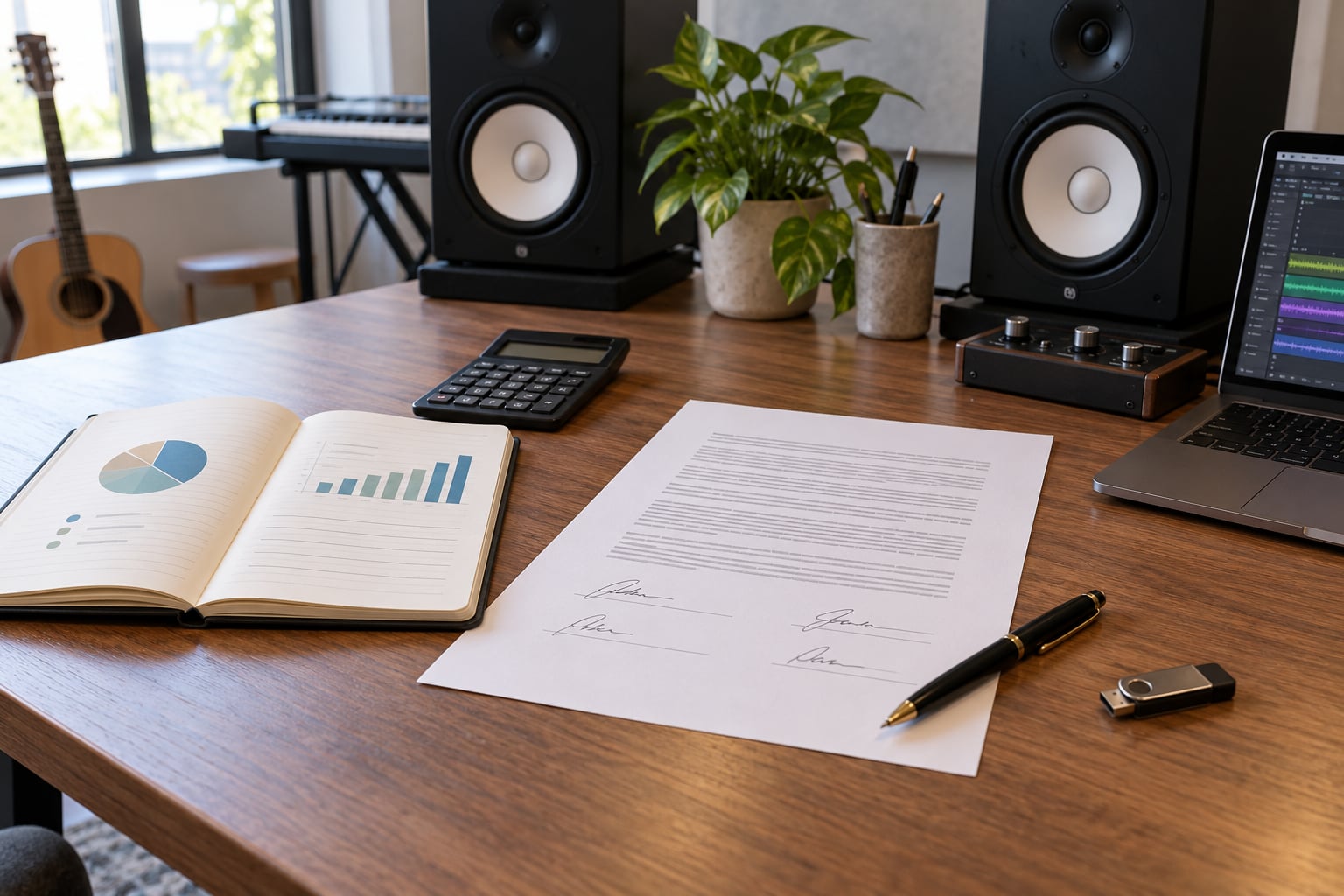
The document that does the work is a split sheet. It needs clear definitions, exact percentages, the works covered, payment triggers, accounting frequency, payment deadline, recoupment rules, credit wording, warranties and a dispute procedure.
A concise example looks like this: for “Nightdrive”, the artist is the sole owner of the master recording and pays the producer 20% of net master receipts. Composition is split 75% artist, 25% producer, reflecting the producer’s co-write on the hook. Statements arrive quarterly and payments run within 30 days of the statement date.
What makes this enforceable is not the wording, it is the full legal name, the PRO affiliation, the IPI or CAE number where applicable, and a signature from every party. Signing before stems are handed over is the habit worth building. Producers on r/musicians describe the same pattern repeatedly: agreements discussed casually in a session and never captured.
How you know it worked: someone outside the project — a label, a publisher, a sync agent — could read one page and tell who owns what and who gets paid.
4. Define When and How Royalties Are Paid
Name the revenue types the split covers. That usually means streaming income, downloads, physical sales and units, sync licensing, merchandising, and performance income collected through performing rights organisations such as ASCAP, BMI or SESAC.
Then settle the calculation basis. Gross means everything collected. Net means what remains after permitted deductions such as distribution fees, collection society withholdings and agreed costs. Producer points are a third model used mostly on label deals, where one point equals one percentage point of the royalty the artist receives, not of total revenue. Forum threads on futureproducers show how badly that distinction gets misread when it is never spelled out.
Write down whether any advance is recoupable from future royalties, how often accounting happens, how quickly payment follows, and who delivers statements. Also record the territory and term of any licence.
How you know it worked: both sides can independently calculate what a given statement should pay and arrive at the same figure.
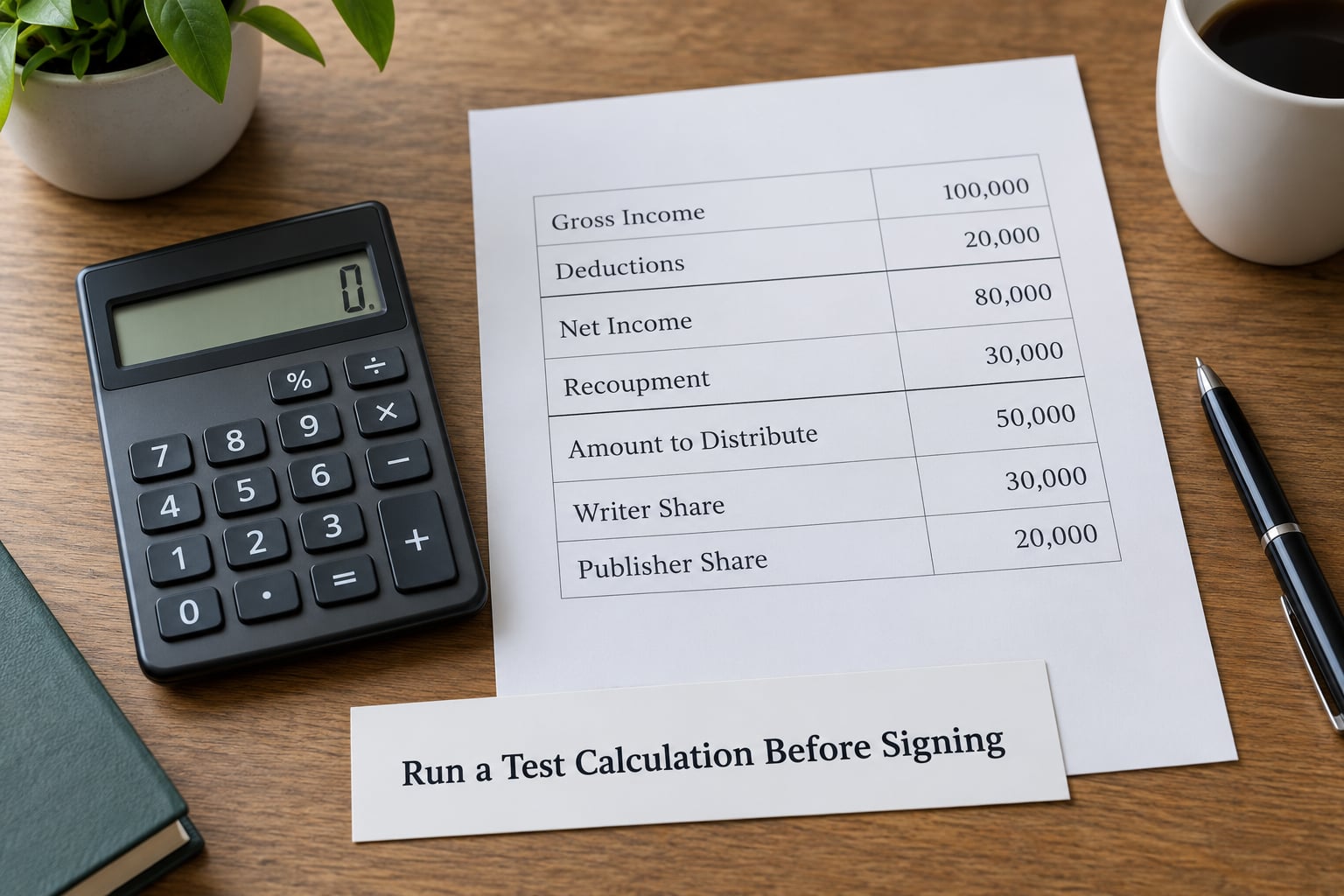
5. Run a Test Calculation Before Signing
Take one plausible gross figure and push it all the way through. Suppose gross receipts for a quarter total 20,000. Deduct agreed costs of 5,000, giving net receipts of 15,000. With a 20% producer royalty on net master receipts, the producer’s share is 3,000 and the artist’s share is 12,000. Separately, the publishing half of the composition produces 2,000, of which the producer’s 25% share is 500.
Run the same numbers against your agreement wording and see whether they match. Disagreements almost always come from ambiguity in one of four places: whether a percentage applies to gross income, to net receipts, to master income only, or to publishing income only.
On r/makinghiphop the recurring question is whether a lease seller who never wrote a lyric earns mechanical royalties. If the agreement does not say, assume the answer is no and write it down either way.
How you know it worked: a stranger with a calculator and your page reaches the same numbers you did.
6. Review the Split After Release
Check the release metadata, the credits, the royalty statements and the payment records on a fixed schedule — quarterly for the first year is plenty. Confirm that each collaborator’s name, split and identifiers appear correctly on every statement you receive.
Income often arrives through more channels than you expect: different DSPs, different collection societies, a publisher administering on one side and a distributor handling the master on the other. Money sitting with an unidentified collection is the most common complaint in music business threads, and it is nearly always traceable to incomplete metadata at registration rather than to a split dispute.
Revisit the split whenever the song changes materially — a remix, new writers added, a sample clearance, a re-record — or when a long-term collaborator’s role grows. Producers who stay with an artist often see their share step up over time as their involvement increases, so a split that was right for one record can be wrong for the next.
How you know it worked: every payment that should have reached a collaborator matched the split sheet, with no unexplained gaps.
Common Mistakes
Using vague percentage terms. “Fifty percent of the song” means nothing. Fix: specify the basis — net master receipts, gross receipts, publishing only — and attach a worked example.
Mixing ownership with participation. Being credited on a release does not create a royalty claim. Fix: write ownership percentages and payment percentages on separate lines.
Forgetting the demo. The beat the producer sold you and the final record are not the same work. Fix: state explicitly whether demo and master rights transfer and whether the demo gets its own registration.
Leaving deductions vague. Fix: list what may be deducted and what may not, and cap anything uncapped.
Skipping accounting rights. Fix: state that each party receives statements on the same schedule, whether or not they are signed to a label.
Using an old split after the track changes. Fix: add a review trigger to the agreement — re-sign when writers are added or the song is reworked.
Relying on a verbal promise. Fix: no stems, no payment, no release without signatures. This one is not negotiable.
Confusing credit with payment. A session player is often offered a small share of the writer’s share rather than master revenue, which on GearSpace is cited as roughly 2% to 5% of the writer’s portion. Fix: state which side of the deal the percentage sits on.
Frequently Asked Questions
What percentage should an artist give a producer?
For a full production on an independent release, 15% to 25% of net master receipts is the working range, with 20% as a fair midpoint when the producer handles arrangement, production and mixing. A beat-only lease is different: it typically carries 50% of the publishing rather than a master percentage. Producers who co-write usually add 20% to 40% of the composition on top. Long relationships often start lower and rise as involvement grows.
Should producer royalties be calculated from gross or net income?
Net receipts are the safer base for an independent deal, because deductions and collection delays do not shrink the producer’s share without their consent. Gross only makes sense if no deductions apply at all, which is rare. Either way, the agreement must list which costs are permitted deductions and which are not, since an undefined deduction list is the most common way a split silently changes meaning after release.
Do I need a written agreement with an independent producer?
Yes, for every track. A signed split sheet is what distributors, publishers and collection societies use to confirm ownership, and without one payments get held or routed to the wrong party. Keep the agreement short: title, contributors, roles, exact percentages on the master and on the composition, payment basis, statement schedule, credit wording and signatures. One page is enough. Longer only helps the person who wrote it.
How are producer royalties paid after a track is released?
Two separate paths. Master royalties flow through your distributor or label to each named payee according to the registered split. Publishing income is collected by a performing rights organisation such as ASCAP, BMI or SESAC and paid to the writer’s share, which is then passed on to the co-writers’ shares. Register the work before release, enter every contributor with their identifiers, and reconcile the first two statements carefully.
Can a producer royalty split be changed after signing?
Only if the agreement says it can, or if everyone who holds a share agrees in writing. A signed split is not automatically permanent, which is why clauses covering added writers, remixes and re-records are worth negotiating up front. Changing a percentage unilaterally is not something a later argument can fix, since the other party is relying on the original document. Copyright and contract rules vary by jurisdiction, so individuals should seek qualified legal advice before signing.
Start with the contribution list, not the percentages. Once both sides agree on who wrote and who produced what, the numbers follow quickly, and a signed split sheet takes an afternoon. Rules differ by country and change over time, so treat this as practical education rather than legal advice, and get a qualified music attorney involved when the money or the relationship matters enough to be worth arguing over in 2026.