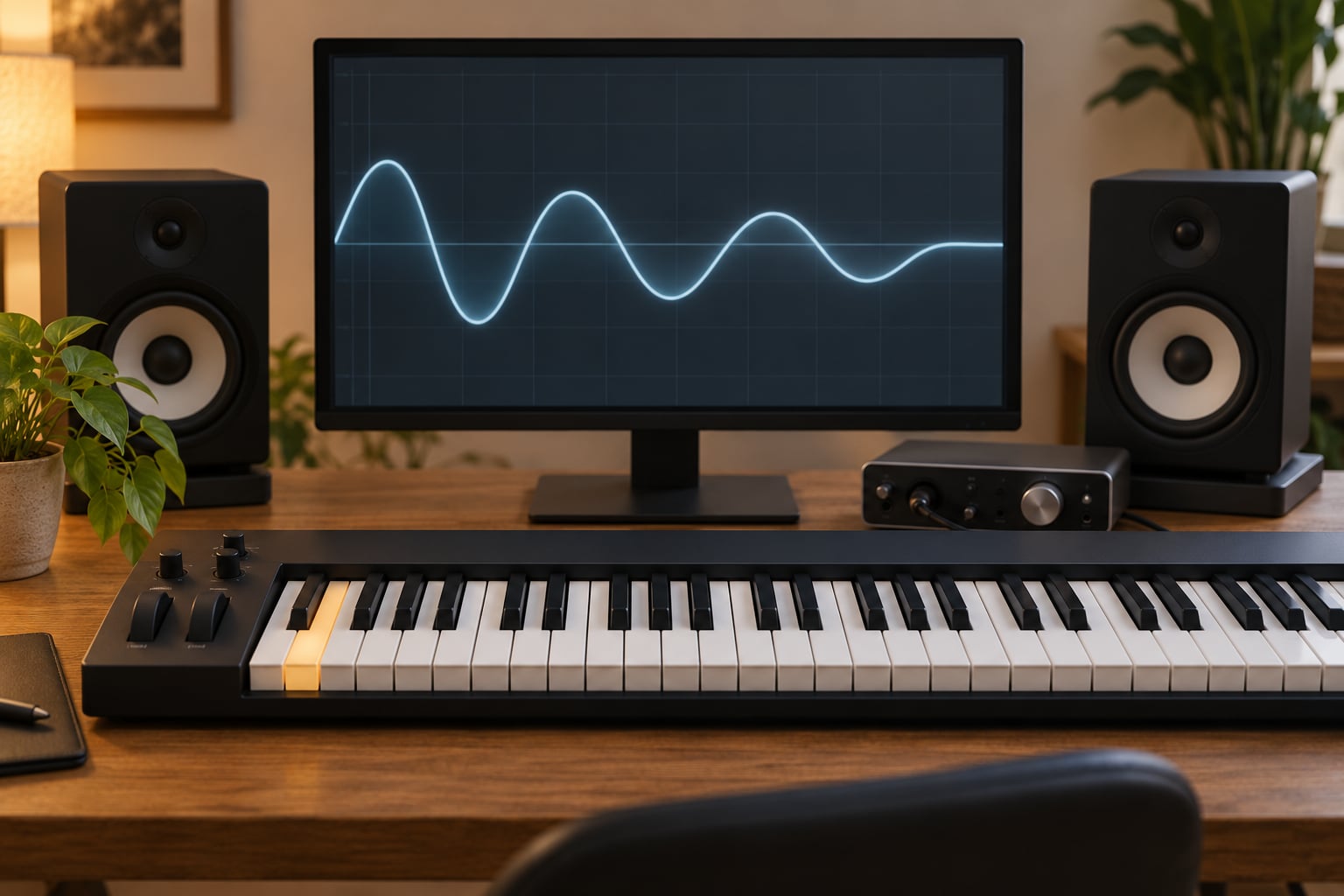
An 808 is a pitched bass instrument derived from the Roland TR-808 drum machine, and that single fact is the whole answer: because it has a long decay and a strong fundamental frequency, its note can be tuned, and it should be tuned to the key your other instruments are playing rather than the key the sample happened to be recorded in. Get that right and the low end stops arguing with your melody.
The practical method is simple. Find the key of the track, find the note the 808 sample is currently recorded at, transpose it by the right number of semitones, and audition it up an octave or two while you tune so you can actually hear the pitch. It takes about ten minutes per 808 and it is the single biggest upgrade most producers can make to a beat.
What You Need
You do not need a paid pitch-correction plugin. Every mainstream DAW ships with everything required, including a tuner.
- The track itself, loaded with its chords or sample flip, so you always tune against real context rather than in silence.
- Your 808 sample loaded into your sampler. Any sampler works.
- A pitch detection tool to read the note the sample was recorded at. FL Studio has Edison with Detect Pitch Region, Ableton Live has the Tuner audio effect, Logic Pro has the Tuner and Pitch Correction plug-ins, Studio One has a built-in tuner on the Audio Track, and Reaper ships ReaTune.
- A keyboard or piano roll with a visible octave readout, so you can tell C2 from C3 at a glance.
- Headphones and one decent speaker system. Sub-bass pitch is nearly indiscernible below about 60 Hz, so judging it on laptop speakers alone is how mistakes survive to mastering.
Step-by-Step: How to Tune 808s to the Key
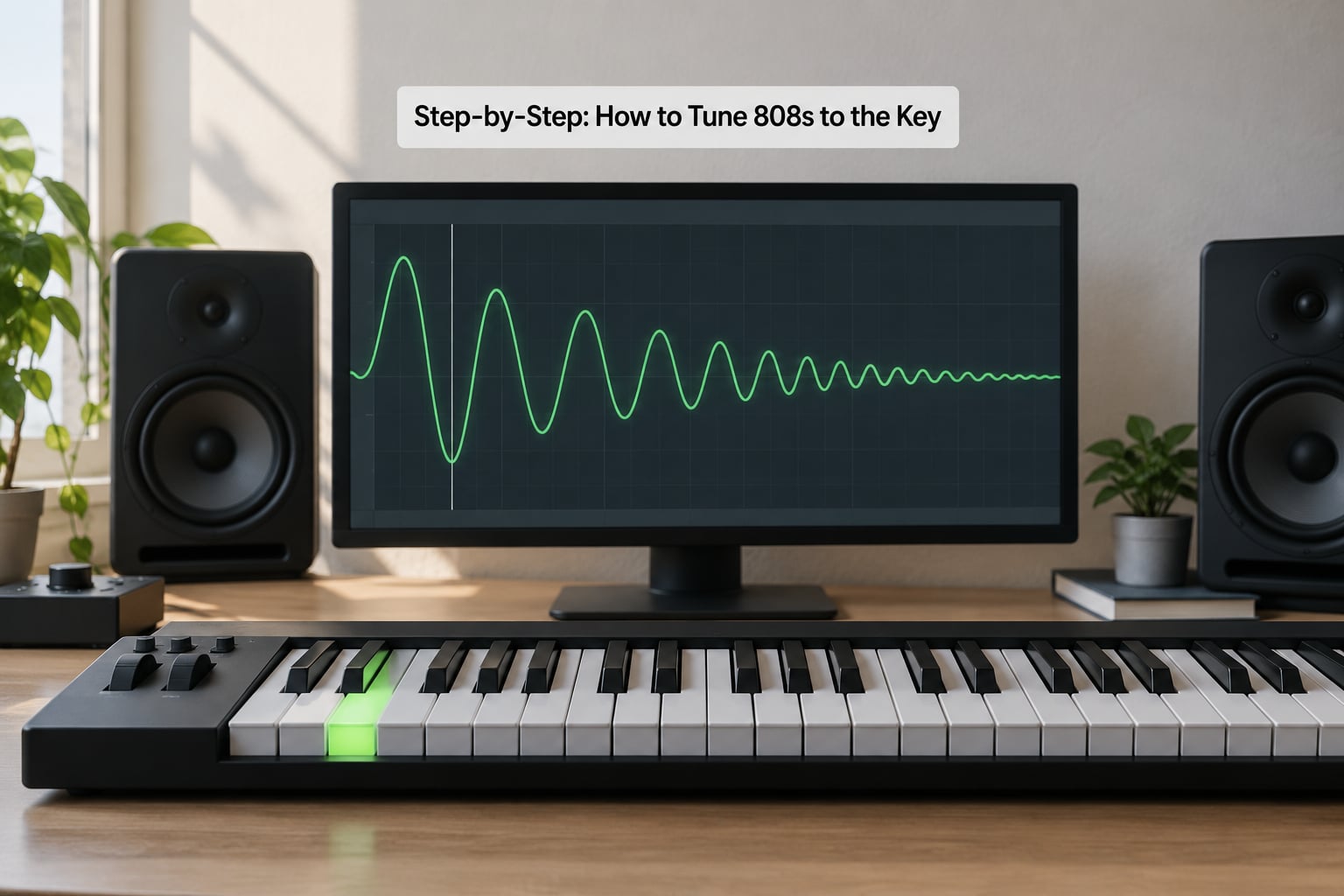
Tune the 808 to the note your melody, chords and sample are already sitting in, then shift the sample so that note comes out when you play the root on your keyboard. Work through these four stages in order and check the result in the full arrangement before you move on.
Find the Track Key and Bass Position
Start by identifying the key of the track, not the key of the 808. If you are working from a sample flip, run a key detection tool on the full loop, or solo the sample and read the note it centers on. Then find the lowest note in the progression.
That lowest note is the root, and it stays the root no matter how the chord is inverted. In C minor, a C minor chord in first inversion still has C as its root, so an 808 playing C under an Eb major chord is still on the root of the song.
Choose the Correct 808 Note
Register and key are two different things, and beginners constantly mix them up. Pressing C1 on your keyboard might not give you C if your sampler is set to a different sample root key, which is why two producers can play the same key name and hear different notes.
Decide which role the 808 plays. Playing the root of every chord is the safest choice. Playing the fifth of each chord underneath a root-based bass line gives the low end movement without pulling the harmony apart.
One long-standing community tip from a 20-year Gearspace member is worth borrowing as a workflow: start with the 808, and let the note it is tuned to decide the key of your song. That flips the problem from tuning an 808 to fitting it, and it saves re-pitching a distorted 808 you already love.
Tune the Pitch and Check the Octave
Read the 808 sample’s recorded note with a pitch detector. An original TR-808 is naturally pitched somewhere around G sharp or A, so samples taken from hardware need very little pitch shifting and sound best there.
Then transpose by the distance between the recorded note and your target note. One semitone is 100 cents, and 12 semitones make one octave, so a move from A up to C is three semitones. Detectors can return two notes when a kick drum is layered inside the sample; trust the lower, longer one, because that is the 808 fundamental and the kick transient is the other.
Set the sample root key in your sampler to that recorded note so the keyboard labels are honest, then audition. If the pitch is hard to identify, shift up 12 or 24 semitones, tune it there where the note is obvious, and shift back down. Several regulars in the Ableton and FL Studio communities describe that up-tune-shift-back trick as the only method they trust.
Now check the octave. Somewhere around 44 Hz is roughly the lowest tone that stays present, and near 65 Hz sub bass starts turning into regular bass. A 20-year Gearspace member described it as 44 Hz being about the lowest tone before tones start disappearing. Play the 808, note the frequency your tuner reads, and if it lands under 45 Hz or above 70 Hz, octave it until it sits in a usable band.
Test the 808 in the Full Mix
Tuning correctly does not sound impressive in isolation, which is exactly why it needs a context check. Solo the 808 against the beat, then bring the kick back and listen to the gap between them.
Three checks catch most problems. Mute the 808 and confirm the track key is still obvious without it, since an out-of-tune 808 smears that sense of key. Play the loop through mono below about 100 Hz and listen for beating or wobble, which means the bass and the bass guitar are fighting. Then check a small speaker or phone, because an 808 that survives that test has enough harmonic content to translate.
If it turns muddy, saturation is usually the answer, not more pitch correction. A gentle saturator adds harmonic content above the fundamental so the note survives on a phone. If it still sounds thin, check note length and the kick relationship before touching pitch again.
Reference Frequencies Worth Memorising
| Frequency | What it means | What to do with it |
|---|---|---|
| 44 Hz | Roughly the lowest tone that stays present | If your 808 reads lower, octave it up |
| About 60 Hz | Below this, pitch is nearly indiscernible | Audition up an octave to hear the note |
| 65 Hz | Top of the practical sub range | Above this you are in bass territory |
| 100 Hz | Common mono cut-off for the low end | Keep everything below this centred |
| 200 Hz | Where to carve space for other bass parts | High-pass guitar and mid instruments here |
Common Mistakes
Tuning the kick drum as well. Regular kicks are of indefinite pitch, like snares, and should be left alone. The same Gearspace member who recommends tuning the 808 to the song key is blunt about the rest: do not bother tuning regular kick drums. 808s are treated differently because they sustain and carry a real fundamental.
Trusting the recorded key. Knowing an 808 was recorded in F sharp tells you nothing about what it should play. Many packs ship every sample in C, which is why so many beats end up stuck in C minor or A minor.
Believing the second detected note. When a detector reports two pitches, you are hearing the 808 fundamental plus a layered kick transient. Tune the lower one.
Tuning by ear alone at low volume. Below roughly 60 Hz your ear cannot really judge pitch. Use a tuner for the last few cents.
Over-correcting with bass EQ. Cutting lows because the 808 sounds wrong is treating the symptom. The note is either right or it is not.
Overplaying the 808 across the progression. Root on strong beats, fifth or chord tones for movement, and stop there. More notes means less low end for everything else.
Skipping slides and octave jumps. A slide has to land on a note that belongs. Tune the destination note first, then draw the slide.
Ignoring translation. Tune to the key first, then use saturation for phone speakers. Doing it the other way round just gives you a loud wrong note.
Frequently Asked Questions
Can I tune an 808 to a different key?
Yes, and that is the normal case. Most 808 samples were recorded at one note and will be used in a song in another. Transposing an 808 is standard practice, and the closer the target key is to the sample’s natural pitch around G sharp or A, the fewer artefacts you hear. Plenty of packs also ship every sample in C, so tuning is not optional if you work in any other key.
Should an 808 always play the root note?
The root is the safest default because it matches the harmonic centre of the progression, but it is not the only option. Playing the fifth of each chord, or an inversion, gives the low end motion without creating a clash. The one rule is that whatever note you choose must belong to the chord under it. Notes outside the chord are what make an 808 sound out of key.
How many semitones should I transpose an 808?
Only the difference between the recorded note and the note you want. One semitone equals 100 cents and 12 semitones equal one octave. If the sample reads A and your song is in C, that is three semitones up. Shift by more than an octave or two and the transient smears, which is exactly what the up-tune-shift-back method exists to avoid.
Is it better to tune the 808 to the bass guitar or the kick?
Tune it to your other pitched instruments, and never to the kick. A kick drum has no fixed pitch, so matching it is meaningless. If you play bass guitar or a bass patch in a scale, the 808 must agree with that part. Write the 808 line first, build the bass around it, and both stay locked to the song key.
Why does my tuned 808 sound muddy?
Muddiness is usually a low end collision rather than a pitch mistake. Check three things in order: whether two parts share the same octave, whether your kick and 808 overlap in time, and whether everything below roughly 100 Hz is centred. A gentle saturator adds harmonic content so the note survives on small speakers, and cutting around 200 Hz for guitar and mid instruments often clears more space than touching the 808 itself.
Do 808s need to be tuned with the entire mix?
Tune the pitch first with the track playing, then judge the level in the full arrangement. You cannot set 808 gain in solo, because the note disappears the moment the kick and bass come in. Mute the 808 and check the song still makes sense without it, then play through a small speaker to confirm the bass survives translation.
Conclusion
Identify the key of your track, find the root note of the progression, read the note your 808 sample is actually recorded at, and transpose it by the difference in semitones. Check the octave lands in a usable 44 to 65 Hz band, then listen against the whole arrangement on more than one system before you touch any EQ. That is how to tune 808s to the key, and every other fix comes after it.