To collaborate with other artists online, you need four things: a clear idea of the track, a way to exchange audio files, a communication channel that works across time zones, and a written agreement covering credits and royalties. Most of the process is file management and paperwork, not talent.
That is good news, because those are the parts you can actually get right. A remote collaboration with someone eight time zones away can produce a better record than a studio session down the hall, and it costs almost nothing. It also fails in the same predictable ways, usually because nobody wrote down who owns what.
Updated for October 2026.
Table of Contents
- What You Need
- Step-by-Step: How to Collaborate with Other Artists Online
- Common Mistakes
- Frequently Asked Questions
- How do I collaborate with other artists?
- Where can I find musicians to collab with online?
- What is the best app for musicians to collaborate?
- How do remote music collaborations work without playing together live?
- How do I split royalties with a collaborator?
- What should I do when a remote collaboration stalls?
- Conclusion
What You Need
You need very little to start, but you need the right few things to start well. Here is the short list, roughly in the order you will need them.
A finished idea, not a finished beat. One loop, one melody, one verse, or even a voice memo is enough. You are looking for someone to build with, not someone to impress.
A home page for your work. A SoundCloud profile, a Bandcamp page, or even a private streaming link works. It has to be easy for a stranger to hear thirty seconds of you in under a minute.
Two accounts that overlap. One for files, one for talking. My default is a cloud storage folder plus Discord or a dedicated message thread. Keeping files and chat separate is what stops version confusion later.
A decision on technical settings. Agree on sample rate and bit depth before anyone exports anything. 24-bit at 44.1 kHz is the safest default for sending files between people, because it is what most distribution services want and what most laptops and interfaces handle without resampling.
A file naming convention. Decide it in the first message. Something like ArtistName_SongTitle_v03_Drums.wav saves an argument in week four.
A split sheet you both sign. Not a promise in a DM. An actual document, with percentages, credits and dates on it.
Once those are in place, the tool choice matters far less than people think. Here is how the common options compare.
| Platform | Best for | Cost model | Real-time or async | Key limitation |
|---|---|---|---|---|
| Cloud storage folders | Stems, bounces, project files | Free tiers, paid storage | Async | No built-in comments on audio |
| Discord | Finding people, quick feedback | Free | Both | Voice chat adds noticeable delay |
| SoundCloud | Showing your work | Free tier, paid plans | Async | Built for playback, not editing |
| Splice | Sessions, samples, producer discovery | Monthly subscription | Async | Session ownership gets murky if a project stalls |
| BeatStars | Producers selling and licensing beats | Monthly subscription | Async | License terms need reading carefully |
| BandLab | Free multi-track recording | Free tier, paid plans | Async | Less precise for final mixing |
| Kompoz | Browser-based collaborative editing | Free tier, paid plans | Async, near real-time | Plugin options are limited |
| Video call plus screen share | Direction, comping, troubleshooting | Free tier, paid plans | Real-time | Audio streaming delay makes live playing impractical |
Pick two, not eight. Every extra tool is another place for a file to be out of date.
Step-by-Step: How to Collaborate with Other Artists Online
Define the Collaboration You Want
Start with a brief, not a vibe. A good brief takes about fifteen minutes to write and saves weeks of drift.
It should state the format (single, EP track, remix, instrumental), the genre and tempo range, the mood in three words, the length, and the deadline. Then add the part people skip: what is finished. Is the beat done and you need a vocalist? Is the lyric done and you need a producer? Is this a co-write where both of you bring verses?
Put the brief in a document, not in your head. When someone asks you six weeks later what you agreed on, a document settles it in seconds.
Find Artists Who Fit the Project
Match on complement, not similarity. The best pairings are usually a producer who leaves space and an artist who fills it, or a vocalist with a limited range working with a producer who builds around tone. Two people who sound identical rarely have a reason to collaborate.
Search by activity, not just genre. Look at when someone last uploaded, whether they respond to comments, and whether they finish what they start. A dormant profile with a slick aesthetic tells you nothing about a deadline in six weeks.
The places people actually find each other:
- Discord servers by genre – the fastest route. Producer, beatmaker and mixing servers run collab channels, feedback threads and monthly prompts. Read for two weeks before posting.
- Reddit communities – r/WeAreTheMusicMakers and genre-specific subs have collab threads that fill quickly. The recurring question in those threads is the same one you have: how do you even start.
- Instagram and TikTok – good for finding artists by feel, bad for paperwork. Follow someone, watch their work, comment on something specific before you ever send a message.
- SoundCloud and BeatStars – filter by genre and listen. If a producer’s catalogue is consistent, message them about their process rather than asking for a free beat.
- Production forums and sample-pack communities – smaller rooms, faster replies, more willingness to say yes.
- Local scene pages that turned online – some city scenes run shared spreadsheets or group chats that stayed active after the venues closed.
Build a short list of ten names, not fifty. Ten is enough to be selective and small enough that you actually remember who you messaged.
Make the First Contact Personal
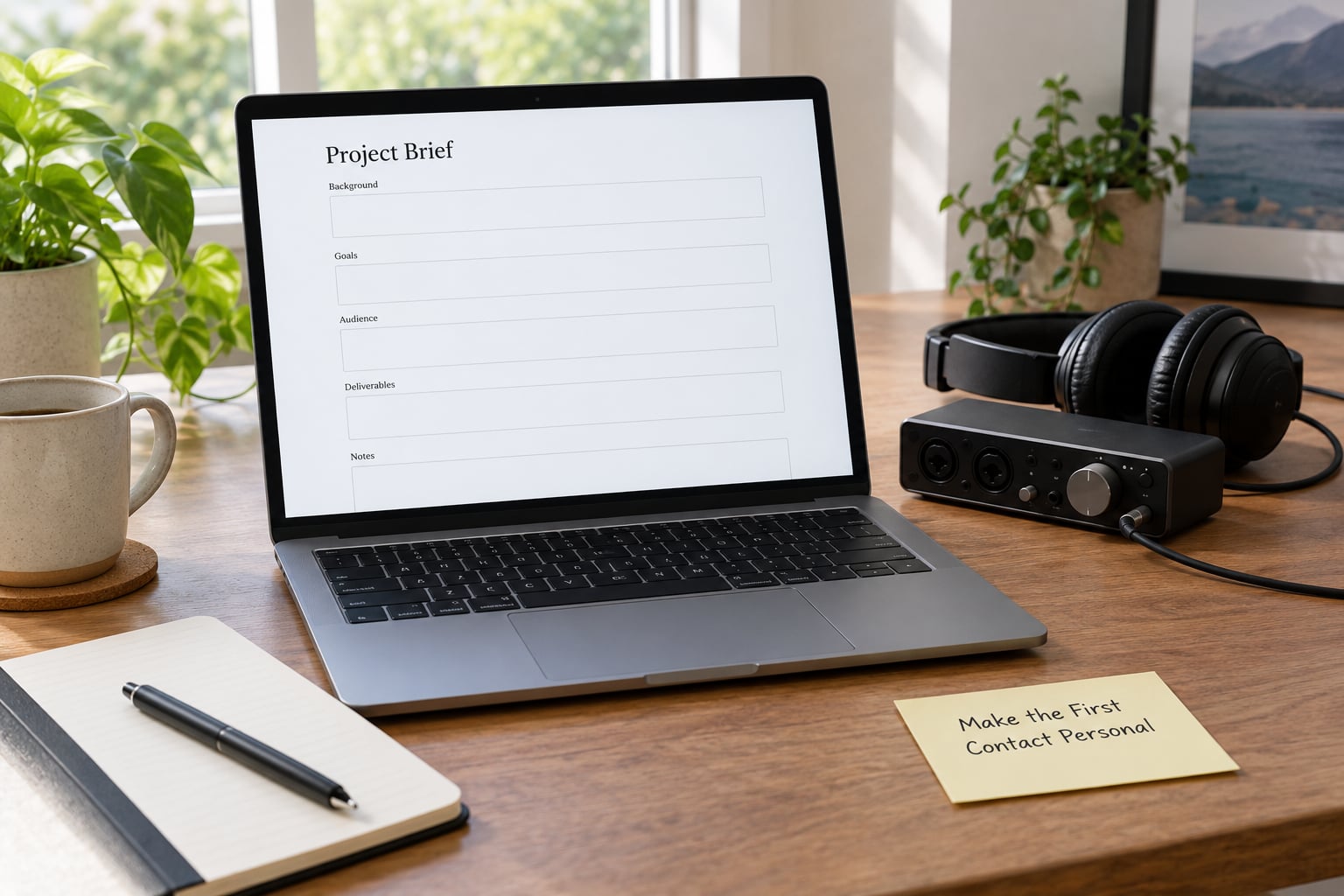
Write a message that proves you listened. The most common mistake is a template that could go to anyone, and people delete those without reading.
Four parts, under 120 words:
The specific reference. Name the track and the moment that got your attention. “The way the chorus drops out on your July upload is exactly the tension I am chasing.”
The project in one line. Format, tempo, mood, what you are bringing.
What you are asking of them. One clear ask, with an easy out. “No pressure if the timing is wrong.”
The next step. Something small and low-effort: a two-bar reply, a yes or no, a link they can hear.
Follow up once, after about a week, then leave it alone. Silence after one polite follow-up is information, not a puzzle to solve.
Agree on Scope, Rights, and Credit
This is the step that protects everyone, and it is the step people postpone because it feels uncool. Do it in writing before any files move.
Cover these points, in this order:
- Ownership. Who owns the master recording, and does anyone keep a share of it?
- Publishing. Percentage for each writer. Publishing is separate from the master and is the piece most first-time collaborators misunderstand.
- Credits. Exact credit names, order and spelling, plus who writes what (produced by, mixed by, mastered by, additional).
- Usage. Can either party use the track commercially, place it in a playlist, pitch it to sync, or license it later? Say yes or no explicitly.
- Deadlines. A realistic date, plus what happens if one person goes quiet.
- Payment. Flat fee, hourly, or deferred until the track earns something. Deferred splits need a trigger point and a way to check the numbers.
- Approval. Who signs off on the final mix, and what counts as finished.
Use a split sheet template with these fields: song title, contributor name, role, publishing percentage, master percentage, signature, date. Sign it before recording, not after the argument. Signing later rarely goes well because both sides have more to lose by then.
For anything involving money across borders, use a payment service that handles currency conversion, and keep the receipt. Rules differ by country, and nobody should be guessing at tax treatment mid-project.
Set Up a Shared Workflow
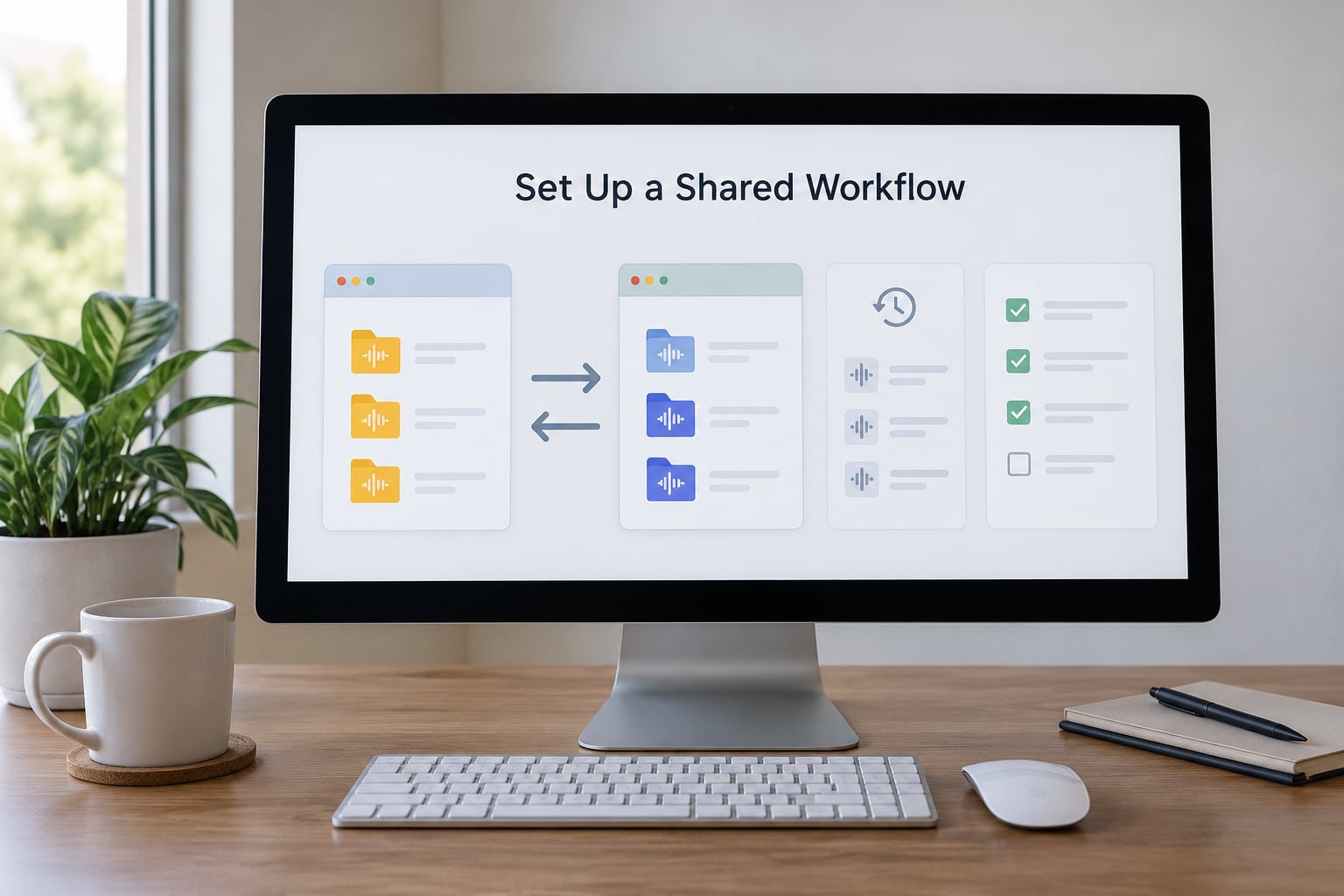
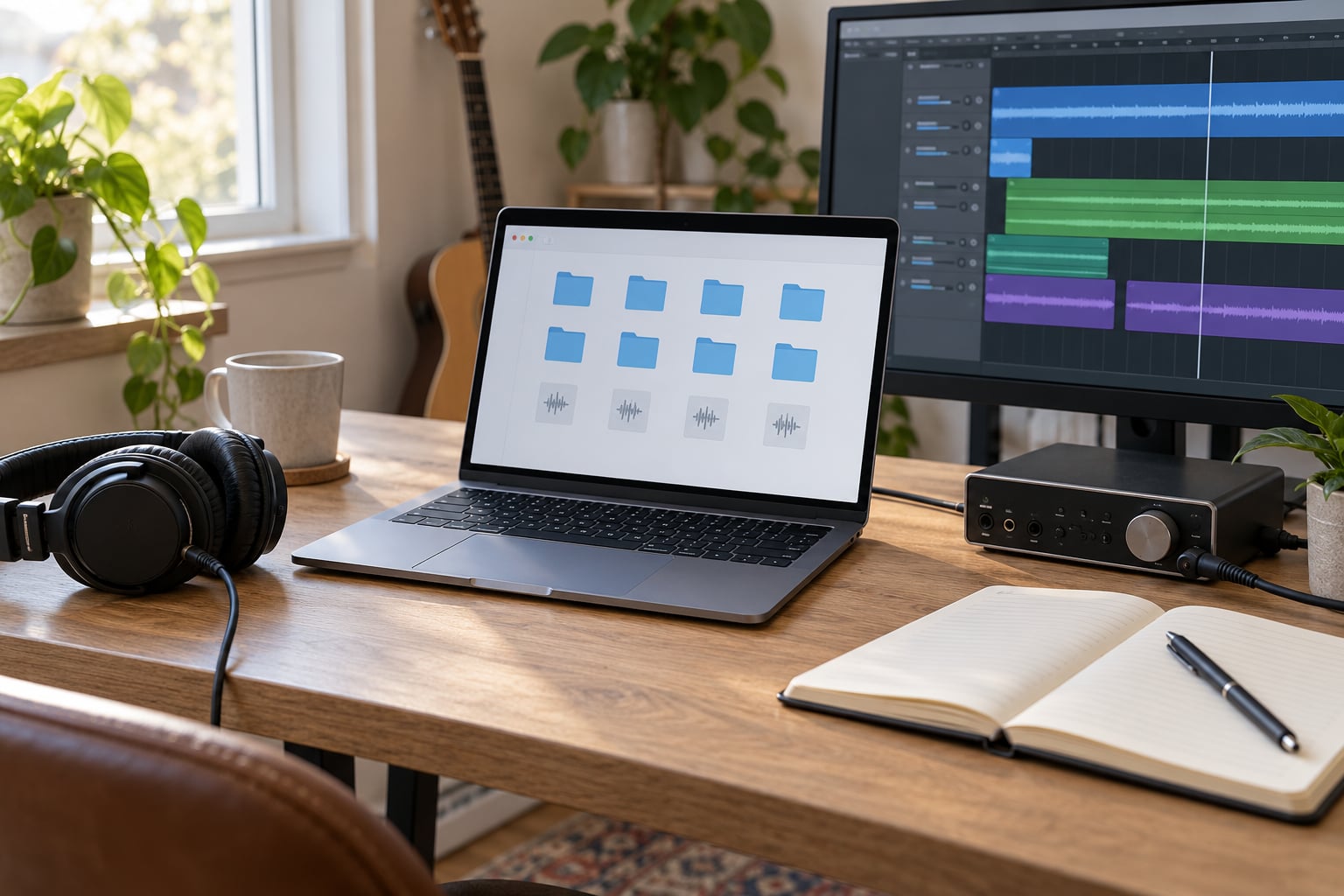
Build the folder structure once, then never deviate from it.
A structure that works:
- A top folder named for the project, dated.
- Inside it, separate folders for
01_bounces,02_stems,03_project_files,04_artworkand05_adminwhere the split sheet lives. - Versions numbered with two digits and never overwritten: v01, v02, v03.
- A single text file called README at the top listing the key, tempo, sample rate, bit depth, and who owns what.
Turn on version history if your storage tool offers it. It turns the worst kind of argument, the one about who overwrote the final bounce, into a two-minute check.
Then set communication rules. Agree on a reply window so nobody feels ignored, choose one thread for decisions and one for file drops, and keep a running decision log. Most stalled remote collaborations do not stall over music. They stall over silence.
Pick a check-in rhythm that fits both time zones. A weekly thirty-minute call works for almost everyone. So does no call at all, with a Monday message exchange and async feedback by timestamp.
Exchange Work and Give Useful Feedback
Share early. A rough bounce at day three keeps a project moving, while a polished demo at day twenty-two reveals too late that the tempo is wrong.
When you give feedback, separate two kinds of notes. Creative direction is taste, and you can argue about it. Technical corrections are fact, and you can just fix them: clipping, a stray hum at 60 Hz, a vocal sitting at -18 dB.
Ask specific questions instead of vague ones. “Does the chorus lift?” gets a guess. “Is the chorus lift enough at low volume?” gets an answer.
Timestamp your notes, and cap the number of revision rounds. Two rounds is normal. Five means someone is fishing for a different song, and it is better to say that out loud in week three than week nine.
One editor at a time is a good rule when you are both in the same session. Otherwise you get a mix nobody remembers approving.
Finish, Credit, and Release the Track
Before anything goes live, run a checklist together:
- Final master at the agreed resolution, plus a rough mix and a version with vocals soloed for pitching.
- All stems exported and archived, including unprocessed takes.
- Metadata written: title, artist names spelled correctly, ISRC assigned by your distributor, credits block filled in.
- Split sheet signed by everyone, with the signed copy stored in the admin folder.
- Artwork licensed or original, with usage rights in writing.
- Distribution set up, release date agreed, and both artists shown the pre-save page before it goes live.
- Backup copies in at least two places, including one outside the shared folder.
Then close the project properly. Send a final email listing what was delivered and where it lives. Say who owns the session files and what happens to them if either of you wants to reuse a part later.
That last point solves a problem nobody mentions until it explodes. Shared accounts and project files get weird fast when a collaboration ends without a clear answer about who controls them.
Common Mistakes
Starting with a blank message
A generic “let’s collab” gets ignored, and it deserves to be. The fix costs ten minutes: reference one specific piece of their work, describe your idea in a sentence, and make the ask small.
Leaving the agreement in a DM thread
Scrolling back through messages is not a contract. Percentages agreed in chat are the hardest ones to enforce later. Put them in a signed document in week one, when nobody is invested in a fight.
Mixing sample rates and bit depths
A project recorded at 44.1 kHz and pitched to 48 kHz will sound dull or brittle, and the person who made it usually cannot hear why. Agree on one setting before the first recording and write it in the README file.
Sending a project instead of stems
Opening someone else’s DAW session requires matching plugins, versions and licensing. Stems work everywhere. Send stems, and keep the project file for yourself unless you are both certain about the setup.
Letting revisions run forever
Endless feedback loops drain the goodwill out of a collaboration. Set two rounds, get everything in one consolidated list, and if you are still arguing after round two, the problem is the song, not the mix.
Going quiet without warning
The forum version of this question gets asked constantly, and the answer is boring but effective: send one message, give a specific date, and if nothing comes back, close the project and move the files to your own archive. Silence is a decision, and you are allowed to treat it as one.
Two habits fix most of the rest. Keep the README file current, and make sure the person you are working with can actually hear what you have without asking you.
Frequently Asked Questions
How do I collaborate with other artists?
Start with a one-page brief describing the format, genre, tempo, length and deadline, then find someone who complements rather than duplicates your sound. Send a short message that references a specific piece of their work, agree on credits and royalty splits in a signed split sheet, and set up a shared folder with a clear file naming convention. Exchange stems early rather than polished masters, and give timestamped feedback in two capped rounds.
Where can I find musicians to collab with online?
Genre Discord servers are usually fastest, followed by collab threads on Reddit communities like r/WeAreTheMusicMakers, and then Instagram, TikTok and SoundCloud where you filter by genre and listen before messaging anyone. BeatStars works well if you want a producer who licenses beats, and production forums reward patience with quicker replies. Read a room for a couple of weeks, contribute feedback on someone else’s track, and your collab requests get answered far more often.
What is the best app for musicians to collaborate?
There is no single best app, because collaboration needs two jobs done well: exchanging files and talking about them. Cloud storage plus Discord covers most sessions for free. Splice suits producers who want shared sessions and a sample library, BandLab covers free multitrack recording, and a video call with screen share handles direction and vocal comping. Pick two tools and stay in them until the project ends.
How do remote music collaborations work without playing together live?
Almost entirely through file exchange. One person writes and bounces, the other adds stems or vocals, then each side comments by timestamp and returns a new numbered version. Live audio streaming over the internet adds enough delay, often around a bar, that playing in sync is impractical. Use real-time video for direction and decisions, and use files for anything where timing or feel matters.
How do I split royalties with a collaborator?
Talk about publishing and master ownership separately, because they are two different rights. Publishing percentages cover the song itself and are split between writers. Master ownership covers the specific recording and often sits with whoever paid for production or owns the session. Write both onto a split sheet with names, roles, percentages, signatures and dates, and have everyone sign it before the release rather than after.
What should I do when a remote collaboration stalls?
Send one short message naming what you are still waiting on, what you have already delivered, and a date by which you need an answer. Avoid blame and keep it factual. If there is no reply, copy the project files out of the shared folder into your own archive, keep the signed split sheet with your records, and close the project. Unreleased material with no signed agreement is straightforward to walk away from.
Conclusion
Pick one project you actually want to finish this month, and write the brief. Find three people whose sound complements yours rather than mirrors it. Send each a short message that names something specific they did well. Then sign a split sheet before a single file moves.
That is the whole method. Everything else is just doing it carefully, eight time zones away.