The fastest way to write rap lyrics when you have no ideas is to stop hunting for a topic and start from a specific feeling instead. Pick one emotion, one moment, or one sentence you overheard, and write ten raw lines before you worry about rhyming. In about forty minutes you can go from a blank page to a sixteen-bar verse and a hook.
I have watched beginners burn entire evenings waiting for inspiration to land. The fix is almost never more inspiration. It is a shorter decision, a lower bar, and permission to write badly on the first pass.
What You Need
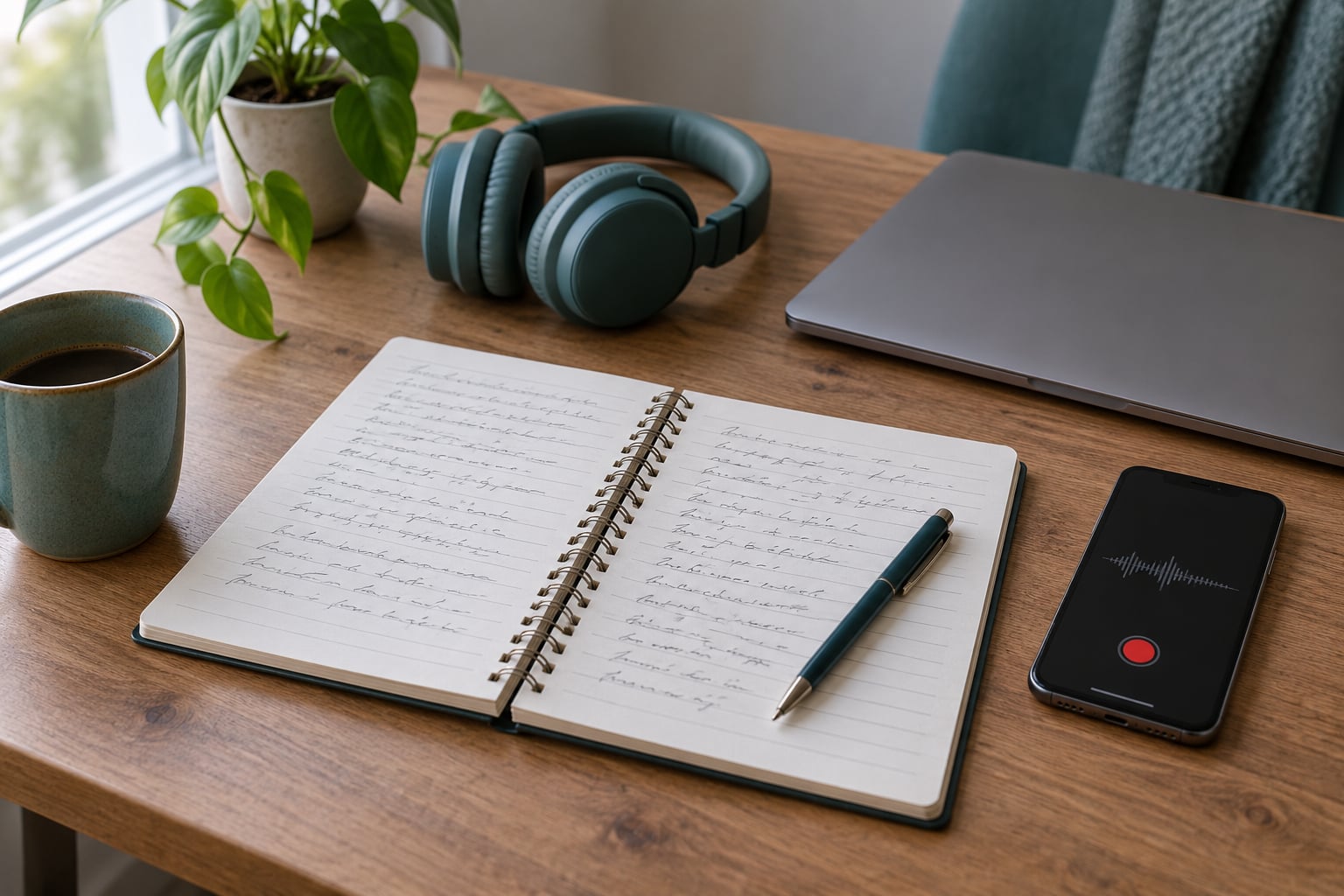
You need four things, and three of them cost nothing. A capture device (your phone works), somewhere to write fast, a reference track, and a ten-minute timer.
- Capture device. Voice memos on your phone beat a laptop every time. You can talk faster than you type and you catch lines before they dissolve.
- A notebook or notes app you can open in under five seconds. Distance between idea and capture is the reason good lines die.
- One reference track. Not three. Pick something whose writing you respect and play it on loop while you draft. The writing is the point, not the beat.
- A timer. Ten minutes of nonstop writing works better than an open-ended session, because an open session lets you edit at minute two.
If you can only do one thing today, record three minutes of yourself talking about your week with no filter. I keep a voice memo folder for exactly this. Half those takes are unusable, and the other half is where my hooks come from. None of this has changed in 2026, which tells you how basic the method actually is.
Step-by-Step: How to Write Rap Lyrics When You Have No Ideas
The process below moves in one direction only: feeling, then detail, then point of view, then draft, then structure, then hook, then edit. Skipping ahead is what keeps people stuck, because rhyme work on a topic you do not care about produces rhyme with no weight behind it.
Step 1: Find a Feeling Instead of a Topic
Start by naming one emotion precisely, not one subject. “Love” is a subject. “The specific embarrassment of being recognised at a supermarket by someone you failed two years ago” is a feeling, and it writes itself.
Before you go further, work out which kind of block you actually have. The symptom tells you what to do, and each type clears in about ten minutes with a different move.
| Type of block | Symptom | What clears it |
|---|---|---|
| Topic block | Nothing feels worth writing about | Name an emotion, then a memory attached to it |
| Word block | You have a topic but no lines | Ten-minute freewrite with the editing off |
| Rhyme block | Good ideas, and no rhymes | Set the words first, force rhymes second |
| Confidence block | You write and delete in the same minute | Write the worst bar first, on purpose |
Confidence block is the sneakiest one, because it feels like all the others. Your work is already coming out, and you are killing it while it lands. The test is simple: if you deleted at least one good line today, you are editing too early, not lacking ideas.
Step 2: Collect Details From Your Day
Rap lines are built from specifics, and specifics are hiding in your day in plain sight. Most writers skip this step and then wonder why their verses sound like every other verse.
Run one observation drill: walk through today and list ten things a camera would catch. The bus number, the stain on the ceiling, the sound of the microwave finishing, the exact phrase your coworker used instead of goodbye.
Do it for sounds, for objects, for places, and for conversations. Sounds give you your consonants, which is where multisyllable rhymes live. Objects give you a rhyme list for free. Places give you a scene. Conversations give you your best material, because real phrasing has a rhythm nobody invented.
A three-line entry looks like this: 7:40 AM, elevator smells like fried chicken, guy outside says “we out here” and means it. That is a verse seed. Most beginners write the summary instead, “mornings are hard,” and then wonder why nothing lands.
Step 3: Turn Details Into a Point of View
Details alone are notes. Details plus an attitude become bars. Once you have your material, decide what you are doing with it: mocking it, mourning it, boasting about it, or warning someone about it.
Compare the two versions of the same detail:
Before: I’m on the bus at six in the morning, tired again.
After: Six AM on the 44, coffee cold, I slept through my stop.
Nothing fancy happened in the edit. The second line only added a bus number, a temperature, and a consequence. That is the whole move: take what you observed and add one consequence.
If your lines sound like the rapper you grew up on, push past the surface and take their method, not their subjects. Their voice came from their life, and yours has details nobody else has.
Step 4: Write a Loose Draft Without Judging It
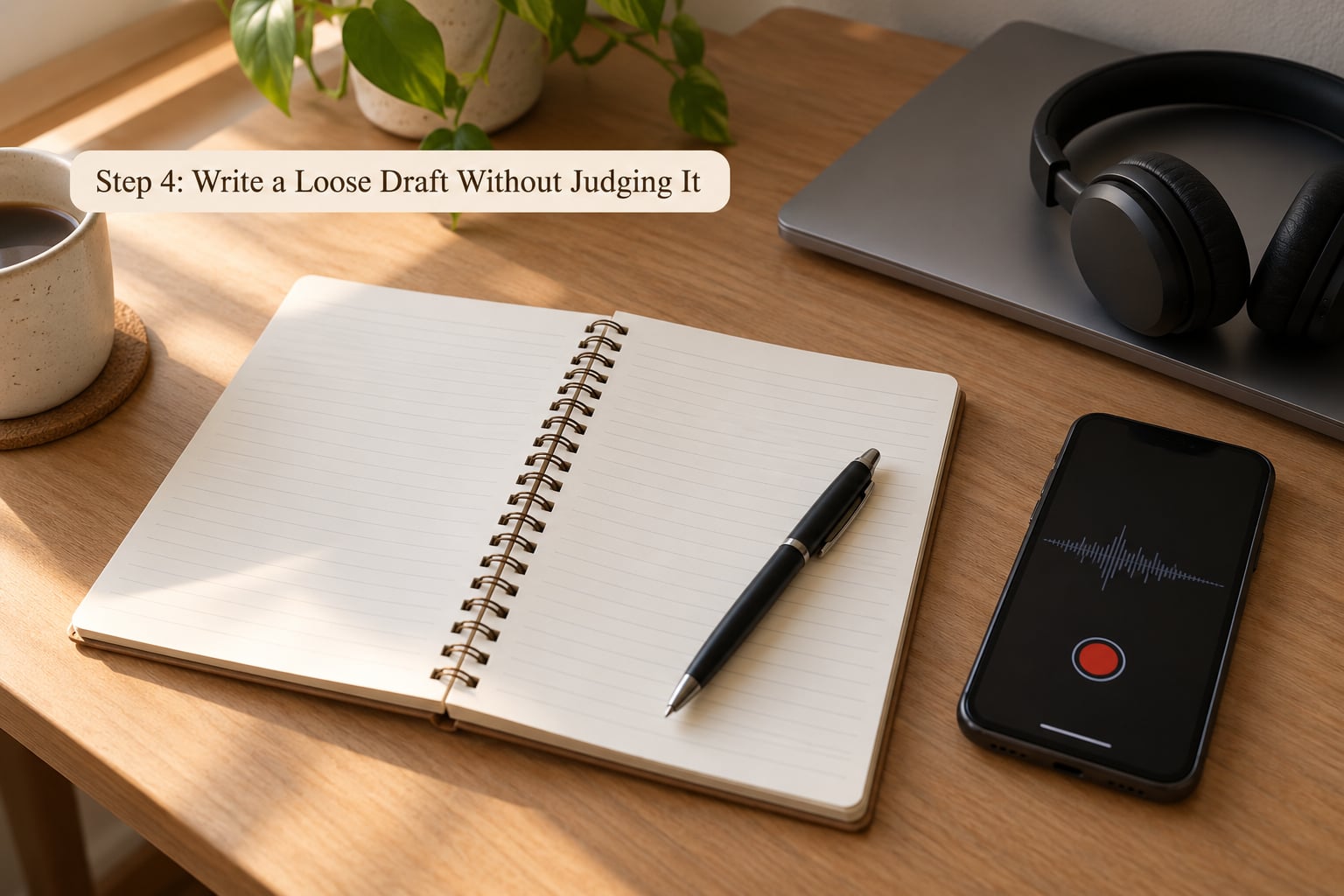
Write for ten minutes straight without stopping to fix anything. Set the timer, put on the reference track, and keep the pen moving even when a line is bad. Bad lines are not the goal, they are the cost of admission.
When you stall, use one of these eight starters and keep moving. They are written to break the blank page, not to be published.
- The last thing I did today that I cannot tell anyone about.
- Something my mother would say if she saw where I am right now.
- Describe this room in four lines without naming a single object twice.
- The conversation I keep replaying from two years ago.
- What I would do with one hour and no one watching.
- The habit I have that costs me money every single month.
- Describe your neighbourhood as if you are selling it to someone who hates it.
- The thing I want badly enough to be embarrassed about wanting.
Also try contrasts and questions. “Everyone says be grateful, I count the hours instead.” “Why do the good ones always leave first?” Repetition works too: write one short phrase on its own five times, then put it at the end of every other line as a refrain.
When the ten minutes end, highlight anything with energy. Ignore everything else for now. That highlighted pile is your raw material, and you will not see it clearly while you are still inside it.
Step 5: Build Verses and Find Your Flow
Turn your highlighted lines into sixteen bars by storyboarding them instead of writing them one at a time. Lay out what happens: where you start, what changes, what you land on. Ten minutes of arrangement beats three hours of staring at a bar count.
A standard rap song runs hook, verse, hook, verse, bridge, hook, with a prehook sometimes bridging the hook into the verse. You do not have to follow that order, but you should know the order before you start placing lines.
Then speak every bar out loud at the tempo you plan to perform. Written verses fail in places that freestyle covers, because your mouth cannot pronounce what your eye approved. Vary your line lengths so the flow moves instead of marching, and use slant rhymes, internal rhymes, and assonance when a perfect rhyme would force an awkward word.
A four-bar storyboard from a rough draft looks like this: bus and the coffee, the missed stop, the argument with the guy who took the seat, and one line about pretending it was planned. Arrange those four beats in that order and the verse has a shape.
Step 6: Create and Refine the Hook
Your hook is the one sentence of the song you could say in a voice over a grocery aisle. Write four options from the central idea of your draft, then cut three.
Take the strongest emotion you wrote about and compress it. Long explanations die in hooks; short declarations survive. Write it, then test it three ways: can you say it after hearing it once, does it work with the beat’s tempo, and does it still make sense if you heard it a year from now?
A hook does not need to be clever. It needs to be repeatable and true to the song. Once you pick it, write it above the verse outline so every section points back to it.
Step 7: Edit, Perform, and Finish
Editing comes last, and it has a fixed order: clarity, then originality, then pronunciation, then musical fit. Take the line that made no sense to you on Tuesday and either fix the meaning or cut it, because listeners will not decode it for you.
Next, swap any phrase you did not coin yourself for something you did. Then read the verse aloud at speed and mark every word you stumble on. A stumble is usually a syllable count problem, and syllable problems are flow problems.
Finally, record one complete pass, start to finish, without stopping. Weak bars announce themselves out loud in a way they never do on paper, because you cannot hear the rhythm of a line you are still editing. Mark them, fix them once, and call the song done.
Common Mistakes
Almost every stuck writer is making one of six mistakes, and each has a specific fix.
- Forcing a topic you have nothing to say about. Fix: switch to the feeling first. If the subject does not come back to you in a day, it was not the song.
- Writing generic lines. “Yeah we grind, yeah we rise” describes nobody. Fix: add one detail only you could know.
- Chasing perfect rhymes while writing. Fix: get all the words down first, then work the rhyme scheme in a separate pass, where you are not losing ideas.
- Overcomplicating the scheme. Fix: land an AABB scheme before attempting a multisyllable chain. Complexity is a phase, not a starting point.
- Judging the draft as you write it. Fix: write the ugliest bar on purpose in your first line, then keep going. You have removed the judgement problem by making it a game.
- Waiting for inspiration while doing nothing else. Fix: freestyle three minutes a day and bank lines. Inspiration is a byproduct of volume, not a prerequisite for it.
One habit worth adding: keep a running list of lines you like, dated. Sound out rhyme pairs against those real words instead of hunting for rhymes in your head. A hundred banked lines is a rough dictionary you built yourself.
Frequently Asked Questions
What should a rap song be about?
A rap song should be about one specific thing you can describe in a sentence: a feeling, a conflict, a memory, a habit, or a place. The topic matters less than the detail. A song about a bus ride at 6 AM with a missed stop gives you more material than a song about struggle, which everyone has already written.
How can a beginner write a rap song from scratch?
Start with a ten-minute freewrite about one emotion instead of one topic, then highlight the lines with energy. Build sixteen bars from those lines by storyboarding them in order, write four hook options, and pick the most repeatable one. Edit last: clarity, originality, pronunciation, then fit. A finished rough song beats a perfect unwritten one.
What are some good rap topic ideas when you are stuck?
Good rap topics come from specifics, not categories. Try: a commute you hate, a bill you keep forgetting, a friendship ending without a fight, a skill you cannot learn, a room you have not cleaned in months, the last conversation with a parent, a place that changed since you left, or the thing you want and are embarrassed about. Pick one and write from inside it.
How do I improve my rhymes when I have plenty of lines?
Speak every bar aloud at performance tempo before you decide it is bad. Pronunciation reveals flow problems that your eye misses. Then look for slant rhymes, internal rhymes, and matching vowels rather than only perfect end rhymes. Practise your ten weakest bar starts over a drum loop until your mouth knows them without thinking.
Should I write rap lyrics with a beat playing first?
Both work, and the choice depends on your goal. Write with a beat when you already know your topic, because it locks cadence and reveals weak phrasing. Write without one when you have no ideas, because a beat narrows your attention and makes every pause feel wrong. Freestyle first, capture ten minutes, then test the lines against the beat later.
What is the 80/20 rule in songwriting?
The 80/20 rule suggests roughly 80 percent of a song’s identity comes from 20 percent of its parts, usually the hook and the first verse. If your song feels forgettable, replace one of those two before rewriting everything else. New hook, same verses, new song. It is a quick test that saves hours of editing the wrong lines.
Start tonight, not when you feel inspired. Put the timer on for ten minutes, name one feeling from today, write without stopping, and keep the lines that hit. That is how to write rap lyrics when you have no ideas: emotion first, details second, structure third, and perfection never.