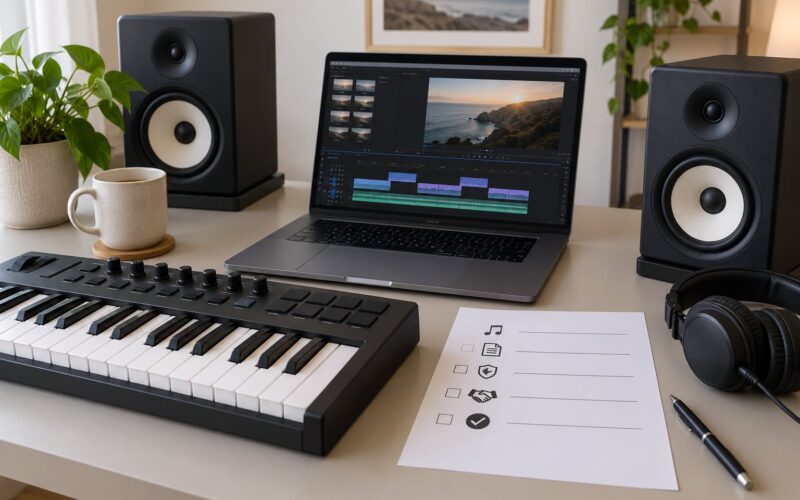
How to pitch music for sync comes down to four jobs: prepare versions a supervisor can drop straight into a scene, clear the rights so nobody has to hunt down a signature, tag the metadata so your song actually surfaces in a search, then send a short, personal email with private streaming links. It is not a spray-and-pray process, and all of it can be set up in an afternoon once the catalog is ready.
A sync pitch is a targeted email to a music supervisor, sync rep, publisher or library contact that delivers a small batch of your most placement-ready tracks as streamable links, alongside the rights and metadata needed to clear them for film, TV, advertising or games.
The honest version of the timeline: most independent artists I know of are pitching for a year or more before anything lands. That is normal for the lane, not a sign you did it wrong. The rest of this guide breaks the process into six steps you can work through this week.
What You Need
Before you contact anyone, assemble this. Most of it is one sitting of admin work, and every item removes a reason for a busy supervisor to say no later.
- A broadcast-ready master. 24-bit WAV, no clipping, vocals sitting forward, no fade-out at the end of the vocal version. Supervisors need to drop it under dialogue or over a title card without touching it.
- The alternate versions. Instrumental, clean, a cappella, stems, a 30-second edit, a 60-second edit, and a loopable version. Details in Step 2.
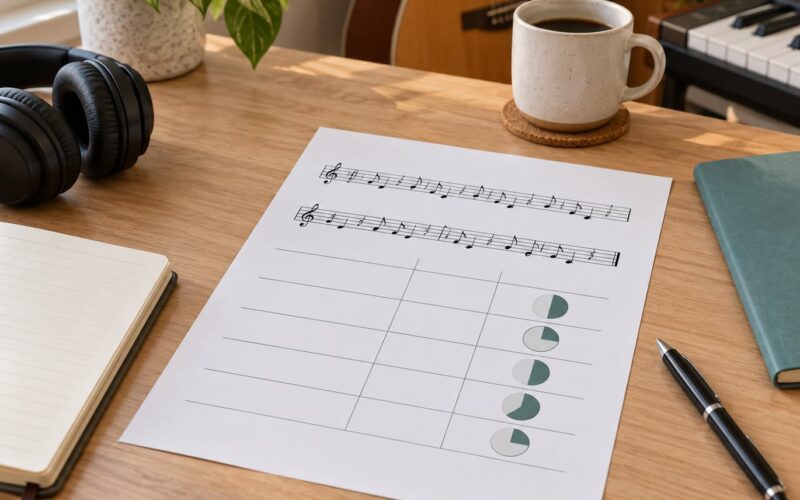
- Split sheets. One PDF per song, signed by every writer and producer, showing publishing percentages and master ownership. A single unfindable 2% co-writer has killed more placements than bad songs have.
- PRO registration. Your composition registered with ASCAP, BMI or SESAC in the US, or the equivalent collecting society elsewhere. If you handle administration yourself, register directly rather than guessing which route applies.
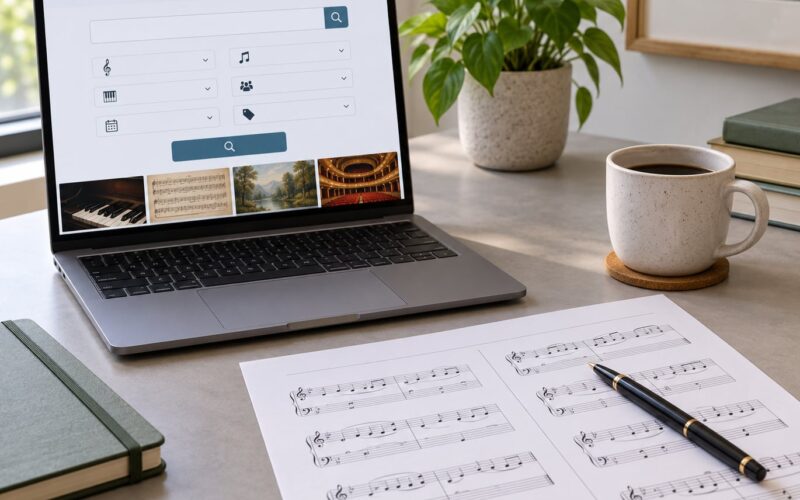
- A metadata sheet. Title, artist name as registered, writers, publishers, master owner, label, release year, genre, mood, BPM, key, explicit flag, ISRC, instrumentation, and one line of description.
- A one-sheet or EPK. Press photo, two or three paragraphs of bio, three to five reference artists, live and studio credits, and any screen or placement history.
- A delivery link. A private stream through DISCO, Dropbox, Google Drive or Reelcrafter, set so a supervisor can download but not reshare. Email attachments are a red flag at most companies.
- A tracking sheet. Columns for contact, project, date sent, follow-up dates, response, fee quoted and outcome.
Step-by-Step: How to Pitch Music for Sync
Step 1: Choose the Right Song and Placement
Pick one song per target, not your five best in a batch of fifty. The right song for a warm family-drama scene is almost never the right song for a sneaker commercial, and supervisors working at speed can tell within seconds whether you did the homework.
Placement-ready tracks tend to share a handful of traits. Songwriter Clay Mills, who credits roughly 1,500 sync licenses, works from a framework of what he calls pillars such as anthemic lift, assured swagger and clean joy, described in detail by SongTown. The practical version is simpler: a clear emotional read in the first fifteen seconds, a chorus that arrives early, and lyrics a stranger can picture something against.
That last point is where beginners argue with veterans. SongTown’s advice is to keep lyrics vague and universal so the scene supplies the meaning. Brett Byrd at DIY Musician pushes the other way, arguing you should not sand the personality off your music to chase placements. Both are defensible. My read is that vagueness works better in the chorus than the verses, and that a song with a distinct point of view usually out-earns a song engineered to fit everything.
Skip the track if the sample situation is murky. Uncleared samples are the single most reported deal-killer on r/synclicensing, and no amount of good mood and tempo matters if clearance stalls.
Step 2: Prepare a Professional Sync Package
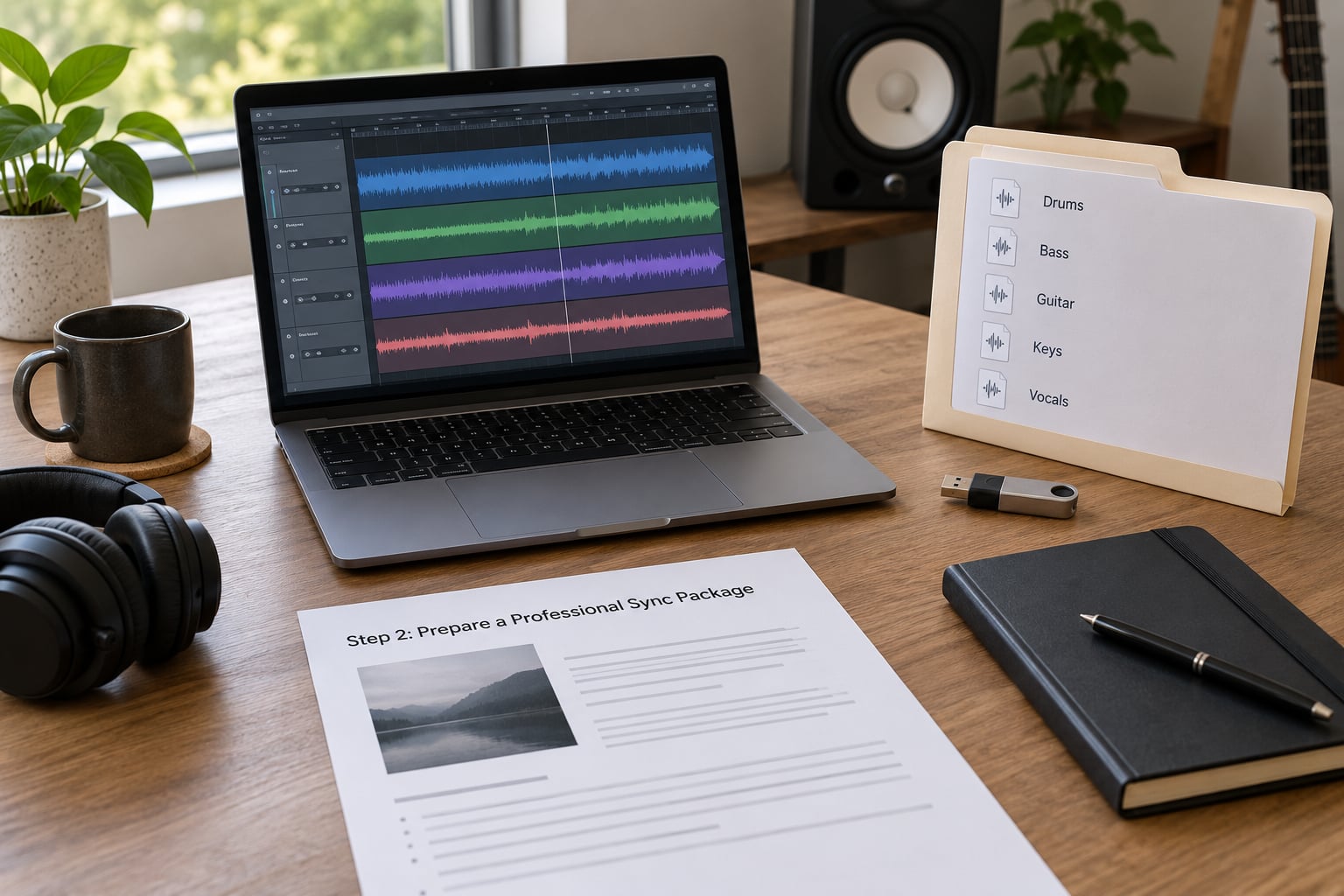
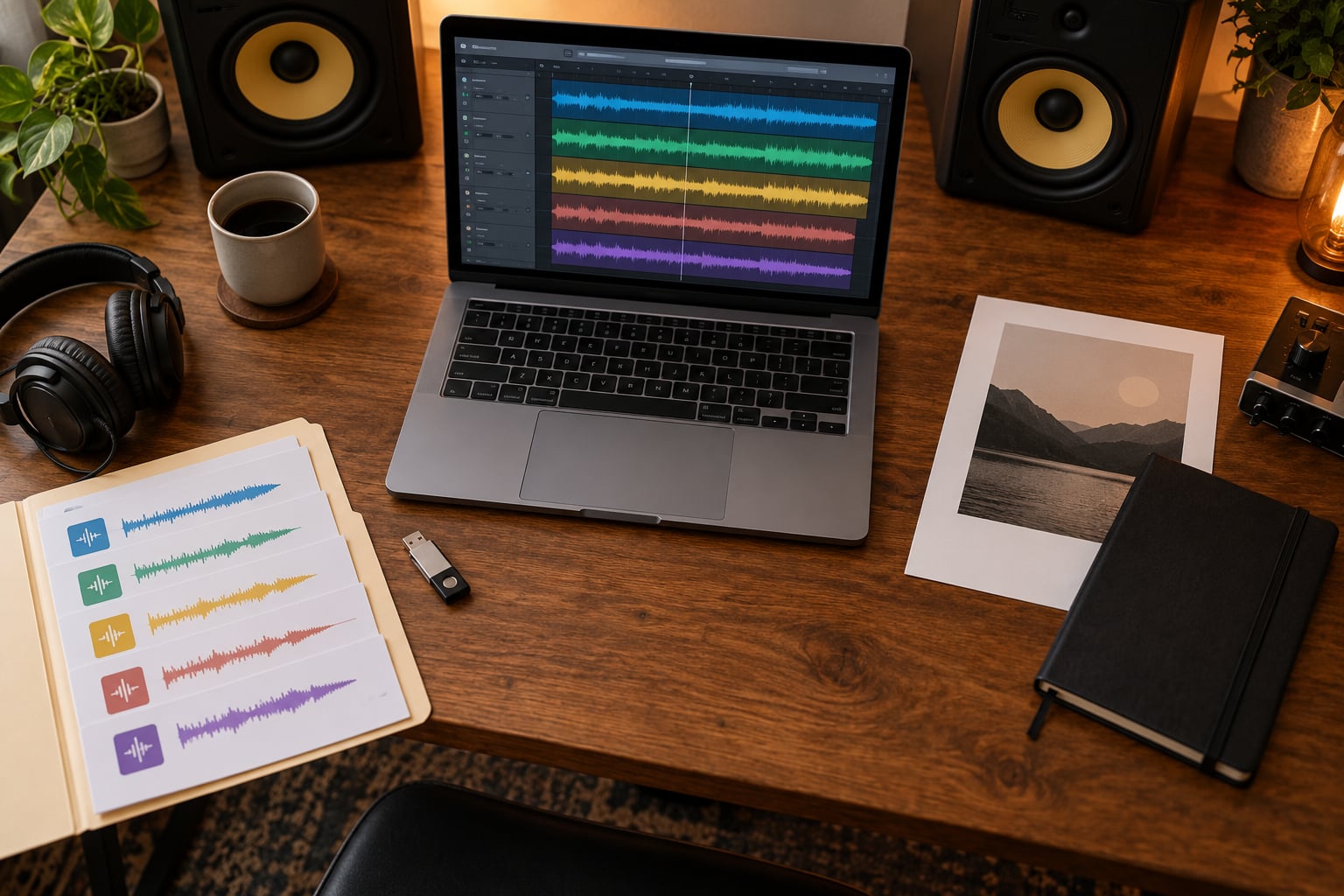
A sync package is the set of files a supervisor expects to find behind a link. Build it once per song, name it consistently, and reuse it for every pitch that song gets.
- Full vocal master, broadcast-ready, no fade-out.
- Mastered instrumental at the same length.
- Clean edit with any explicit language substituted.
- A cappella version for layering and for karaoke-style visuals.
- Stems, exported at the song length and named clearly.
- Thirty-second edit and sixty-second edit for short slots.
- Loopable version, where the arrangement supports repetition.
- Lyrics sheet uploaded to Musixmatch so timed lyrics show up on streaming platforms.
Missing instrumentals show up again and again in practitioner advice as the reason placements evaporated late in a negotiation. Make the instrumental before you need it.
Step 3: Confirm Rights, Credits, and Deliverables
Two separate copyrights are involved in every sync: the master, which is the recording, and the composition, which is the underlying song. Each one has its own license, its own fee, and its own owner, and you need to know who holds which before you pitch.
Work through this in order. Confirm who owns the master and in what percentage. Collect signed split sheets for the composition from every writer, including anyone who contributed a line or a hook and took no ownership elsewhere. Register the work with your PRO. Confirm every sample is cleared, or re-record the part. Then decide whether you can offer one-stop clearance, meaning you handle both master and publishing so the buyer deals with a single party. One-stop is a genuine selling point and it is why publishers exist.
Two cautions. If a co-writer has vanished, get a music lawyer on it before you promise anyone a deal, and expect the conversation to stall while ownership is sorted. If a publisher or admin registered your song under a different title than the one you are pitching, fix the discrepancy now, because the mismatch surfaces at the worst possible moment during clearance.
Outside the US, collecting works differently. PRS for Music and PPL in the UK, and the various European collecting societies, run on their own registration systems, and a US-only assumption will quietly leak backend royalties.
Step 4: Build a Focused Sync Target List
Targeting is where most self-taught artists go wrong, because the understandable instinct is to ask strangers for music supervisor email addresses. The r/synclicensing community has a pinned post explaining why those lists get hoarded, and the reasoning is fair: supervisors are named on projects they did not choose, and a cold flood helps nobody.
Use a repeatable research routine instead. Identify the show, brand, network or game you want to work on. Run the show title through Tunefind or IMDb to hear the existing music, then check the full credits for the music supervisor and music coordinator attached to that specific season. Check Shazam on a track you admire to see where it has already been placed, which often leads you to the same supervisor by a different route. Read publisher and roster pages, since a roster is a public list of what that publisher is looking for. Watch the label and agency credits on Shazam for songs similar to yours.
Sentric staff make a useful distinction here: supervisors source music through professional filters, meaning publishers, labels, agents and libraries who pitch on your behalf, and personal filters, meaning their own taste. You cannot reach a personal filter directly. Your realistic paths into both are a sync agent, a publisher, a library, or a direct pitch to a name you researched properly.
Aim for 20 well-researched contacts a month rather than 200 scraped ones.
Step 5: Write a Short, Specific Pitch
The email does one job: it gets the song played. Keep it under 150 words, put the link near the top, and never attach an audio file.
A workable subject line formula is Song title – artist name – optional one-word use case. Something like “Golden Hour Motel – The Canyons – TV drama” is searchable six months later and tells the supervisor what they are opening.
The body should cover four things in order: who you are in one line, the link, why this song fits their project in one specific sentence, and the rights position. Add three to five reference artists so the supervisor can place your sound in a scene. Close with a single clear ask and your contact details.
On the first line, resist describing yourself as an artist hoping for a break. Simon, Global Director of Music Services at Sentric, argues for leading with third-party validation instead, since a placement at a known outlet or playlist does work your self-description cannot. Practitioners in r/synclicensing put it more bluntly: show you can write and perform the record you are pitching.
A sample, adapted to a TV drama pitch:
Hi Ren, I’m Dee, and Golden Hour Motel is the closing-credits track for our 12-minute pilot. It’s a 92 BPM acoustic build that lifts at the last chorus, and the vocal master runs clean under dialogue. Reference: Iron & Wine, Gregory Alan Isakov, Phoebe Bridgers.
Private link (download enabled, sharing off): [your link]. Full vocal master, instrumental, clean, a cappella, stems and 30-second edit are all in the folder. I control 100% of the master and publishing, one-stop clearance, no samples. Split sheet and metadata sheet attached as a single PDF in the same folder.
Happy to cut a 15-second edit if that’s more useful. Thanks for your time.
Send three to five tracks at most in one message, and only if they share a stylistic thread. Forum advice repeats a simple curation habit: listen to music that gets synced, make records of that quality and structure, then submit a cohesive batch of ten.
Step 6: Submit, Follow Up, and Track Results
Track everything in one sheet the day you send. Contact, project, date, follow-up dates, reply, fee quoted, outcome. Sync is slow enough that memory will lie to you about who you already approached.
Set follow-ups at day 7, day 21 and day 45. First follow-up is one short line referencing the song and the project. Second assumes the earlier note was buried. Third is your last one, and it should say plainly that you will not follow up again. Then stop and move on.
Expect silence most of the time. On r/synclicensing, artists report library acceptances with no placements behind them, including one user who had roughly fifteen tracks accepted over four years with plenty of pitches and no syncs. Silence usually means timing, not quality. Supervisors are sourcing for a specific scene on a specific day, and your song either fit that scene or it did not.
If a placement happens, treat it as the start of a relationship rather than the finish line. Update your metadata so the song appears correctly in streaming credits, use the placement as social proof on every future pitch, and build toward a second one on the same project.
Common Mistakes
These are the errors that end a thread before it starts.
- Sending attachments. Many companies block email attachments outright. Use a private streaming link with download enabled and sharing disabled.
- Sending the whole catalog. A forty-track link signals that you have not chosen. Five relevant tracks say you have.
- Writing the same email to everyone. One specific sentence about the supervisor’s project is the difference between a read and a delete.
- Pitching before the rights are documented. Unclear splits and uncleared samples are the most common reason a warm conversation dies.
- No instrumental. A great vocal master that cannot be used under dialogue is a song that cannot be placed.
- Metadata that lies. Wrong writer names, wrong publisher, missing ISRC, mismatched title. Search breaks quietly when the data is wrong.
- Over-following up. Three contacts is generous. More than that reads as pressure, and music people talk to each other.
Two habits that lift response rates quietly. Pitch the person who pitches the supervisor, because a rep with a catalog has an existing relationship you do not. And keep records good enough that a rejection teaches you something, since the same three songs getting the same two rejections means the package is the problem, not your luck.
On library memberships, work out the break-even before you join another one. If a library keeps 40% of the fee on a placement, you need a certain number of placements a year for it to make sense, and paying into five libraries at once is a common way for independent artists to spend money on rejections.
Frequently Asked Questions
How much do you get paid for sync licensing?
Fees depend on media, screen time, territory, term, exclusivity and budget, not on how good your Spotify numbers are. A short placement for online creator content can pay a few hundred dollars, while a national TV placement can reach five figures, and major campaigns pay far more. Backend performance royalties on every rerun are part of the picture too. Ask what a deal includes before you compare two offers.
Do I need a lawyer for sync licensing?
Not for ordinary pitches or a straightforward library deal. You do want a lawyer when a co-writer cannot be found, when ownership percentages are disputed, when a publisher asks for a long exclusive term, or when an offer includes work-for-hire language. Budget a few hundred dollars for a contract review rather than learning what a bad clause costs later.
Can I sync license my own music?
Yes, and most independent artists do. If you own the master and the publishing, nothing stops you from approaching supervisors directly, joining non-exclusive libraries, or signing with a sync rep. The trade-off is that you handle the pitching, paperwork and follow-up yourself instead of leaning on a publisher’s machinery. Many artists start solo and add representation once a track starts placing.
How long does it take to land a first sync placement?
Realistically months, and for many independent artists a year or more. The variable is not skill but timing and fit: supervisors are sourcing for a specific scene on a specific day. Artists on r/synclicensing report library acceptances that never converted into placements, so treat acceptance as a small result rather than proof. Keep pitching a tight target list while you wait.
Do music supervisors read pitches from unknown artists?
Some do, but the volume is enormous, so a generic message rarely gets past the first screen. Supervisors tend to source through professional filters such as publishers, agents and libraries, plus their own listening. Pitch the people who already talk to supervisors, keep each email short and specific, and accept that many replies will be silence rather than rejection.
What is the best sync licensing company for an independent artist?
There is no single best one, and the market splits into agencies and reps who pitch on your behalf, non-exclusive libraries that host pre-cleared tracks, and platforms for delivering files. Compare them on commission percentage, whether they handle publishing as well as the master, how much individual pitching they actually do, and how quickly they pay. Several memberships rarely pay for themselves at low placement volume.
Conclusion
Start with one song and get its package finished: instrumental, clean, a cappella, stems, edits, a signed split sheet and a metadata sheet. That is your first real deliverable, and it is the piece most people skip.
Then build a list of twenty contacts you actually researched, and send five short pitches a week that each name one specific thing about the project. If you take one idea from this guide, take the follow-up schedule with it, because a single tidy follow-up on day 7 separates you from the pile of silence.