To register with a performing rights organization, you pick one US PRO, open a writer account in your own or your publisher’s name, enter each composition with its writers and ownership percentages, and confirm the works appear in that organization’s public repertoire search. Registration itself takes an afternoon; what the paperwork decides is whether you get paid later.
A performing rights organization (PRO) is a US collective that licenses the public performance of musical compositions and pays the resulting royalties to songwriters, composers and publishers. ASCAP, BMI and SESAC are the three big ones. When your song plays on radio, on television, in a bar, on satellite radio or on a streaming platform, someone who wants to use it pays a license fee, and the PRO splits that money between the writers and the publisher of the composition.
Two things are worth sorting out before you read further, because both come up constantly and both cost writers real money.
The first is that a PRO is not a copyright office. Registering with ASCAP or BMI does not copyright anything. Copyright in the United States comes from having an original work fixed in a tangible medium; registering with the US Copyright Office is a separate, optional step with its own filing. Your distributor, whether that is a DIY service or a label, handles neither the composition rights nor the copyright filing for you.
The second is that no PRO collects every royalty your song earns. The PRO covers public performance. Digital performance royalties on satellite and internet-only radio are collected by SoundExchange, and mechanical royalties on streaming come from The MLC. Those three organizations do not talk to each other. Sync fees, the money from putting your song in an ad or a show, are negotiated directly and sit outside all of them.
Once that separation is clear, the actual process is short. Here is what to gather, what to click, and what to check before you consider it done.
Table of Contents
- What You Need
- Step-by-Step: Register with a Performing Rights Organization
- Step 1: Identify the Rights You Are Registering
- Step 2: Choose a Performing Rights Organization
- Step 3: Prepare Your Song and Ownership Information
- Step 4: Create Your PRO Account or Contact Your Publisher
- Step 5: Submit Your Compositions to the Catalog
- Step 6: Review, Pay, and Confirm Registration
- Common Mistakes to Avoid During Registration
- Common Mistakes and How to Fix Them
- Frequently Asked Questions
- Do I have to be a songwriter to register with a performing rights organization?
- Is ASCAP or BMI better for a songwriter?
- Can a songwriter belong to more than one performing rights organization?
- How are performing royalties paid after I register my songs?
- Should a music producer register with a performing rights organization?
- How do publishers and co-writers receive credit for a registered composition?
- Conclusion
What You Need
Every organization’s application asks for the same handful of things. Having them written down before you open the form turns a two-hour session into a twenty-minute one.
- A professional name, plus variations. The name you write as the songwriter, and every other version it might appear under: your full legal name, a stage name, a married or changed surname, initials-only credits. Recording societies match on name strings, and a mismatch is the most common reason a payment never finds its way home.
- Contact and payment details. An email you actually read, a mailing address, and a way to receive money. Direct deposit is the usual route, which means a bank account in your name and the tax identification number that goes with it.
- Ownership information for each song. Every writer’s name, and the percentage each one owns. See Step 3 for the arithmetic.
- Publishing details. Whether you are your own publisher, and if so the name you use. If a third-party publisher or administrator handles the song, you need their company name and their IPI number.
- A catalog list. Title, alternate titles if there are any, writer credits in the order they should appear, release status, and the recording details for released material.
- The words of the song. The public versions of the organizations ask you to confirm you have authority to submit the lyric.
One piece of background settles a lot of confusion: the rights in a composition, meaning the words and the underlying music, are separate from the rights in the sound recording. A PRO collects on the composition. Registering with a PRO tells the organizations nothing about who owns your master recording, which is a separate set of rights often held by the artist or the label.
That is also why a publisher may need to be involved. If you signed a publishing deal, the contract normally obliges the publisher to administer your writer’s share and collect it on your behalf, so registering the same song yourself creates a duplicate. Read your agreement before you create an account.
Step-by-Step: Register with a Performing Rights Organization
Step 1: Identify the Rights You Are Registering
Performing rights cover the public performance of a musical composition, and they fall into two categories most writers will encounter. Broadcast rights cover television, radio and satellite radio. General performance rights cover live venues, bars, gyms, retail stores, websites and streaming services.
Concretely, a PRO collects money when your song is played on a commercial radio station, run as a featured vocal on a station, appears in a television episode or advertisement, is performed live in a venue, plays through a streaming service, or is heard in a fitness class or retail environment. What it does not collect is the master recording itself, which is why a PRO is the right home for your songwriting catalog and the wrong home for your sound recording.
Four situations show how this plays out in practice:
- A song you wrote alone. You own 100 percent of the writer’s share. Straightforward entry.
- A 50/50 co-write. Both writers register the same title with matching shares. Each writer’s organization matches them and each pays its own half.
- A sampled composition. If you sampled someone else’s song, you need permission, and the sample often carries a share for the original writer and their publisher. That share belongs in your metadata, not in a private agreement.
- A licensed composition. If you licensed someone else’s song, including in a sync placement, the rights holder collects the performance money. You register only what you own.
For context, here is how the money from one play divides up.
| Royalty type | Typical trigger | Who collects it |
|---|---|---|
| Public performance | Radio, TV, live venue, streaming, background music | Your PRO |
| Digital performance | Satellite radio and internet-only radio | SoundExchange |
| Mechanical | Streams, downloads, physical reproductions | The MLC |
| Synchronization | Film, TV, advertising, games | Negotiated directly, often via your publisher or a licensing agent |
Step 2: Choose a Performing Rights Organization
None of the three major US organizations is best for everybody, and the differences in what they pay for a typical independent catalog are small. What matters far more is that you pick one and register your songs.
| ASCAP | BMI | SESAC | |
|---|---|---|---|
| Who can join as a writer | Any songwriter or composer | Any songwriter or composer | By invitation or application approval |
| Writer membership fee | One-time fee, often waived or bundled with publisher membership | Free | No writer fee; access is selective |
| Self-publishing as your own publisher | Allowed | Allowed, with an administrator option available | Allowed |
| Payment timing | Quarterly, after the log period closes | Quarterly, after the log period closes | Quarterly, after the log period closes |
| Outside the US | Collects through affiliated societies in other countries | Collects through affiliated collective management organizations | Collects through affiliated societies |
| Best known for | Pop, film and television writers | Broad catalog across pop, country, rock, jazz and gospel | Christian, gospel, jazz, blues and R&B |
Fees change, so confirm the current terms on the organization’s own site before you sign up.
Here is the rule that causes the most confusion, and it is worth stating plainly: you may affiliate with only one performing rights organization as a writer at a time. Two of them cannot both claim your writer’s share of the same song. If you have already registered works with one and want to move to another, you transfer your catalog, you do not open a second account and register the same songs twice.
Co-writers can belong to different organizations, and that is fine. Your split sheet should list each writer’s affiliation, which is what lets two organizations pay two different people on one title. If your writer’s share is administered by a publisher, that publisher holds the share on your behalf regardless of which society administers the publisher’s own catalog.
SESAC does not accept every applicant, so if you have a large catalog, a publishing deal, or specific genre positioning, apply and wait for a response. If you want registration this week, ASCAP and BMI both open their doors to any writer.
Step 3: Prepare Your Song and Ownership Information
Build a worksheet before you log in. One row per song, one column per field.
- Title, and every alternate or working title the song has had
- Is the song a Composition Original, or a Composition New Work added to an existing one
- Each writer’s full name, professional name if different, and IPI or CAE number
- Each writer’s role: composer, lyricist, or arranger, and whether they are a co-creator
- Each writer’s ownership percentage, and the publisher’s percentage where the catalog is split
- Publisher name and IPI number, or “self-published” with your own publisher name
- Release status, the recording artist, and the release date or ISRC if it is out
The percentages are where the work happens. Ownership applies to the composition as a whole, so the writer shares and the publisher share must add to 100. A common setup: two writers at 50 percent each and a publisher at 0 percent, because the self-publishing writer keeps the publisher’s half themselves. Another: two writers at 40 percent each, leaving 20 percent to a publishing company that signed a deal taking part of the writer’s share.
Worked example. Three writers, no publisher. Marisol Reyes writes the lyric and gets 50 percent. Dev Okonkwo writes the music and gets 30 percent. Priya Nair contributes 20 percent. The entry reads: Reyes 50, Okonkwo 30, Nair 20, total 100, publisher share 0 assigned to Reyes as administrator. If someone later asks where the missing publisher half went, the sheet already answers it.
Settle disagreements before you submit, not after. A split sheet signed by all writers is the simplest documentation, and it prevents a catalog dispute later that neither organization will adjudicate for you.
Step 4: Create Your PRO Account or Contact Your Publisher
There are two routes, and picking the wrong one is the most expensive mistake in this whole process.
If you self-publish, you create a writer account yourself and, in most cases, a publisher account under your own name so the publisher’s share routes to you as well. If you have a publishing deal, a publishing administrator, or work already registered by someone else, that party handles your writer’s share and you do not register those songs independently.
Expect to enter your name exactly as it appears on your legal documents, a mailing address, a tax identification number, banking details, and contact preferences. Both the organizations and their mobile apps change their menus regularly, so treat any specific button label as something to look for rather than a fixed path. What stays stable is the sequence: identity, contact, tax, payment, then works.
Minors need a parent or guardian to complete the application and set up payment. If a young composer is earning real money from commissions or performances, the account should be in their name with a guardian managing access, so the royalties belong to the composer rather than to the family.
Step 5: Submit Your Compositions to the Catalog
Once the account is active you can add works one at a time or upload a catalog file. Both routes exist for every major organization; single entry is fine for a first handful, and bulk upload becomes worth the setup once you are past a few dozen songs.
For each composition, the fields are the ones from your worksheet: title, alternate titles, work type, writer credits with roles, ownership percentages, publisher, and release information. The critical part is mapping every writer correctly, either by selecting an existing member record or by entering the writer’s details so the system can create one.
Matching on the IPI or CAE number is the safest route, because that number is a recording society identifier for a specific person or company, and it survives a name change better than a name string. Search for the co-writer, confirm the match is the right person, then attach them at their percentage. Do not create a duplicate profile for someone who already has one; you would end up with two identities, and payment would have to be reconciled by hand.
The 50/50 example, worked end to end: you open a new work, title “Neon Underpass,” type Composition Original. You add yourself as lyricist and composer at 50 percent. You search for your co-writer, match the existing profile, add her as composer at 50 percent. You set the publisher to your self-publishing name. You confirm the writers total 100 and submit. The system assigns a work number and, once processed, the title becomes searchable in the public repertoire with your name attached.
Two more details that save arguments later. Add alternate titles, because a song registered under a working title will not match a cue sheet using the release title. And enter co-writers exactly as they want to be credited, including how their name is spelled, because that string is what appears on a screen credit and in a royalty statement.
Step 6: Review, Pay, and Confirm Registration
Before you leave the session, read back each work: title, every writer, every percentage, the publisher. Percentages that do not total 100 or that do not match your split sheet are the errors that turn into unpaid royalties months later.
Then handle the fee, if one applies. BMI charges writers nothing. ASCAP has historically charged writers a one-time fee that is frequently waived or included when you also register as your own publisher. SESAC does not charge writers and controls membership. Use the current terms on the organization’s site rather than an old blog post, including mine.
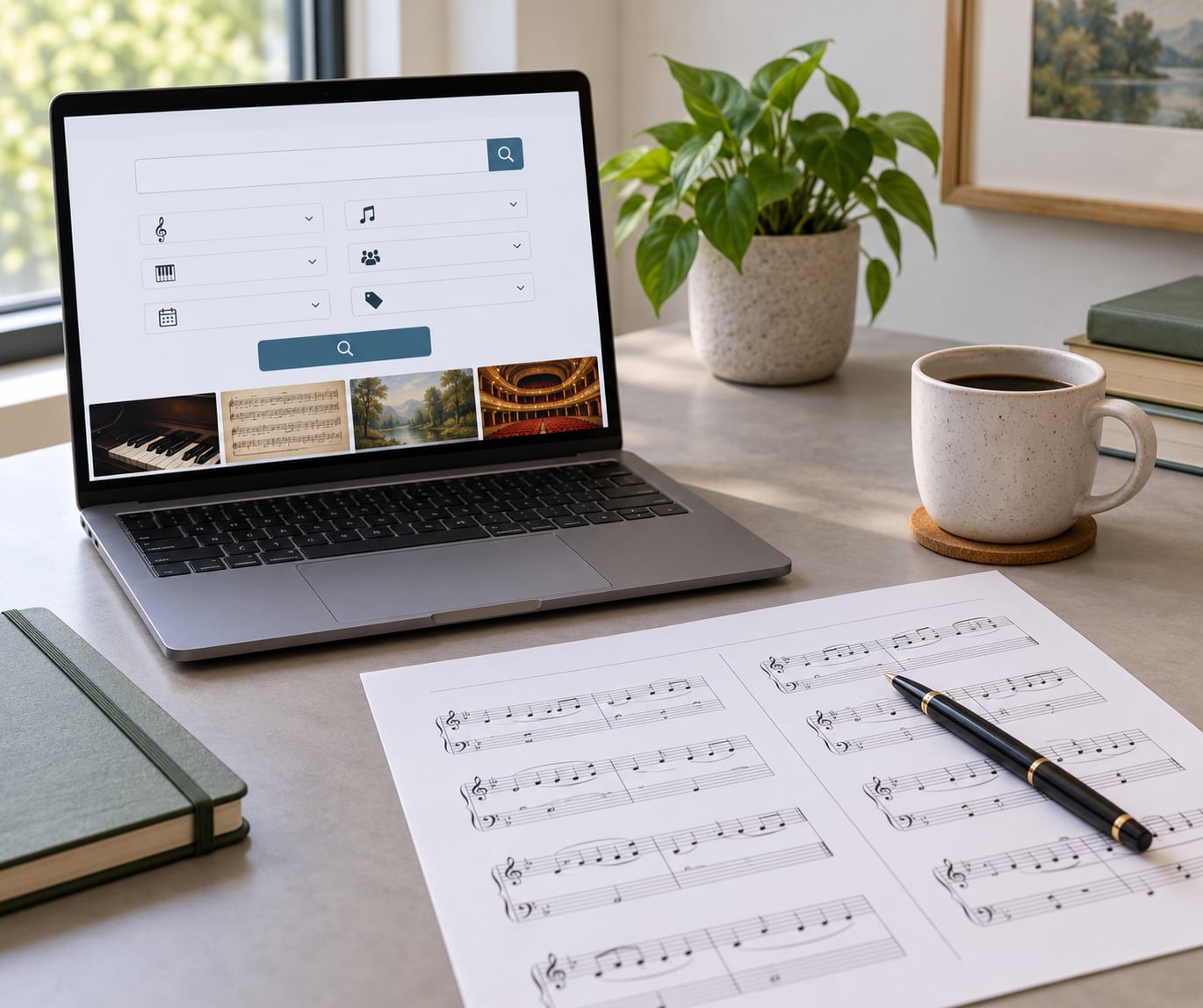
Confirmation comes in one of two forms: an account or work number on screen, and a searchable entry in the organization’s public repertoire. Search your title and confirm your name is attached to it with the right share. If the work does not appear, the registration is not finished.
Then wait. A performance is only paid once it is reported by the broadcaster, the venue or the platform, which usually means a reporting lag of several months, and a distribution lag after that. Checking an empty balance the week after registering tells you nothing. Most writers see their first meaningful statement a few log periods after their first play.
Common Mistakes to Avoid During Registration
- Affiliating with a second PRO while works are still registered with the first
- Entering ownership percentages that do not total 100
- Creating a new profile for a co-writer who already has one
- Leaving out alternate titles, which breaks matching against cue sheets
- Registering compositions that a publisher already administers
- Assuming that joining a PRO registered your copyright or replaced your distributor
Common Mistakes and How to Fix Them
Joining a Second PRO by Accident
Once a work is registered with one organization as a writer, it should not be registered with another as a writer. Fix it by contacting both organizations and transferring the affected works, rather than leaving duplicate records in two catalogs and hoping one resolves itself.
Wrong Names and Wrong Splits
Match co-writers by IPI or CAE number, not by typing a name you think is right. For your own credits, register the full legal name as the primary identity and add your professional name as an alternate. Check that shares total 100 and match the signed split sheet; a share that is wrong by ten points is usually recoverable only with the other writer’s cooperation.
Duplicate Works in Your Catalog
Registering a song you self-publish through your own accounts is correct. Registering a song that a publisher or administrator already handles is a duplicate. Before adding anything, check whether that title is already searchable in the organization’s repertoire under another party.
Expecting One Organization to Collect Every Royalty
A PRO collects public performance royalties and nothing else. SoundExchange handles digital performance on satellite and internet-only radio. The MLC handles mechanical royalties. Sync money comes from negotiation. Many independent artists collect only the first stream and never find out about the other two exist.
Registering Older Releases Too Late
Back catalog can still be registered, but performances older than a few years get progressively harder to match, because reporting periods close and records age out. Register what you have now, today, and register new material as it comes out rather than in one annual batch.
When to Ask for Help
Ask the organization’s member services when your identity does not match an existing writer record, when a work number is missing, or when you are moving a catalog between organizations. Ask a qualified music attorney when shares are disputed, when a sample was used without clearances, when a publisher’s catalog is being administered by someone you have never contracted with, or when money has been allocated to the wrong party and you need it recovered.
Frequently Asked Questions
Do I have to be a songwriter to register with a performing rights organization?
A PRO registers musical compositions, so the members it pays are songwriters, composers and lyricists. If you only perform someone else’s songs or produce records, you usually have no compositions to register. The exception is a producer who actually wrote or co-wrote the song, in which case your writer’s share is registerable in exactly the same way as anyone else’s.
Is ASCAP or BMI better for a songwriter?
For most independent writers, the difference in what they pay is too small to drive the decision. ASCAP has a strong history with pop and film writers; BMI is free to writers and widely used across pop, country, rock, jazz and gospel; SESAC is selective and strongest in gospel, jazz, blues and R and B. Pick the one you can join and register your catalog this week.
Can a songwriter belong to more than one performing rights organization?
No. You may affiliate with only one PRO as a writer at a time, because two organizations cannot both collect the same writer’s share of the same composition. Co-writers can each belong to a different organization, which is normal and is why split sheets list affiliations. If you want to move, you transfer your works from one catalog to the other.
How are performing royalties paid after I register my songs?
Radio stations, television networks, venues and streaming services report what they played to your PRO, usually with a lag of several months. Your PRO then splits the license fee between writers and publishers according to the percentages in your metadata and issues payment quarterly. Expect an empty dashboard for a while, and check that your payment details are complete so money is not held back.
Should a music producer register with a performing rights organization?
Register if you wrote or co-wrote the song, or if you sample and adapt other compositions. That share is a composition share and belongs in a PRO. If you only produce someone else’s song, you do not register the composition. Your recording rights are handled separately, often through a distribution deal or your agreement with the artist.
How do publishers and co-writers receive credit for a registered composition?
Every writer and publisher must be listed on the work with an ownership percentage, and those shares must total 100. Each writer is matched to their own PRO, or has their share paid through an administrator, and the publisher’s share goes to the named publisher. Because credits are keyed to identity records, matching writers by IPI or CAE number is the most reliable route.
Conclusion
Start by settling your ownership percentages with every co-writer on a signed sheet. Then choose one performing rights organization, confirm whether a fee applies on its current website, and register your compositions with clean metadata: full legal names, IPI or CAE numbers, alternate titles, and a publisher entry that matches how you actually publish.
After you submit, do one verification pass. Search your title in the organization’s public repertoire and confirm your name and share appear. That single check catches most of the errors that would otherwise go unnoticed for a year. Then let the reporting cycles do their work, and remember that The MLC and SoundExchange are separate systems you will need to set up on their own.